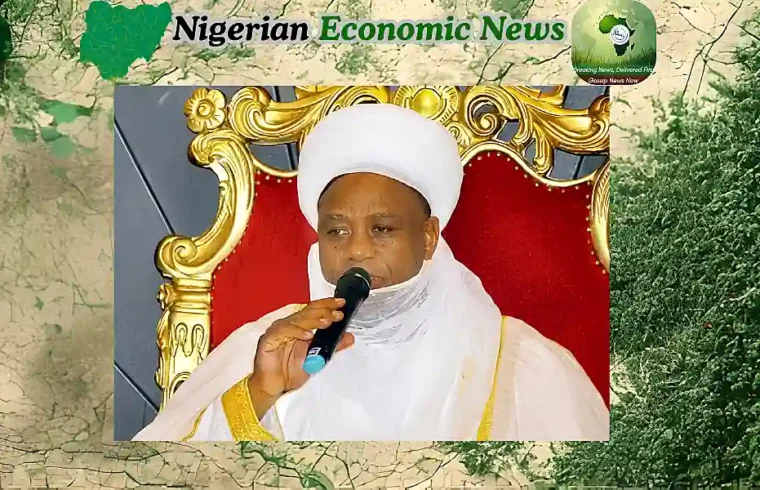
The Nigerian Supreme Council for Islamic Affairs (NSCIA) has rejected claims that Christians are being subjected to genocide in Nigeria, saying insecurity affects citizens regardless of their religious faith.
The council also called for an urgent and comprehensive review of Nigeria’s security architecture, while backing decentralized policing subject to strong professional and constitutional safeguards.
Key Takeaways
- NSCIA says insecurity affects Nigerians regardless of faith and rejects claims of a Christian or religious genocide in Nigeria.
- The council is calling for a comprehensive reform of the country’s security architecture.
- It supports decentralized policing but wants safeguards covering professionalism, accountability and fundamental rights.
- The NSCIA urged the Federal Government to move faster on reducing food and transportation costs.
- It also addressed civic participation, Muslim rights, poverty reduction, education and the moral upbringing of young people.
NSCIA Rejects Christian Genocide Claim
The position was contained in a communiqué issued after the NSCIA General Assembly held at the National Mosque in Abuja.
The communiqué was signed by the Sultan of Sokoto and President-General of the NSCIA, Alhaji Muhammad Sa’ad Abubakar, and the council’s Secretary-General, Professor Is-haq Oloyede.
In its statement, the council said insecurity in Nigeria affects citizens across religious lines.
The NSCIA stated:
“Insecurity in Nigeria affects all Nigerians regardless of faith and that there is no genocide of Christians or any religious community in Nigeria as claimed in some quarters.”
The statement places the council’s position directly at the centre of an ongoing debate over how insecurity and attacks in Nigeria should be characterized.
Security Reform Takes Centre Stage
Beyond rejecting the genocide claim, the NSCIA called for broad changes to the country’s security system.
The council expressed support for decentralized policing, but said any move towards state police must be built around clear safeguards.
According to the NSCIA, decentralized policing should be anchored on professionalism, constitutional safeguards, impartiality and accountability.
It also called for sustainable funding, respect for fundamental rights and effective coordination between federal and state security institutions.
The council’s position therefore combines support for a more decentralized security structure with conditions intended to ensure that policing remains accountable and professionally managed.
What The NSCIA Wants From Decentralized Policing
The council’s proposed safeguards cover several areas.
They include professional standards for policing, constitutional protections, impartiality in the exercise of police powers and mechanisms for accountability.
The NSCIA also highlighted the importance of sustainable funding and respect for fundamental rights.
It said effective coordination between federal and state security institutions would also be necessary.
The emphasis on these safeguards means the council’s support for decentralized policing was not presented as an unrestricted transfer of policing responsibilities.
Economic Hardship Also Features In The Communiqué
The NSCIA also turned its attention to the economic pressure facing ordinary Nigerians.
It urged the Federal Government to accelerate efforts to reduce the cost of transportation and food.
The council acknowledged government efforts to revive the economy but said more action was needed to reduce the pressure on citizens.
The economic concerns were presented alongside the council’s wider recommendations on security, civic responsibility and national development.
For households, the issues raised are directly connected to everyday expenses, particularly the cost of moving around and purchasing food.
Civic Participation And National Development
The council also urged Muslims to play a stronger role in national development and to demonstrate responsible conduct in their workplaces and communities.
It encouraged Muslims to make faith:
“a source of character, not just a tag of identity.”
The NSCIA also called on Muslims to obtain their National Identification Numbers (NINs) and Permanent Voter Cards (PVCs).
It urged them to participate in the process of selecting Nigerian leaders at all levels.
The call places civic participation alongside personal conduct as part of the council’s broader message to the Muslim community.
NSCIA Addresses Claims About Muslims In Igboland
Another part of the communiqué focused on claims concerning the presence of Muslims in Igboland.
The council said:
“it was obvious that Islam has been in Igboland for several decades and across generations.”
The NSCIA condemned attempts by individuals or groups to portray Muslims as non-indigenous to the region.
According to the council, such claims could contribute to the suppression of Muslims and help normalize attacks against them.
The issue was therefore presented by the NSCIA as part of its wider concern about religious inclusion and the protection of Muslim communities.
Council Calls For Protection Of Hijab Rights
The NSCIA also addressed the use of hijab by Muslim women and girls in different institutions.
It called on government agencies to respect what it described as the fundamental human right of Muslim female students, Muslim National Youth Service Corps (NYSC) members, Muslim female personnel in security agencies and Muslim female staff in other workplaces to use hijab.
The council framed the issue around religious rights and called for government agencies to respect those rights.
Poverty Reduction, Education And Youth Development
The communiqué also contained recommendations concerning poverty reduction.
The NSCIA encouraged Muslim organisations and societies to pursue lawful investments and cooperation.
It also called for improvements in the administration of Zakat and Waqf as tools to support long-term poverty reduction.
Education was another area highlighted by the council.
It urged Muslim leaders to give greater attention to quality education that combines Islamic knowledge with Science, Technology, Engineering, Arts and Mathematics.
The council further called on parents and community leaders to pay closer attention to the moral upbringing of young people.
It cited increasing exposure to negative foreign influences as one reason for greater attention to youth development.
What To Watch Next
The NSCIA’s communiqué places several issues on the public agenda, ranging from the characterization of insecurity to security-sector reform and the conditions surrounding decentralized policing.
Its recommendations also extend into food and transportation costs, civic participation, religious rights, poverty reduction and education.
The communiqué itself sets out the council’s positions and recommendations; it does not establish that the proposed measures have already been implemented.
The next stage will therefore depend on how the issues raised by the NSCIA feature in wider discussions about security, economic hardship, civic participation and national development.
Frequently Asked Questions
What did the NSCIA say about Christian genocide in Nigeria?
The NSCIA rejected claims that there is a genocide against Christians or another religious community in Nigeria, saying insecurity affects Nigerians regardless of faith.
What did the NSCIA say about state police?
The council expressed support for decentralized policing but said it should be based on professionalism, constitutional safeguards, impartiality, accountability, sustainable funding, respect for fundamental rights and effective coordination between federal and state security institutions.
What economic issues did the NSCIA raise?
The council urged the Federal Government to move faster in reducing the cost of transportation and food to ease the pressure on ordinary Nigerians.
What did the NSCIA say about NIN and PVC?
It urged Muslims to obtain their National Identification Numbers and Permanent Voter Cards and participate in choosing Nigerian leaders at all levels.
What did the council say about Muslims in Igboland?
The NSCIA said Islam has existed in Igboland for several decades and across generations, while condemning efforts to portray Muslims as non-indigenous to the region.
What did the NSCIA say about hijab?
The council called on government agencies to respect the right of Muslim female students, NYSC members, female security personnel and Muslim female staff in other workplaces to use hijab.
A Broader Call For Security And National Development
The NSCIA’s communiqué goes beyond the debate over how insecurity in Nigeria should be described.
It combines the council’s position on religious violence with calls for security reform, safeguards for decentralized policing, relief from food and transportation costs, greater civic participation and stronger attention to religious rights.
Its recommendations also extend to poverty reduction, education and the moral development of young people.
Taken together, the communiqué presents the council’s broader position on security, economic hardship, religious rights and the responsibilities it believes Muslims should embrace in Nigeria’s national development.