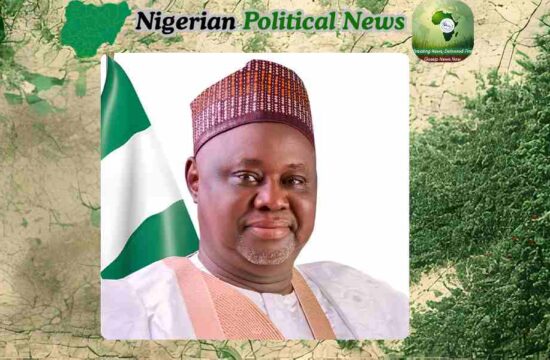
Delta State Governor, Sheriff Oborevwori, has disclosed that he earns ₦503,000 monthly, revealing that his salary is lower than the ₦900,000 monthly salary of Permanent Secretaries in the state.
Oborevwori made the disclosure while inaugurating 12 four-bedroom terraced duplexes for Permanent Secretaries and presenting 12 official vehicles to newly appointed Permanent Secretaries in Asaba, the state capital.
At a Glance
- Governor’s monthly salary: ₦503,000
- Permanent Secretary’s monthly salary: ₦900,000
- Head of Service’s monthly salary: ₦1 million
- Official vehicles presented: 12
- Vehicle Loan Scheme beneficiaries: 302
- Housing Loan Scheme beneficiaries: 119
- Senior management staff supported for training: 450
- Training duration: Seven weekends
- New Permanent Secretaries appointed: 12
The governor also highlighted several measures his administration has introduced to support civil servants and improve their working conditions.
Government Update
The salary disclosure came during the inauguration of 12 four-bedroom terraced duplexes for Permanent Secretaries and the presentation of 12 official vehicles to newly appointed Permanent Secretaries.
According to Oborevwori, his administration had increased the salaries of Permanent Secretaries after they complained that some directors were earning almost the same amount as them.
He explained that the adjustment resulted in Permanent Secretaries receiving ₦900,000 monthly, compared with the governor’s stated salary of ₦503,000.
The governor also disclosed that the Head of Service earns ₦1 million monthly.
Beyond salaries, Oborevwori said his administration had prioritised the welfare and operational needs of civil servants since assuming office.
What Oborevwori Said
Speaking during the event, the governor explained the salary adjustment for Permanent Secretaries.
“When the Permanent Secretaries said most of the Directors are receiving almost the same thing with them, we increased their money. Today, Permanent Secretaries… Your salary is 900, my salary is 503,000, Governor’s salary.”
He added:
“Head of Service is one million. It’s clear.”
Oborevwori also explained that official vehicles were being provided to Permanent Secretaries to improve their mobility and operational efficiency.
“To enhance their mobility and operational efficiency, we provided official vehicles to serving Permanent Secretaries. And today, it is my pleasure to present another 12 vehicles to the Permanent Secretaries that were recently sworn in.”
By the Numbers
The figures disclosed by the governor provide a snapshot of the remuneration and welfare measures highlighted by his administration.
₦503,000 — the monthly salary Oborevwori said he receives as governor.
₦900,000 — the monthly salary he said Permanent Secretaries receive.
₦1 million — the monthly salary stated for the Head of Service.
302 — the number of beneficiaries Oborevwori said had received support under the Public Officers’ Vehicle Loan Scheme.
119 — the number of people he said had benefited from the Public Officers’ Housing Loan Scheme.
450 — senior management staff who, according to the governor, received support to participate in a seven-weekend training programme.
12 — newly appointed Permanent Secretaries and the number of official vehicles presented to them at the event.
Government Performance
Oborevwori said the state’s civil-service welfare programme extends beyond salary adjustments.
According to him, 302 beneficiaries have received support through the Public Officers’ Vehicle Loan Scheme, while 119 people have benefited from the Public Officers’ Housing Loan Scheme.
The governor also said the state government had provided farm inputs to civil servants interested in agriculture.
He said the initiative was intended to help workers develop additional sources of income while contributing to food security.
Another measure highlighted by the governor was professional training.
He said 450 senior management staff received support to attend a seven-weekend training programme through collaboration with the Administrative Staff College of Nigeria.
The measures described by Oborevwori therefore cover several areas of civil-service welfare, including transportation, housing, additional income opportunities and professional development.
Governance Impact
The initiatives highlighted by the governor point to several areas of public-sector administration.
Official vehicles can support the mobility of senior civil servants and their ability to carry out official responsibilities, while vehicle and housing loan schemes can provide financial support for eligible public officers.
Training programmes can also strengthen the professional capacity of senior management staff, while agricultural support could provide civil servants with another potential source of income.
However, the figures supplied in the report primarily represent the governor’s account of the government’s interventions. The article does not provide independent assessments of the long-term results of these programmes.
The broader governance question is therefore not only how much government spends on civil-service welfare, but also whether such interventions produce measurable improvements in worker welfare, administrative efficiency and public-service delivery.
Permanent Secretary Appointments
Oborevwori also addressed the process through which the 12 Permanent Secretaries were appointed.
He said the appointments, made in May, ensured that every local government area in Delta State had a Permanent Secretary in the civil service.
The governor insisted that the appointments were based on merit and not on recommendations from political figures.
He said:
“The process was properly done. Not by saying, even the one that was appointed in my place, I don’t even know the person. All the Permanent Secretaries appointed, no one was recommended by anybody, but by merit.”
The governor’s statement presents the appointments as part of an effort to strengthen representation across the state’s local government areas while maintaining what he described as a merit-based process.
Governance Perspective
The salary figures disclosed by Oborevwori are likely to attract attention because they place the governor’s stated monthly salary below that of Permanent Secretaries and the Head of Service.
However, salary comparisons alone do not establish whether a particular public office is appropriately or inadequately remunerated. Public-sector compensation can involve different responsibilities, allowances, conditions of service and statutory arrangements, none of which are detailed in the supplied article.
The more significant governance issue is the relationship between public-sector remuneration, worker welfare and administrative performance.
If welfare schemes, training and operational support are to improve the civil service, their significance ultimately depends on their reach and results.
For that reason, the numbers announced by the governor provide an important starting point, while their longer-term impact would require further assessment.
Questions For Readers
The governor’s disclosure raises broader questions about public-sector remuneration and government welfare programmes:
- Should a governor’s salary be higher than that of a Permanent Secretary?
- What should determine the salaries of senior public officials?
- Should civil-service welfare programmes be judged by the number of beneficiaries or by their long-term results?
- How important are training and welfare programmes to improving public-sector performance?
- Should governments publish more detailed information on the outcomes of civil-service welfare schemes?
These questions extend the discussion beyond the governor’s salary to the broader issue of how governments can build an effective and properly supported public service.
Editorial Wrap-Up
Oborevwori’s disclosure has provided a rare public look at the salary figures he says apply to some of Delta State’s top public officers, with the governor stating that he earns ₦503,000 monthly compared with ₦900,000 for Permanent Secretaries and ₦1 million for the Head of Service.
But the salary comparison is only one part of the wider story.
The governor also used the occasion to highlight official vehicles, housing and vehicle loans, agricultural support and professional training for civil servants.
Taken together, the measures outlined by Oborevwori present his administration’s approach to civil-service welfare as extending beyond salaries to transportation, housing, skills development and additional income opportunities.
The key governance question now is not simply who earns more, but whether these investments in public officers ultimately translate into a stronger, more efficient and better-performing civil service.