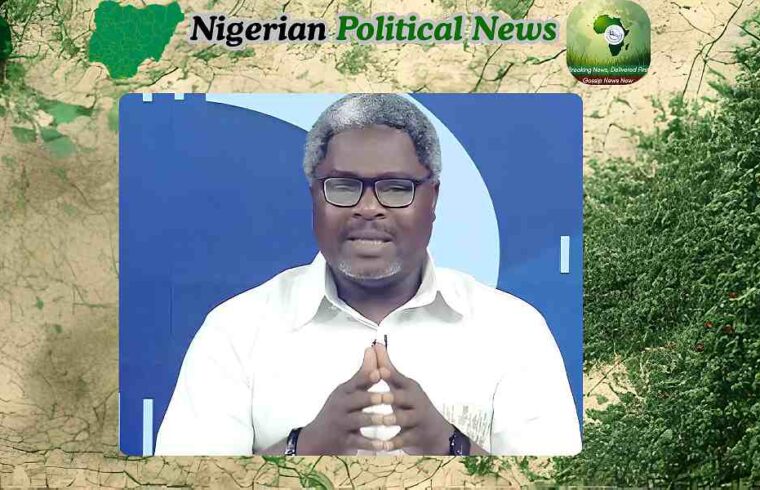
Lere Olayinka, spokesperson to the Minister of the Federal Capital Territory (FCT), Nyesom Wike, has questioned the chances of some presidential candidates in the 2027 election, arguing that not everyone in the race is contesting with the expectation of winning.
Olayinka made the remarks while assessing Nigeria’s political landscape ahead of the 2027 general elections, saying some candidates were primarily seeking to establish their presence rather than emerge victorious.
Olayinka’s Position
Speaking during an interview on Arise News on Friday, Olayinka questioned whether all 19 presidential candidates were genuinely entering the 2027 contest with the intention of winning.
He argued that some candidates already understood the limitations facing their campaigns and were contesting mainly to register their presence in the election.
“So it is not everybody that contests elections that wants to win. There are people that contest elections just to register their presence.”
He added that the number of presidential candidates in the 2027 race did not necessarily mean that all of them had the same electoral ambitions.
“For instance, in this 2027 election, we have 19 presidential candidates. Can we say honestly that all the 19 are contesting with the mindset of winning? The answer is no.”
Why Olayinka Mentioned Sowore
Olayinka specifically cited Omoyele Sowore, the presidential candidate of the African Action Congress (AAC), as an example of a candidate whose previous electoral performance, in his view, raises questions about his prospects in 2027.
He referred to Sowore’s performance in the 2023 presidential election, when he said the AAC candidate secured 14,600 votes.
Using that result to support his argument, Olayinka questioned how Sowore could realistically win the 2027 election.
“For instance, the candidate of AAC, Omoyele Sowore, had 14,600 votes in 2023. How would that person win the election next year? They know that they cannot win.”
Olayinka concluded that Sowore was among those contesting primarily to establish a political presence.
“They are just contesting.”
Peter Obi’s Party Structure Also Questioned
Olayinka also turned his attention to Peter Obi, arguing that the political structure of the Nigeria Democratic Congress (NDC) was not sufficiently established across the country to support a successful presidential campaign.
According to him, the party’s limited presence at the governorship level was one of the factors that could affect its ability to compete effectively in a presidential election.
“Even NDC, the party of Peter Obi, they know they cannot win the election. They are just contesting to try to register their presence.”
Olayinka pointed to the party’s governorship coverage as evidence for his position, claiming that NDC did not have governorship candidates in 15 states and had candidates in only 13 states.
He also referred to recent elections in Ekiti and Osun, arguing that the party’s absence from those contests illustrated what he described as a lack of political presence on the ground.
The Grassroots Argument
For Olayinka, the question of whether a presidential candidate can win goes beyond campaign visibility or political messaging. He argued that parties need an extensive network of people operating at the grassroots and at polling units on election day.
He questioned how a party could effectively compete for the presidency without enough personnel to canvass votes and manage its operations during the election.
“NDC did not fit candidates. How do you win an election when you don’t have people on ground to canvass votes for you, to manage elections for you?”
Olayinka said the organisational demands of a presidential election were substantial, particularly because of the number of polling units across Nigeria.
According to him, Nigeria has 176,846 polling units and a party seeking to make a strong showing would need at least five people to manage each polling unit.
“In Nigeria today, there are 176,846 polling units. To make good impression on election day, you need at least five people to manage each polling unit for you.”
He repeated the importance of having sufficient personnel on the ground.
“At least. You need five people. We have done elections before, so we know what it is.”
What Olayinka’s Argument Is Based On
Olayinka’s assessment rests largely on two factors: previous electoral performance and party organisation.
In Sowore’s case, he pointed to the candidate’s 2023 vote total as evidence for his argument about electoral viability. In Obi’s case, he focused on the geographical and organisational reach of the party, particularly its presence in governorship contests and its ability to establish personnel across polling units.
The argument therefore places significant emphasis on the organisational side of presidential elections. Rather than measuring competitiveness solely through campaign visibility, Olayinka argues that parties also require structures capable of mobilising voters and managing election-day operations.
His comments, however, represent his assessment of the candidates’ prospects. The supplied account does not contain responses from Obi, Sowore or their parties addressing Olayinka’s claims.
The 2027 Contest
The remarks add another dimension to the political debate surrounding the 2027 presidential election, particularly over what makes a candidate or party genuinely competitive at the national level.
Olayinka’s argument is that presidential contests require more than the decision to appear on the ballot. In his view, candidates also need substantial political structures, grassroots organisation and personnel capable of operating across polling units.
He ended his argument by dismissing political visibility without corresponding organisation as insufficient.
“It is not about making noise,” Olayinka submitted.
As political parties and presidential contenders prepare for the 2027 election, questions surrounding nationwide organisation, grassroots mobilisation and election-day structures are likely to remain part of the wider debate over which candidates can mount serious national campaigns.