Key Takeaways
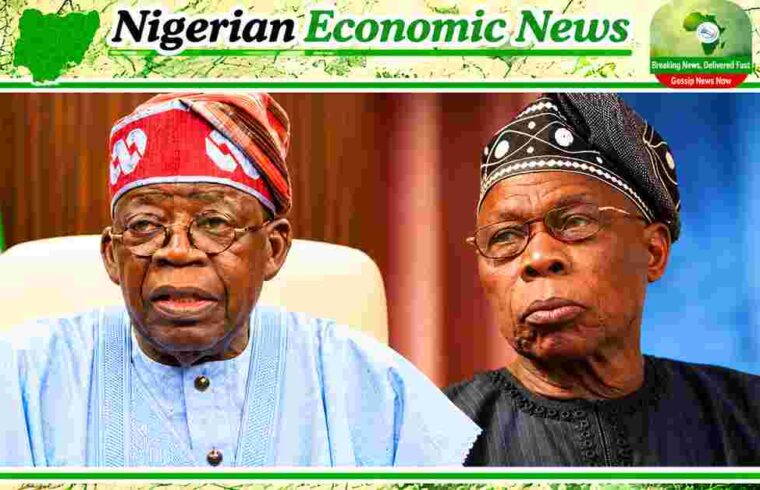
- Oluremi Omowaiye, an Executive Director at the Federal Housing Authority and APC chieftain, has criticised former President Olusegun Obasanjo over his comments on Tinubu’s economic reforms.
- Omowaiye accused Obasanjo of being uncomfortable with Tinubu’s performance and alleged that the former President was motivated by political considerations.
- The FHA director referred to Bells University, Obasanjo Farms and Next Cash & Carry to challenge Obasanjo’s assessment of Nigeria’s economic conditions.
- He compared the infrastructure records of the Obasanjo and Tinubu administrations, citing the Lagos-Ibadan Expressway and Lagos-Calabar Coastal Highway.
- Omowaiye also compared ASUU strike activity under the two administrations, citing the 2001 university strike.
- He admitted that Tinubu’s economic reforms had caused hardship but maintained that they were necessary for long-term economic development.
- He claimed that inflation had fallen and rice prices had reduced, although the figures require independent verification.
- The disagreement highlights the continuing debate over the effects of Tinubu’s economic reforms on Nigerians.
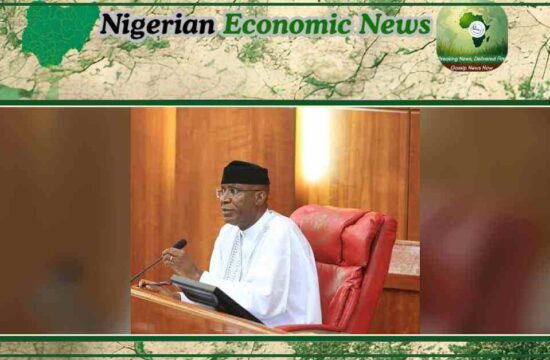
Oluremi Omowaiye, an Executive Director at the Federal Housing Authority (FHA) and chieftain of the All Progressives Congress (APC), has launched a strong criticism of former President Olusegun Obasanjo following his comments about President Bola Tinubu’s economic reforms.
Omowaiye accused the former Nigerian leader of being uncomfortable with Tinubu’s performance, alleging that Obasanjo was unhappy because a fellow Yoruba man had achieved what he failed to accomplish during his eight years in office.
His reaction followed Obasanjo’s criticism of the Tinubu administration’s economic policies, which the former President said had pushed many Nigerians deeper into poverty.
Responding in a statement, Omowaiye argued that Obasanjo’s assessment of the administration was unfair and accused him of attempting to undermine Tinubu’s political prospects ahead of the next presidential election.
What Omowaiye Said About Obasanjo’s Criticism
The FHA director did not hold back in his response, insisting that Obasanjo should be ashamed of his comments about the current administration.
He alleged that the former President was uncomfortable with Tinubu’s achievements and believed the incumbent had surpassed his record in office.
Omowaiye said:
“Obasanjo should cover his face in shame. He is unhappy because we have a Yoruba man who has done what he failed to do as president. He is uncomfortable because President Tinubu has surpassed his achievements,” he said.
He further alleged that Obasanjo was opposed to Tinubu’s re-election because the President was delivering on his promises and could accomplish more if given another four-year term.
Omowaiye maintained that the former President’s criticism was part of an effort to prevent Tinubu from securing a second term.
He stated:
“Obasanjo is unhappy because President Tinubu is delivering on his promises and he knows he is going to achieve much more when he gets reelected for another four years. That is why he is doing everything to stop it but he won’t succeed,” he said.
The allegations about Obasanjo’s motives represent Omowaiye’s position in the political disagreement and have not been independently established by the statements provided.
Omowaiye Uses Obasanjo’s Businesses to Challenge His Economic Assessment
Beyond questioning Obasanjo’s political motives, Omowaiye also challenged the former President’s assessment of Nigeria’s economic situation by referring to businesses associated with him.
He questioned whether the economic hardship being discussed had forced Obasanjo to shut down his business interests, specifically mentioning Bells University and Obasanjo Farms.
According to Omowaiye, the continued operation of these businesses raised questions about the former President’s criticism of the economy.
He asked:
“Did he close down Bells University because students are unable to pay? No. Has he closed down Obasanjo Farms because the economy is so bad?” he asked.
Omowaiye also brought Peter Obi, the Nigeria Democratic Congress presidential candidate whom Obasanjo supports, into the argument.
He referred to Next Cash & Carry, a supermarket he linked to Obi, saying the business had continued operating after being affected by a fire.
Using the supermarket as another example, the FHA director questioned whether its continued operation was consistent with claims that economic conditions had become extremely difficult.
He said:
“Peter Obi that Obasanjo is supporting has the biggest single supermarket in Nigeria. It got burnt sometimes ago. He rebuilt it and it is doing fine today. If the economy is so bad, will Next Supermarket be doing fine?” he asked.
However, the continued operation of individual businesses does not, by itself, establish the overall condition of the Nigerian economy. Omowaiye’s examples should therefore be understood as arguments he presented in response to Obasanjo’s criticism.
Lagos-Ibadan Expressway and Coastal Highway Feature in the Debate
Omowaiye also compared the infrastructure records of the Obasanjo and Tinubu political administrations, using the Lagos-Ibadan Expressway as one of his major examples.
He accused the former President of failing to repair the economically important highway throughout his eight-year tenure, arguing that an APC-led government eventually undertook the work.
The FHA director described the road as one of Nigeria’s most economically important transport routes.
He said:
“The most economically viable road in Nigeria today is the Lagos-Ibadan Expressway. He never fixed that road throughout his eight years. It was the APC government that fixed it,” he said.
Omowaiye also praised the Lagos-Calabar Coastal Highway, describing the project as the fulfilment of a vision associated with the late Chief Obafemi Awolowo, former Premier of the Western Region.
His comments formed part of a broader argument that the Tinubu administration and previous APC governments had made infrastructure investments that he believed compared favourably with the achievements of earlier administrations.
ASUU Strikes Become Another Point of Comparison
Education was another area Omowaiye used to challenge Obasanjo’s record in office.
He recalled the frequent industrial actions by the Academic Staff Union of Universities (ASUU) during the former President’s administration, citing a strike in 2001 that he said lasted approximately 10 months.
He contrasted that period with what he described as the absence of recurring ASUU strikes under Tinubu.
Omowaiye stated:
“ASUU strike is a regular thing during the Obasanjo presidency. In 2001, ASUU went on strike for about 10 months. Under President Tinubu, ASUU strike has become a thing of the past,” he said.
The comparison was presented as part of Omowaiye’s defence of Tinubu’s administration. The historical duration of the 2001 strike and the broader claim about university industrial action should be assessed against independent records before being treated as established conclusions.
Omowaiye Admits Tinubu’s Economic Reforms Have Caused Hardship
Despite his strong defence of the administration, Omowaiye acknowledged that Tinubu’s economic reforms had brought difficulties for Nigerians.
However, he argued that the policies were necessary to make the country more productive and prosperous in the long term.
His position was that the immediate difficulties associated with the reforms should be considered alongside the economic improvements he believes the administration is beginning to achieve.
Omowaiye said:
“These reforms by President Tinubu are painful, but they are needed for Nigeria to be productive and prosperous. Today, we are already seeing the results and the pains will soon be a thing of the past,” he said.
His comments reflect the administration’s supporters’ argument that difficult economic adjustments may be necessary to address longstanding structural problems.
Nevertheless, whether the reforms are delivering the expected benefits remains a wider economic question that requires evidence from inflation, employment, income, investment and household purchasing-power data.
Inflation, Rice Prices and the Naira: Omowaiye’s Economic Arguments
To support his position that Nigeria’s economy was improving, Omowaiye referred to inflation, the price of rice and the exchange rate.
He claimed that inflation had fallen from above 20 per cent to 14 per cent. He also argued that the price of a bag of rice, which he said had previously exceeded ₦100,000, had dropped to between ₦50,000 and ₦57,000.
These figures were presented by Omowaiye as evidence that the economic situation was improving. However, the inflation claim requires confirmation of the reporting period and the official inflation measure, while the rice-price comparison requires details such as location, bag size and market date.
The FHA director also defended the government’s decision to float the naira, referring to earlier predictions that the currency could fall to ₦10,000 against the dollar.
He argued that the exchange rate had not reached that level and claimed that the dollar was trading at approximately ₦1,300.
Omowaiye said:
“When President Tinubu floated the naira, some economists predicted that the naira would exchange for ₦10,000, but today a dollar is ₦1,300. Today, our economy is improving, and investors are coming into the country,” he said.
The exchange-rate figure should be treated as Omowaiye’s stated figure rather than a verified current market rate. The applicable date and whether he was referring to the official or parallel market were not specified in the supplied report.
The Wider Debate Over Tinubu’s Economic Reforms
The disagreement between Obasanjo and Omowaiye reflects the continuing political debate over the direction and consequences of Tinubu’s economic reforms.
While Obasanjo has criticised the administration’s policies over their effects on Nigerians, Omowaiye has defended them, arguing that the measures are necessary and that improvements are beginning to emerge.
The central issue extends beyond the political disagreement between the two figures. It concerns whether the reforms are achieving their stated economic objectives and whether their long-term benefits will outweigh the immediate financial pressures experienced by households and businesses.
For Nigerians, the assessment of the reforms will ultimately depend on measurable changes in the cost of living, employment opportunities, purchasing power, business conditions and the stability of the economy.
Omowaiye’s comments provide the perspective of a government appointee and APC chieftain defending the President’s policies. A fuller assessment, however, requires independently verified economic data and consideration of the experiences of Nigerians affected by the reforms.
Frequently Asked Questions (FAQ)
1. Who criticised Obasanjo over his comments on Tinubu’s economic reforms?
Oluremi Omowaiye, an Executive Director at the Federal Housing Authority and APC chieftain, criticised former President Olusegun Obasanjo over his assessment of Tinubu’s economic reforms.
2. What did Omowaiye say about Obasanjo?
Omowaiye accused Obasanjo of being uncomfortable with Tinubu’s achievements and said the former President should be ashamed of his criticism of the administration.
3. Why did Obasanjo criticise Tinubu’s economic reforms?
According to the supplied report, Obasanjo argued that the Tinubu administration’s economic reforms had pushed many Nigerians deeper into poverty.
4. What examples did Omowaiye use to defend Tinubu’s administration?
He referred to the Lagos-Ibadan Expressway, Lagos-Calabar Coastal Highway, ASUU strikes, inflation, rice prices and the naira’s exchange rate.
5. Did Omowaiye admit that Tinubu’s reforms caused hardship?
Yes. He acknowledged that the reforms were painful but argued that they were necessary to make Nigeria more productive and prosperous.
6. What did Omowaiye claim about inflation and rice prices?
He claimed that inflation had fallen from above 20 per cent to 14 per cent and that a bag of rice that previously cost more than ₦100,000 was selling for between ₦50,000 and ₦57,000. These figures require independent verification.
7. What is the main disagreement between Obasanjo and Omowaiye?
The disagreement centres on the effects of Tinubu’s economic reforms. Obasanjo has criticised their impact on Nigerians, while Omowaiye has defended the policies and argued that they are beginning to produce positive results.
Conclusion
Omowaiye’s response has added another dimension to the debate over Tinubu’s economic reforms, with the FHA director challenging Obasanjo’s criticism through political arguments and comparisons involving infrastructure, education, businesses and economic indicators.
Although Omowaiye maintains that the reforms are necessary and that improvements are already emerging, the wider debate over their effectiveness will depend on independently verified economic evidence and whether ordinary Nigerians begin to experience sustained improvements in their living conditions.