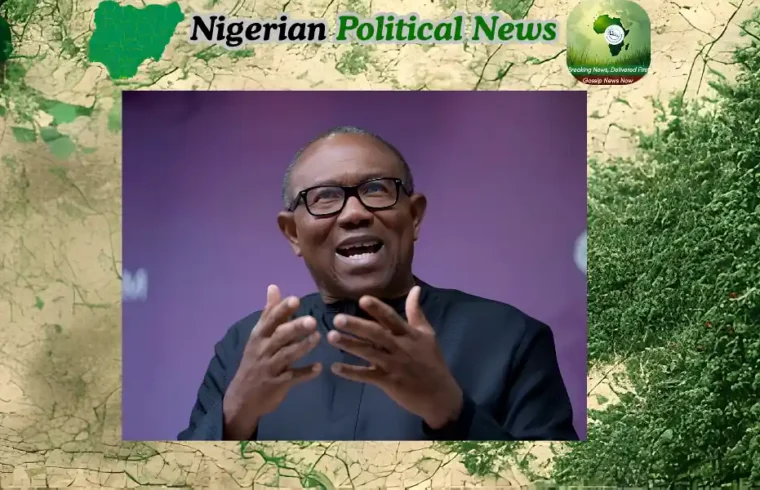
Former Anambra State governor and presidential candidate of the Nigeria Democratic Congress (NDC), Peter Obi, has called on Nigerians to put aside ethnic and religious divisions, arguing that the country’s economic and security challenges affect citizens across different backgrounds.
Obi made the call on Sunday during the NDC Global Digital Townhall, where he responded to questions about issues affecting Nigerians and the party’s preparations for the 2027 general elections.
In Brief
- Peter Obi called for greater national unity ahead of the 2027 elections.
- He argued that economic hardship does not distinguish between ethnic or religious groups.
- Obi said Nigerians across the country face similar challenges involving poverty and insecurity.
- He criticised ethnic and religious divisions, saying they make it harder to address national problems collectively.
- The former Anambra governor said Nigeria needs a president focused on unity and national security.
What Happened?
Obi used the virtual town hall to make a broader argument about the need for Nigerians to approach the country’s problems as shared national challenges.
He said divisions along ethnic and religious lines should not determine how Nigerians respond to issues affecting the country.
According to Obi, the effects of economic hardship are not limited to any particular ethnic group or religious community.
He pointed to the cost of basic necessities as an example, arguing that Nigerians face similar pressures regardless of their background.
“We need unity in our country. Today we are not united. We are divided along ethnic and religious lines, and to the best of my knowledge, no tribe buys bread cheaper; no tribe buys fuel cheaper; no religion buys bread cheaper; no religion buys fuel cheaper,” Obi said.
The NDC presidential candidate also linked national division to wider concerns about poverty and insecurity.
He argued that insecurity affects citizens across the country rather than being confined to a particular ethnic or religious group.
Key Players
Peter Obi
Obi is the political figure at the centre of the development. The former Anambra State governor used the NDC Global Digital Townhall to outline his position on national unity, economic hardship and insecurity.
Nigeria Democratic Congress
The NDC hosted the global digital town hall where Obi addressed questions concerning issues affecting Nigerians and preparations for the 2027 general elections.
Nigerian Citizens
Citizens are central to Obi’s argument because he presented poverty, the cost of basic goods and insecurity as challenges that cut across ethnic and religious boundaries.
What Peter Obi Said
Obi argued that the country’s economic difficulties are being experienced across different parts of Nigeria.
He said poverty had spread throughout the country and maintained that insecurity was also affecting Nigerians regardless of their background.
“The poverty that is in our country today spreads across the whole nation. No tribe is more secure than the other. Insecurity is all over the country. Same thing I have been saying,” he said.
The statement formed part of Obi’s wider appeal for Nigerians to see the country’s challenges as common problems rather than issues belonging to particular ethnic or religious communities.
The 2027 Political Context
Obi’s remarks came as political parties and political figures prepare for the 2027 general elections.
The town hall was also presented as an opportunity for the NDC presidential candidate to respond to questions about issues affecting Nigerians and the party’s preparations for the election.
His comments placed national unity at the centre of his political message, with economic hardship and insecurity serving as examples of problems that affect Nigerians across the country.
The supplied report does not indicate that Obi announced a specific campaign strategy during the event beyond his call for unity and the need for stronger leadership on security.
Political Implications
Obi’s argument presents economic hardship and insecurity as national issues that should not be approached primarily through ethnic or religious identities.
By pointing to the shared cost of basic necessities and the widespread nature of insecurity, he sought to emphasise common interests among Nigerians.
That framing also gives his call for national unity a direct connection to governance. His position is that the country’s leadership should focus on bringing citizens together while addressing problems that affect them regardless of background.
The remarks therefore place unity, security and the economic condition of citizens within the same political argument ahead of the 2027 elections.
Why It Matters
The significance of Obi’s message lies in its focus on issues that directly affect citizens.
Food and fuel costs, poverty and insecurity are not presented in his remarks as problems belonging to one ethnic group or religious community. Instead, he used them to argue that Nigerians have common interests that require a national response.
For the 2027 political debate, that places national cohesion alongside economic and security concerns as issues that political leaders may need to address.
Obi said Nigeria needs a president capable of rising above ethnic and religious considerations while working to unite the country.
“We need a president who will unite us. We need a president who will work tirelessly to secure the country,” he told participants at the virtual gathering.
Final Editorial Wrap-Up
Peter Obi’s message at the NDC Global Digital Townhall centred on a call for Nigerians to look beyond ethnic and religious divisions and recognise the challenges they share.
He linked that argument to poverty, the cost of essential goods and insecurity, while saying the country needs leadership focused on unity and security as the 2027 general elections approach.
The remarks add national unity to the issues Obi is placing before Nigerians as political preparations for the next general election continue.
© 2025 Gossip News Now , a division of CHIEJOS HARBIAN DIGITAL MEDIA LTD. Contact us via admin@gossipnewsnow.online.