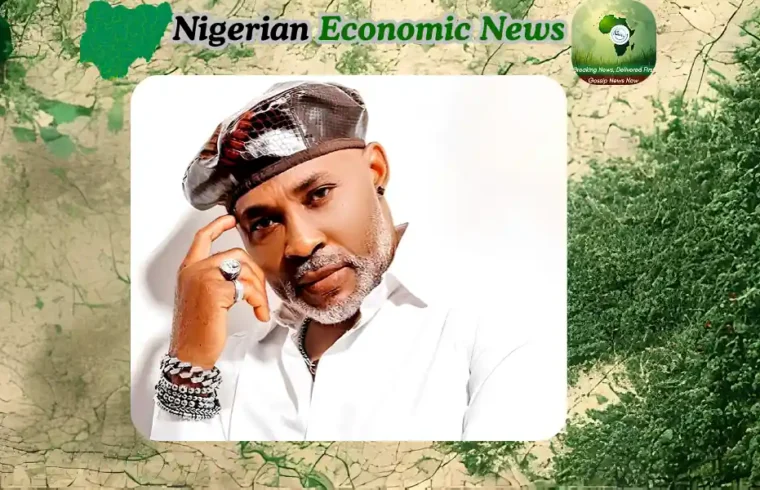
Veteran actor and filmmaker Richard Mofe-Damijo (RMD) has called on Nigerians to change the way they view and discuss the country while also taking practical steps to address its challenges.
Mofe-Damijo made the remarks at the 2026 Pivot Nigeria Conference in Lagos, where participants examined Nigeria’s global reputation as well as the social and economic costs associated with negative perceptions of the country.
Key Takeaways
- Richard Mofe-Damijo said Nigeria’s age should not be used to excuse poor governance or other national shortcomings.
- He argued that Nigeria, at 66 years of independence, remains relatively young compared with many developed countries.
- Mofe-Damijo said nation-building requires patience, consistent effort and a shared commitment to development.
- He urged Nigerians to move beyond criticism and contribute practical ideas for addressing the country’s problems.
- He also called for a change in the way Nigerians view the country without pretending that its problems do not exist.
RMD’s Argument About Nigeria’s Development
Mofe-Damijo said Nigeria’s relatively young age should be considered when discussing the country’s development.
Nigeria will mark its 66th year of independence in 2026, and the actor argued that building a stable and prosperous nation is a long-term process.
He said some countries that are regarded as leading nations today have had much longer periods to develop their institutions and societies.
According to him, Nigeria needs patience and sustained effort as it continues the process of nation-building.
“At 66, we are a young country compared to a lot of the countries that are leading countries today.”
However, Mofe-Damijo stressed that describing Nigeria as a young country should not provide an excuse for its shortcomings.
Why Nigeria’s Age Does Not Excuse Its Problems
Mofe-Damijo acknowledged that Nigeria continues to face problems but argued that the country’s age should instead be viewed as part of a longer development process.
He said:
“It does not excuse our shortcomings, but it speaks to the fact that we should be patient.”
He described Nigeria as a “country in progress” and a “work in progress”, while stressing the need for citizens to continue contributing to its development.
His argument therefore combines two positions: Nigeria’s development may require time, but the passage of time should not be used to justify institutional or governance failures.
Nigeria’s Image and the Cost of Negative Perceptions
The discussion at the Pivot Nigeria Conference also focused on Nigeria’s global reputation and the social and economic consequences of negative perceptions of the country.
Mofe-Damijo argued that changing the way Nigerians view their country does not mean denying its problems.
Instead, he said Nigerians should recognise existing challenges while focusing attention on how those problems can be addressed.
He said:
“Reframing the lens through which we look at Nigeria is not lying that there are no problems. It is saying that we need to fix them.”
The distinction is important to the argument he presented: improving perceptions, in his view, should accompany efforts to address the underlying problems rather than replace those efforts.
Beyond Criticism: RMD Calls For Practical Solutions
Mofe-Damijo also criticised what he described as a tendency among Nigerians to condemn the country without offering solutions.
He urged citizens to move beyond identifying problems and consider what can be done to address them.
“Do not stand and just criticise without proffering solutions.”
He argued that recognising Nigeria’s problems should be followed by efforts to find practical responses.
The call places responsibility not only on government but also on citizens and other stakeholders who participate in the country’s social and economic development.
What Changing Nigeria’s Image Does — And Does Not — Mean
Mofe-Damijo’s comments do not amount to a call for Nigerians to ignore the country’s challenges.
Rather, his argument is that criticism should be accompanied by efforts to address those challenges.
Changing perceptions can therefore be understood in two parts within the context of his remarks:
What it means:
- viewing Nigeria’s development as an ongoing process;
- recognising progress alongside existing challenges;
- encouraging constructive discussion;
- proposing practical solutions.
What it does not mean:
- denying national problems;
- excusing poor governance;
- overlooking institutional shortcomings;
- pretending that challenges do not exist.
His comments specifically acknowledge that Nigeria has shortcomings while arguing that citizens should remain engaged in addressing them.
Nation-Building As A Long-Term Process
The broader message from Mofe-Damijo centres on the idea that building a prosperous country requires sustained effort.
He argued that Nigeria’s development should be viewed as an ongoing process requiring patience and commitment.
At the same time, his comments acknowledge that patience does not remove the need to address existing problems.
The article therefore presents two ideas that sit alongside each other: nation-building takes time, while current shortcomings still require action.
What RMD Wants Nigerians To Do
Mofe-Damijo’s message to Nigerians can be summarised around three areas.
1. Recognise Nigeria’s challenges
He did not deny that Nigeria has serious problems. Instead, he explicitly acknowledged the country’s shortcomings.
2. Change the way the country is viewed
He urged Nigerians to reconsider the lens through which they view their country and to avoid an approach based solely on condemnation.
3. Focus on solutions
He called on Nigerians to go beyond criticism by offering practical ideas for addressing national problems.
Frequently Asked Questions
What did RMD say about Nigeria’s age?
Richard Mofe-Damijo said Nigeria, at 66 years of independence, is still relatively young compared with many developed countries and that nation-building can take a long time.
Did RMD say Nigeria’s age excuses poor governance?
No. He specifically said Nigeria’s age does not excuse its shortcomings, including problems associated with governance and institutions.
What did RMD say about Nigeria’s image?
He urged Nigerians to change the way they view the country while making clear that doing so does not mean pretending that Nigeria’s problems do not exist.
Did RMD ask Nigerians to stop criticising Nigeria?
His message was more specific. He argued that Nigerians should move beyond criticism alone and contribute practical ideas and solutions to national problems.
Where did RMD make the comments?
He made the remarks at the 2026 Pivot Nigeria Conference in Lagos.
What was discussed at the Pivot Nigeria Conference?
According to the source article, participants examined Nigeria’s global reputation and the social and economic costs associated with negative perceptions of the country.
Is changing Nigeria’s image enough to solve its problems?
RMD’s comments do not suggest that perception alone can solve Nigeria’s challenges. His argument was that changing perceptions should be accompanied by efforts to identify and fix the country’s problems.
The Broader Message
RMD’s comments at the Pivot Nigeria Conference centred on how Nigerians perceive their country and how they respond to its challenges.
He argued that Nigeria’s 66 years of independence should be viewed within the longer process of nation-building, while making clear that the country’s age should not excuse its shortcomings.
His broader appeal was for Nigerians to combine patience, continued effort and practical solutions rather than limiting national discussion to criticism.
For Mofe-Damijo, changing Nigeria’s image therefore involves more than changing how the country is described. It also requires confronting the problems that shape those perceptions and continuing the work of addressing them.