“The Nigerian people need to see the candidate. They need to hear the candidate. They need to question the candidate.”
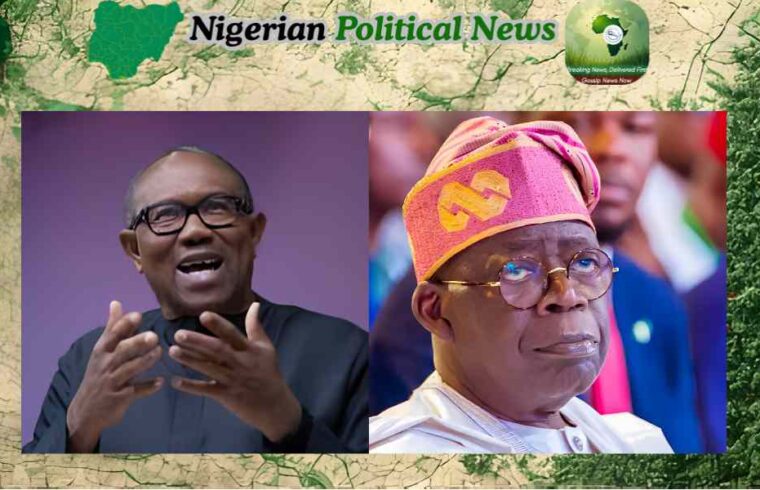
That was the position expressed by the Peter Obi Media Reach (POMR) as it challenged President Bola Tinubu to engage Nigerians directly over his administration’s record, policies and plans ahead of the 2027 presidential election.
In Brief
Peter Obi’s media office accused President Tinubu of relying too heavily on ministers, governors, party officials, media aides and other political allies to represent him before Nigerians.
The group argued that political surrogates could perform certain official duties but should not replace direct interaction between a presidential candidate and the electorate.
It consequently challenged Tinubu to personally explain his record since 2023 and tell Nigerians what he would do differently if given another four years.
What Happened?
The challenge was contained in a statement issued on Tuesday on behalf of Peter Obi by his media office.
The statement, signed by POMR spokesman Idris Zekeri, questioned what the group described as the President’s limited direct engagement with voters as the 2027 election approaches.
The media office alleged that Tinubu was positioning himself for a second term without sufficiently meeting the electorate and could depend on political surrogates to campaign on his behalf.
It argued that a presidential election should involve candidates presenting their records, policies and future plans directly to the people whose votes they seek.
The group also pointed to Tinubu’s absence from the National Peace Accord convened by the National Peace Committee as part of its criticism.
The Challenge From Obi’s Media Office
POMR said the President could use representatives for certain official functions but maintained that surrogates could not substitute for direct engagement with Nigerians.
The statement urged Tinubu to personally address issues surrounding the economy, the hardship facing families and the impact of his administration’s policies.
It also challenged him to explain what has changed since he assumed office in 2023 and what he intends to do differently if he secures a second term.
The media office declared that the 2027 contest should be based on candidates’ records, competence, ideas and character rather than the ability of political camps to deploy large numbers of surrogates.
What The Statement Says
Among the strongest points made by the Peter Obi media office was its call for Nigerians to hear directly from the candidates seeking their votes.
The group said:
“The Nigerian people need to see the candidate. They need to hear the candidate. They need to question the candidate.”
It further challenged Tinubu to explain his administration’s economic policies, address the hardship confronting families and account for developments since 2023.
The statement also called for the President to explain what he would do differently during a second term if he is seeking another mandate.
Where The Political Positions Stand
The criticism in the statement came from Peter Obi’s media office, which argued that direct communication between presidential candidates and voters is essential to democratic accountability.
The group specifically accused Tinubu of potentially relying on ministers, party officials, governors, media aides and other political allies to communicate his message.
However, the material provided for this report does not contain a response from President Tinubu or his representatives to the allegations.
The claims should therefore be understood as the position expressed by Obi’s media office rather than as independently established facts.
What Is Confirmed — And What Is An Allegation?
The confirmed development from the supplied material is that Peter Obi’s media office issued a statement challenging Tinubu to engage Nigerians directly ahead of the 2027 presidential election.
Claims that the President intends to “hide in Aso Rock” or deliberately rely on surrogates are allegations contained in that statement.
Similarly, the statement’s assessment of Tinubu’s performance and its description of the consequences of his policies represent the political position of Obi’s media office.
The Wider 2027 Context
The dispute comes as political activity around the 2027 presidential election continues to develop.
Peter Obi, a major opposition political figure, has continued to position himself within the national political conversation, while Tinubu’s administration remains at the centre of debates over governance, economic policies and the country’s political direction.
POMR also referenced the National Peace Accord organised by the National Peace Committee under the leadership of former Head of State General Abdulsalami Abubakar, criticising Tinubu’s absence from the event.
The group argued that presidential candidates should use major national platforms to engage Nigerians directly on issues affecting the country.
Why The Debate Challenge Matters
The demand for direct engagement adds another dimension to the political conversation ahead of 2027.
Beyond campaign appearances and statements from political allies, presidential candidates can face increasing pressure to explain their records and plans personally to voters.
For the opposition, such engagements can provide an opportunity to question the government’s performance. For an incumbent seeking another term, they can provide a platform to defend policies and present a case for continuity.
The significance of the challenge therefore extends beyond the exchange between Obi’s camp and the Presidency. It touches on how Nigerians may expect presidential candidates to communicate with voters during the next election cycle.
Possible Political Implications
If demands for direct candidate engagement become more prominent as the election approaches, debates, interviews and other national platforms could become increasingly important to the presidential contest.
Such platforms would give candidates opportunities to explain their positions while allowing voters to compare records, policies and proposed solutions.
The controversy also highlights the growing importance of accountability in the political conversation, particularly as Nigerians assess what has changed since 2023 and what each candidate is offering for the future.
What Happens Next?
The immediate question is whether President Tinubu or his representatives will respond to the challenge from Peter Obi’s media office.
As the 2027 election draws closer, similar demands for direct engagement could become a recurring feature of the political campaign.
The extent to which the major presidential contenders personally engage Nigerians may consequently become part of the wider debate over leadership, accountability and electoral choice.
Final Editorial Wrap-Up
Peter Obi’s media office has placed direct communication between presidential candidates and Nigerians at the centre of its latest political challenge to President Bola Tinubu.
Its message is straightforward: candidates seeking another mandate should be prepared to defend their records, explain their policies and answer questions from the electorate themselves.
With the 2027 presidential contest approaching, the debate over who speaks for the candidates — and how directly they engage the people whose votes they seek — is likely to remain an important part of Nigeria’s political conversation.