Why does the Tinubu administration continue to borrow heavily, and why are Nigerians still unable to clearly see the facts and figures behind the fuel subsidy that was removed at the beginning of the administration?
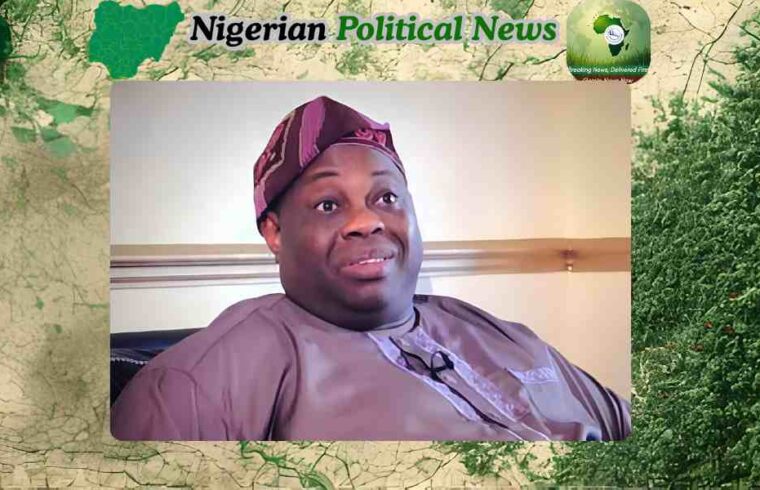
Those are among the questions raised by chieftain of the African Democratic Congress (ADC), Dele Momodu, as he criticised the government’s handling of the subsidy policy and its approach to public borrowing.
Momodu also questioned what he described as an environment in which elected officials cannot easily be challenged or held to account.
Quick Takeaways
- Dele Momodu questioned the continued borrowing by President Bola Tinubu’s administration.
- He criticised the removal of fuel subsidy at the beginning of the administration.
- Momodu said the subsidy issue remains difficult to understand because, according to him, clear facts and figures have not been provided.
- He questioned why the current administration is still borrowing more than previous presidents, as he put it.
- Momodu also criticised what he described as a political environment where elected officials cannot easily be questioned.
- His comments were made during an appearance on Arise Television’s Prime Time.
Key Players
Dele Momodu is a chieftain of the African Democratic Congress and the publisher of Ovation Magazine. He is the principal political voice behind the criticism contained in the report.
President Bola Tinubu is the subject of Momodu’s questions over the administration’s borrowing and its handling of the fuel subsidy issue.
The controversy therefore centres on the government’s economic decisions and the extent to which those decisions can be examined and questioned by citizens and political stakeholders.
Background
Fuel subsidy removal became one of the defining economic decisions of President Tinubu’s administration from its beginning.
According to the article, Momodu argued that the announcement brought difficult news to Nigerians from the first day of the administration and that the country had not recovered from the consequences.
He also questioned the transparency surrounding the subsidy itself.
According to Momodu, Nigerians have not been given sufficient facts and figures concerning the cost of the subsidy before its removal, making it difficult for the public to fully understand the basis of the policy.
His comments were made during an appearance on Arise Television’s Prime Time on Thursday.
What Momodu Said
Momodu criticised the manner in which the subsidy removal was announced, saying that bad news should not be delivered on a day intended for celebration.
He argued that the subsidy issue remained difficult to understand because, in his view, the public had not been given adequate facts and figures.
He also raised a separate question concerning government borrowing, asking why the current administration was still borrowing more than previous presidents.
Momodu further argued that Nigerians should be able to question elected officials about major government decisions.
He described the situation as resembling a dictatorship, saying that people were unable to question those elected by Nigerians.
Accountability Watch
The concerns raised by Momodu touch on two important areas of public accountability: government borrowing and transparency over major economic policies.
On borrowing, Momodu’s question is whether the scale of government borrowing can be adequately justified and explained to the public. However, the supplied article does not provide comparative borrowing figures to independently establish his claim that the Tinubu administration is borrowing more than every previous president.
On subsidy, Momodu argues that the absence of clear facts and figures has made the policy difficult to assess.
The accountability issue therefore goes beyond whether subsidy removal was right or wrong. It also concerns whether citizens have access to enough information to understand the financial basis of such a major policy decision.
Similarly, government borrowing raises questions about how public debt is explained, what the borrowed funds are intended to achieve and how citizens can scrutinise those decisions.
Editorial Analysis
Momodu’s criticism brings together two issues that are central to public confidence in economic policymaking: transparency and accountability.
The removal of fuel subsidy was a major economic decision with broad consequences for Nigerians. For that reason, the availability of clear information about the former subsidy regime is important to any public assessment of the policy.
Momodu’s argument is that Nigerians should be able to see the facts and figures behind the subsidy before and after its removal.
His borrowing question raises a different but related issue. Borrowing by itself does not establish whether an administration is managing public finances well or badly. The significance depends on factors such as the amount borrowed, the purpose of the borrowing, the cost of servicing the debt and the results achieved with the funds.
The supplied article, however, does not provide those figures. It therefore supports reporting Momodu’s concern, but not independently concluding that his comparison with previous presidents is accurate.
What can be established from the article is that Momodu is demanding greater scrutiny of the administration’s economic decisions and questioning whether Nigerians have sufficient information to assess them.
Governance Impact
The issues raised have implications beyond the political disagreement between Momodu and the Tinubu administration.
Government borrowing concerns public finances and can affect how future governments allocate resources.
Fuel subsidy policy can also have a direct effect on households and businesses because changes in fuel prices can influence transportation and the cost of goods and services.
For citizens to properly assess such policies, they need access to credible information about government spending, borrowing and the financial assumptions behind major economic decisions.
The broader governance question is therefore whether major decisions affecting the public are accompanied by enough transparency for citizens, journalists, lawmakers and other stakeholders to scrutinise them.
Questions For Readers
The issues raised by Momodu leave several broader questions for public discussion:
- Should the government provide more detailed facts and figures about the former fuel subsidy regime?
- How should Nigerians judge whether government borrowing is justified?
- What information should citizens receive when major economic policies are introduced?
- How can elected officials be effectively questioned and held accountable without turning legitimate criticism into political confrontation?
- Should transparency over borrowing and major economic policies be treated as a basic requirement of democratic governance?
These questions move the discussion beyond the personalities involved and towards the broader issue of how economic decisions are explained and scrutinised in a democracy.
Final Editorial Wrap-Up
Dele Momodu’s intervention has placed government borrowing, fuel subsidy transparency and political accountability at the centre of his criticism of the Tinubu administration.
His comments raise questions about whether Nigerians have been given enough information to understand the financial basis of the former subsidy regime and whether government borrowing is being adequately explained.
However, the supplied article does not contain the comparative borrowing figures or independent financial evidence required to establish Momodu’s claim that the current administration is borrowing more than all previous presidents.
What remains clear from his remarks is his demand for greater scrutiny of government decisions and more transparent information about policies that have significant consequences for Nigerians.
The broader issue, therefore, is not simply Momodu’s criticism of Tinubu, but how effectively major economic decisions are explained, scrutinised and held accountable in the public interest.