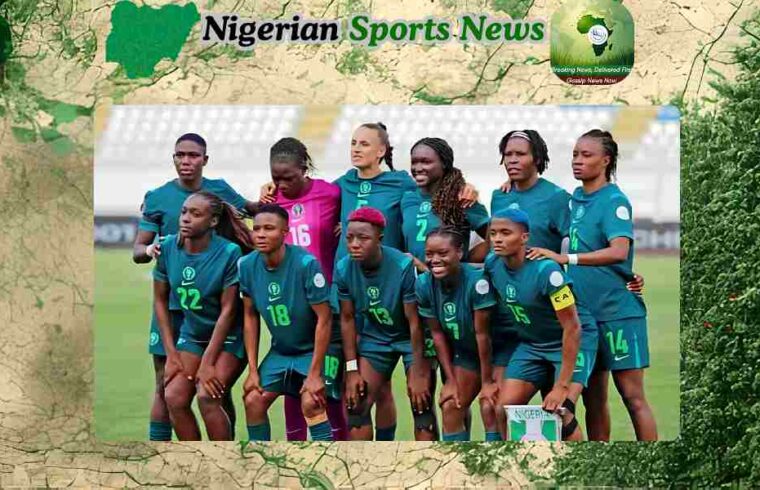
The Super Falcons will begin their bid to qualify for the 2028 Los Angeles Olympic Games with both legs of their second-round qualifying tie against Comoros scheduled to take place at the Remo Stars Stadium in Ikenne-Remo.
The Nigeria Football Federation (NFF) confirmed that the two matches will be played on October 9 and 13, giving Nigeria home advantage in its opening Olympic qualifying assignment.
The fixtures mark the beginning of what could be a four-round journey for the Super Falcons, with Nigeria needing to overcome successive two-legged knockout ties to secure one of Africa’s two available places at the Los Angeles Olympics.
Key Takeaways
- The Remo Stars Stadium will host both legs of Nigeria’s Olympic qualifying tie against Comoros.
- The matches are scheduled for October 9 and 13.
- Nigeria received a bye into the second round because of its ranking.
- The Super Falcons must negotiate four rounds of two-legged ties to qualify.
- Nigeria could face DR Congo or Morocco in the third round if it eliminates Comoros.
- Africa has two available places for the Olympic women’s football tournament.
- The NFF is working to appoint a coach before the October qualifiers.
- Thomas Dennerby is among those being considered, according to the source material, but no appointment has been confirmed.
- The Olympic campaign follows Nigeria’s disappointing 2026 WAFCON campaign and failure to qualify for the 2027 FIFA Women’s World Cup.
Nigeria’s Olympic Qualification Campaign Begins Against Comoros
Nigeria entered the second round after receiving a bye, having been ranked among the three highest-ranked teams in the competition.
Comoros, meanwhile, reached this stage after defeating Sudan 30-0 on aggregate, according to the information provided in the source material.
With both legs taking place at the Remo Stars Stadium, the Super Falcons will have the opportunity to play their opening qualifying tie on home ground.
The first meeting is scheduled for October 9, followed by the return fixture on October 13.
The Falcons Face Four Rounds On The Road To Los Angeles
Beating Comoros would only take Nigeria through the first stage of its Olympic qualification journey.
The Super Falcons must negotiate four rounds of two-legged knockout ties to secure qualification for the 2028 Olympic Games.
If Nigeria eliminates Comoros, the Falcons will advance to the third round, scheduled for February 23 to March 6, 2027.
At that stage, Nigeria could face either the Democratic Republic of Congo or Morocco.
Progress to the fourth round would then put the Falcons against one of Tunisia, Senegal, Benin Republic or Mali, with those matches scheduled between October 4 and 12, 2027.
The final qualifying round is scheduled for November 23 to December 4, 2027. Nigeria could potentially meet one of Guinea, Cameroon, DR Congo, Ivory Coast, Central African Republic, Algeria or Burkina Faso.
The pathway therefore leaves little room for error, with Nigeria required to navigate multiple knockout stages before reaching the Olympics.
Only Two African Places Are Available
The qualification campaign carries added significance because Africa has two available places for the women’s football tournament at the 2028 Los Angeles Olympics.
That means the Super Falcons cannot afford to focus only on the opening tie against Comoros. Every round represents another step toward securing one of those places.
For Nigeria, the immediate objective is straightforward: negotiate the October meetings with Comoros and keep the Olympic campaign moving into 2027.
The Falcons Could Start With A New Technical Crew
Another important issue surrounding the October qualifiers is the uncertainty over Nigeria’s technical setup.
The Super Falcons could begin their Olympic campaign under a new technical crew, with the NFF working to appoint a coach before the matches against Comoros.
Former Super Falcons coach Thomas Dennerby is among those being considered for the position, according to the source material.
Dennerby previously guided Nigeria to the quarter-finals of the 2019 FIFA Women’s World Cup and helped the team qualify for the 2020 Tokyo Olympics.
However, his possible return remains a consideration rather than a confirmed appointment.
Why The Coaching Situation Matters Before October
The coaching uncertainty follows the NFF’s decision in August to ask Justine Madugu and his technical crew to step aside after the Falcons’ disappointing campaign at the 2026 Women’s Africa Cup of Nations in Morocco.
Nigeria failed to defend its WAFCON title and also missed qualification for the 2027 FIFA Women’s World Cup.
Madugu had previously led the team to a record-extending 10th WAFCON title in 2025.
The prospect of another change to the technical setup therefore adds another layer to Nigeria’s preparations for the Olympic qualifiers.
National Sports Commission Director-General Bukola Olopade had also indicated in August that changes to the Falcons’ technical team could be considered ahead of the Olympic campaign.
“The Olympics are around the corner; we will see how we can tweak the technical team of the Falcons as we did for the U-23, which coach Eric Chelle will handle. This is because we are desirous of qualifying for the Olympics,” Olopade said in August.
His comments underline the importance being placed on Olympic qualification and the possibility of changes before the Falcons face Comoros.
Nigeria’s Olympic Bid Follows A Difficult Period
The Olympic qualification campaign comes after a challenging period for the Super Falcons.
Nigeria’s failure to retain the WAFCON title and its subsequent absence from the 2027 FIFA Women’s World Cup have increased the importance of the next major qualification campaign.
The Falcons now have another opportunity to respond on the international stage, although their immediate focus will be on navigating the Comoros tie.
The October fixtures will therefore provide the first indication of how Nigeria’s Olympic campaign begins, both competitively and under whatever technical structure the NFF settles on.
What The Comoros Tie Means For Nigeria
The two matches against Comoros represent the first hurdle in a long qualification route.
Nigeria’s advantage is that both legs will be played at the Remo Stars Stadium, while its higher ranking allowed the Falcons to enter the competition at the second round.
But progressing will still require Nigeria to successfully negotiate the two-legged tie before turning its attention to the subsequent rounds.
With only two African Olympic places available, every stage of the campaign will carry increasing significance.
Questions About The Super Falcons’ Olympic Qualifiers
Where will Nigeria play Comoros in the Olympic qualifiers?
Both legs of Nigeria’s second-round Olympic qualifying tie against Comoros will be played at the Remo Stars Stadium in Ikenne-Remo.
When will Nigeria play Comoros?
The two matches are scheduled for October 9 and October 13.
Why did Nigeria receive a bye into the second round?
Nigeria received a bye after being ranked among the three highest-ranked teams in the competition.
How many rounds must the Super Falcons pass to qualify for the Olympics?
Nigeria must negotiate four rounds of two-legged knockout ties to secure one of Africa’s two available Olympic places.
Who could Nigeria face after Comoros?
If Nigeria advances, the Falcons could face DR Congo or Morocco in the third round.
Could Nigeria have a new coach for the Comoros qualifiers?
Yes. The NFF is working to appoint a coach before the October qualifiers, while Thomas Dennerby is among those being considered according to the source material. His appointment, however, has not been confirmed.
Reader Discussion
- Do you think playing both legs against Comoros at Remo Stars Stadium gives the Super Falcons a significant advantage?
- How far do you expect Nigeria to go in the Olympic qualification campaign?
- Should the NFF make changes to the technical team before the October qualifiers?
- The Super Falcons’ road to Los Angeles 2028 will begin at the Remo Stars Stadium, but the October meetings with Comoros are only the first step in a demanding four-round qualification journey. With two African Olympic places available, Nigeria’s immediate task is to make the most of its home advantage and secure progress to the next stage.