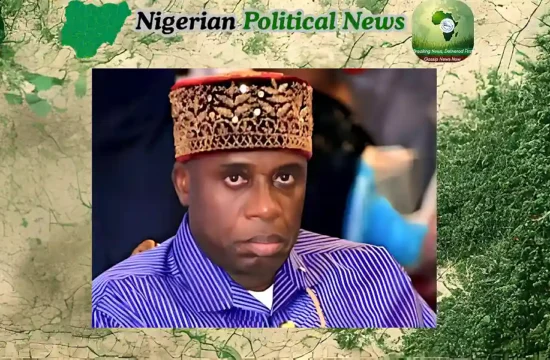
Director of the Abuja School of Social and Political Thought, Sam Amadi, has urged Nigerians to look beyond presidential policy promises when deciding which candidates to support, arguing that political commitment to the Nigerian people should be a major consideration ahead of the 2027 elections.
Amadi made the remarks during an appearance on Arise Television’s Prime Time, where he discussed the direction of President Bola Tinubu’s administration and the choices that could confront voters as the 2027 polls draw closer.
Key Takeaways
- Sam Amadi said Nigerians should not be guided solely by attractive policies presented by presidential candidates.
- He argued that policies can be changed, making the commitment of political leaders an important consideration.
- Amadi described President Bola Tinubu’s manifesto as very good but said Tinubu had governed outside its social-market philosophy.
- He said Tinubu now had little option but to continue with the policy direction his administration is pursuing.
- Amadi also linked the removal of fuel subsidy to increased pressure on the cost of living.
What Sam Amadi Said
According to Amadi, voters should examine the commitment of political candidates to the Nigerian people rather than being persuaded only by the policies contained in their manifestos.
He argued that political policies are capable of being revised after candidates assume office.
For Amadi, the more important issue is whether a political leader is genuinely committed to the people and is focused on finding ways for policies to work.
His comments came as political discussions around the 2027 general elections continue to take shape.
Amadi’s Key Argument
Amadi said Nigerians should be cautious about judging presidential candidates solely on the attractiveness of their proposed policies.
He maintained that policies can change, while the commitment of the person implementing them remains an important consideration.
“Nigerians should not be deceived by policy but vote for who has the commitment to the Nigerian people first.”
The statement formed part of Amadi’s broader argument about the difference between what political candidates promise in their manifestos and how they govern after taking office.
Tinubu’s Manifesto And Current Policy Direction
Amadi specifically addressed President Bola Tinubu’s manifesto, describing it as very good while arguing that the president has governed outside what he referred to as Tinubu’s social-market philosophy.
He said the current policy direction had effectively limited the president’s room to change course.
“Clearly, Tinubu has no option but to stick to where he was or where he is because that’s the policy he is running, and don’t expect him to shift.”
Amadi’s comments therefore focused on the relationship between a political manifesto, the philosophy behind it and the policies eventually pursued by an administration.
Background
The remarks were made against the backdrop of preparations and political discussions ahead of the 2027 elections.
Amadi’s comments also touched on the economic consequences of subsidy removal, particularly its relationship with the cost of living.
He acknowledged that the removal of the subsidy has had an inflationary effect, before raising the question of how the resulting pressure should be addressed.
“The key point here is, people feel that the subsidy removal has a dominant effect on the cost of living, no doubt, inflationary. And so, how do they deal with that?”
The supplied report does not provide further details on the specific measures Amadi believes should be adopted to address the issue.
Editorial Analysis
Amadi’s argument places emphasis on the difference between policy promises and political commitment.
His comments suggest that voters may encounter a distinction between the policies presented during an election campaign and the decisions eventually made once a candidate assumes office. That distinction is central to his warning against focusing exclusively on manifesto proposals.
His assessment of Tinubu also centres on policy consistency. While he acknowledged the quality of Tinubu’s manifesto, he argued that the president’s governance has moved outside the social-market philosophy he associated with that manifesto.
The supplied report does not independently establish whether Tinubu’s policies have departed from that philosophy. That characterization is Amadi’s assessment.
Similarly, his statement that Tinubu has no option but to continue with the current policy direction represents Amadi’s interpretation of the president’s position, rather than a documented statement from Tinubu in the supplied report.
Why It Matters
The issue is relevant to the political debate ahead of the 2027 general elections because Amadi’s comments focus attention on how voters assess candidates and their policy commitments.
His remarks also connect political decision-making with economic concerns, particularly the effect of subsidy removal on the cost of living.
However, the supplied report does not provide responses from the Presidency or Tinubu regarding Amadi’s assessment of the manifesto, the social-market philosophy or the claim that the current policy direction cannot easily be changed.
For that reason, those points remain attributed to Sam Amadi in this report.
Closing Perspective
Sam Amadi’s comments put the relationship between political promises, governing philosophy and policy implementation at the centre of his discussion ahead of the 2027 elections.
While he described Tinubu’s manifesto positively, he argued that the president’s governance has moved outside the philosophy he associated with it and said the administration would continue along its current policy path.
His remarks also highlighted the cost-of-living consequences he associates with subsidy removal, leaving the question of how those pressures should be addressed as part of the broader policy debate.