
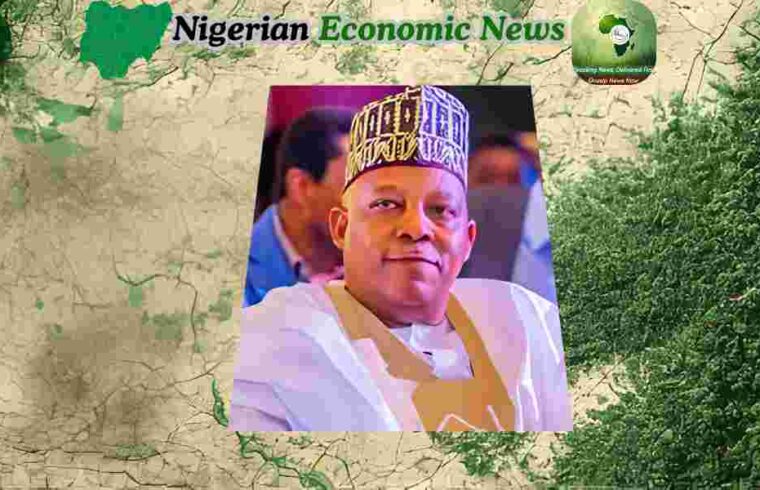
Vice President Kashim Shettima has shed more light on one of the most consequential economic decisions of the current administration, revealing that President Bola Tinubu intentionally kept his plan to remove fuel subsidy away from public scrutiny before assuming office.
Speaking during a gathering of state governors at the President’s private residence in Lagos as part of the Eid el-Kabir celebrations and activities marking the administration’s third anniversary, Shettima said the decision was carefully calculated long before the inauguration ceremony.
Fuel Subsidy Decision Was Deliberately Withheld
According to Shettima, the removal of fuel subsidy was not included in Tinubu’s prepared inaugural address because the President wanted to avoid pressure from individuals who might attempt to discourage him from implementing the policy.
The Vice President suggested that the decision had already been settled internally before the administration officially took office. In his view, maintaining secrecy around the plan ensured that the government could move forward without interference from competing interests.
Rather than presenting the policy as a last-minute choice, he described it as a strategic move that reflected determination and long-term planning.
Shettima Praises Tinubu’s Leadership Style
During his remarks, Kashim Shettima portrayed the subsidy removal decision as an example of decisive leadership.
He argued that difficult reforms often require leaders willing to take politically risky actions in pursuit of broader national objectives. For that reason, he credited President Tinubu with demonstrating resolve at a moment when many would have preferred a less controversial path.
The Vice President maintained that major transformations rarely occur without tough choices, particularly when governments are confronted with deep-rooted economic challenges.
Administration Defends Three Years of Economic Reforms
Beyond the issue of fuel subsidy, Shettima used the occasion to defend the administration’s economic agenda, insisting that the government inherited structural problems that demanded urgent attention.
He painted a picture of a nation facing longstanding economic contradictions and argued that gradual or cosmetic adjustments would not have been sufficient to address them.
According to him, the administration opted for difficult reforms because postponing major decisions would only have prolonged existing challenges.
Gossip News Now reports that the Vice President compared the government’s approach to rebuilding a weakened foundation rather than simply improving appearances, emphasizing that lasting solutions often require significant sacrifices.
A Vision Focused on Long-Term Outcomes
The Vice President further suggested that the administration’s policies should be viewed through the lens of long-term national development rather than short-term political convenience.
He explained that leadership sometimes requires embracing unpopular measures if they are considered necessary for future stability and economic growth.
In his assessment, the reforms initiated by the government represent an effort to reshape key sectors of the economy and create conditions for sustainable progress.
Tinubu’s Economic Strategy Continues to Spark Debate
Since the removal of fuel subsidy, public debate has remained intense, with supporters arguing that the policy was necessary to correct long-standing fiscal distortions, while critics point to the hardship experienced by many Nigerians following the decision.
The remarks by Shettima provide additional insight into the thinking behind the policy and highlight the administration’s belief that bold action was required at the beginning of its tenure.
As economic reforms continue, discussions around the impact of subsidy removal are likely to remain central to national conversations about governance and economic management.
Political and Economic Analysis
The disclosure by Kashim Shettima offers a rare glimpse into the strategic calculations that preceded one of Nigeria’s most significant economic policy shifts in recent years. By revealing that the decision was intentionally kept confidential, the Vice President has reinforced the administration’s narrative that subsidy removal was a carefully planned reform rather than a spontaneous announcement.
The comments also underscore how the government views leadership during periods of economic transition. Whether Nigerians ultimately judge the policy as successful will depend largely on the long-term effects of the broader reforms introduced alongside it. For now, the explanation provides further context for a decision that continues to shape political and economic discourse across the country.
© 2025 Gossip News Now, a division of CHIEJOS HARBIAN DIGITAL MEDIA LTD. Contact us via admin@gossipnewsnow.online