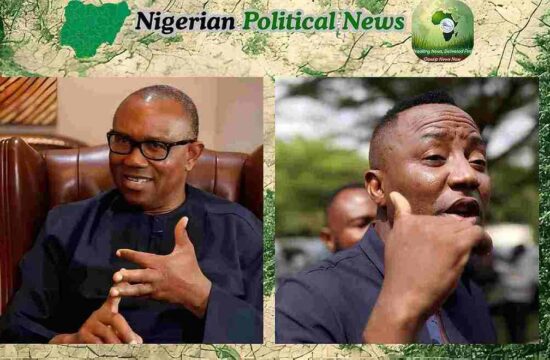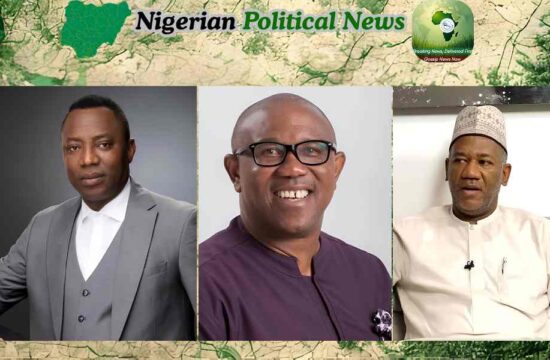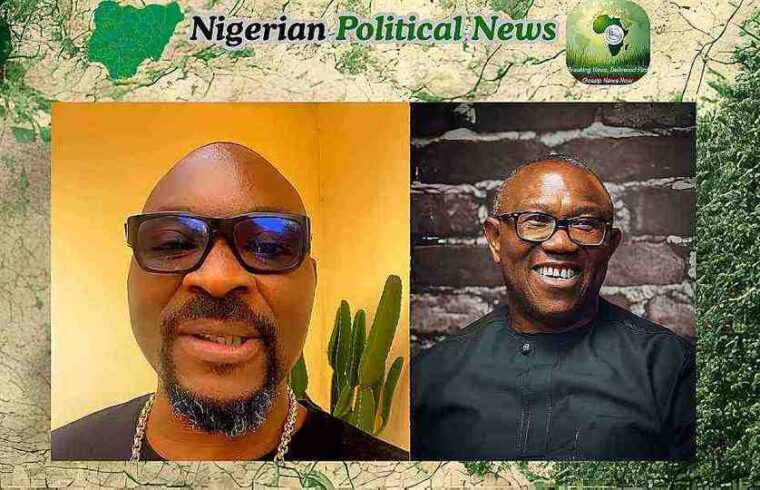
“Thugs for thugs, fire for fire, trouble for trouble,” businessman Isaac Fayose said while reacting to the reported attack on Peter Obi’s convoy in Benue State.
Fayose criticised Obi’s handling of the incident, arguing that the presidential candidate’s restrained approach could work against his ambition to win the 2027 presidential election.
At a Glance
- Peter Obi’s convoy was reportedly attacked by suspected thugs during a visit to Benue State.
- The visit was intended to enable Obi to sympathise with a community that had recently lost residents.
- Fayose criticised Obi for leaving Benue for Plateau State without completing his humanitarian mission.
- He argued that Obi’s “gentleman” approach could make it more difficult for him to compete politically.
- Fayose said a more confrontational strategy would be necessary to challenge President Bola Tinubu and the ruling All Progressives Congress (APC) in 2027.
Fayose’s Reaction
Reacting to the development in a video posted on his verified Facebook page, Fayose said he was disappointed by Obi’s decision to leave Benue for Plateau following the incident.
He argued that Obi had the right to travel to any part of Nigeria and should have completed the purpose of his visit despite the reported attack.
Fayose also linked the incident to the wider political challenge facing Obi ahead of the 2027 presidential election.
According to him, maintaining a purely gentlemanly approach to politics could leave Obi vulnerable to similar situations in the future.
Key Players
Peter Obi is at the centre of the controversy after his convoy was reportedly attacked during his visit to Benue State.
Isaac Fayose, a businessman, criticised Obi’s response to the incident and questioned his decision to leave Benue without completing his intended humanitarian visit.
President Bola Tinubu and the APC were referenced by Fayose in the context of the political challenge he believes Obi faces ahead of the 2027 presidential election.
The source material also refers to suspected thugs who allegedly attacked Obi’s convoy during the Benue visit.
The Different Positions
Fayose’s argument centres on the view that Obi should have remained in Benue and completed his humanitarian mission despite the reported attack.
He also believes Obi’s political temperament could become a disadvantage as the 2027 election approaches. Fayose described Obi as gentle and argued that other political actors could take advantage of that characteristic.
At the same time, the available article does not contain a direct response from Obi addressing Fayose’s criticism.
The material therefore establishes Fayose’s position in detail, but does not provide Obi’s own explanation for leaving Benue or his response to the comments.
What Fayose Said
Fayose said he was “highly disappointed” with Obi and questioned why the former Anambra State governor left Benue for Plateau without accomplishing his mission.
He maintained that Obi, as a Nigerian, had the right to travel anywhere in the country.
Fayose then framed the incident as part of the broader challenge of taking political power from Tinubu and the APC.
His most confrontational remark was his call for a reciprocal response to political violence, saying: “If they bring thugs, we bring our own thugs. Thugs for thugs, fire for fire, trouble for trouble.”
He warned that, in his view, continuing to play what he described as a “gentleman’s game” could hurt Obi’s electoral prospects.
The Benue Incident
The comments followed a reported attack on Obi’s convoy during his visit to Benue State.
According to the original report, Obi had travelled to the state to sympathise with a community that had recently lost residents.
The incident disrupted the visit, after which Obi left Benue for Plateau State. Fayose’s criticism is based largely on the decision to leave the state before completing the humanitarian purpose of the trip.
The source describes those involved in the incident as suspected thugs and does not provide further verified details about their identity or affiliations.
Questions Still Unanswered
Several issues remain unclear from the available account.
The source does not establish who organised the alleged attack on Obi’s convoy or what motivated those responsible.
It also does not provide an official account explaining the circumstances surrounding the incident.
Similarly, there is no direct response from Obi in the supplied material addressing Fayose’s criticism or explaining his decision to leave Benue for Plateau.
These distinctions are important because Fayose’s political interpretation of the incident should not be presented as an established fact.
Political Analysis
The dispute highlights a broader question about how political candidates respond when their movements or campaign activities are disrupted.
Fayose’s criticism is built around the idea that political resilience requires a willingness to confront opposition rather than withdraw from a difficult situation. His argument connects Obi’s conduct in Benue with the larger question of how the politician presents himself to voters ahead of 2027.
The significance of the criticism, therefore, goes beyond the immediate incident. Fayose is effectively challenging the political value of Obi’s restrained public image and arguing that a more forceful approach would be necessary to compete for power.
However, the source material does not establish that a more confrontational strategy would improve Obi’s electoral prospects. That remains Fayose’s political assessment.
Political Implications
Fayose’s remarks introduce a debate over the kind of political strategy opposition figures may adopt as preparations for the 2027 presidential election continue.
His comments also place Obi’s public image under scrutiny, particularly the perception of him as a relatively restrained or gentlemanly political figure.
The argument has a wider dimension because Fayose explicitly connected Obi’s response to the challenge of defeating Tinubu and the APC. His remarks therefore turn a specific incident in Benue into a discussion about electoral strategy and political competitiveness.
The available material, however, does not establish how Obi intends to respond to such criticism or whether his political strategy will change as the 2027 election approaches.
Political Significance
The Benue incident has become politically significant not only because Obi’s convoy was reportedly attacked, but because the response has prompted a debate over the type of political approach required to compete for power.
Fayose’s criticism presents a sharp contrast between political restraint and confrontation, arguing that Obi’s gentlemanly image could become a disadvantage.
His comments therefore add another dimension to the emerging political debate around Obi and the 2027 presidential contest, while the underlying circumstances of the Benue incident remain subject to the information available from the reported account.