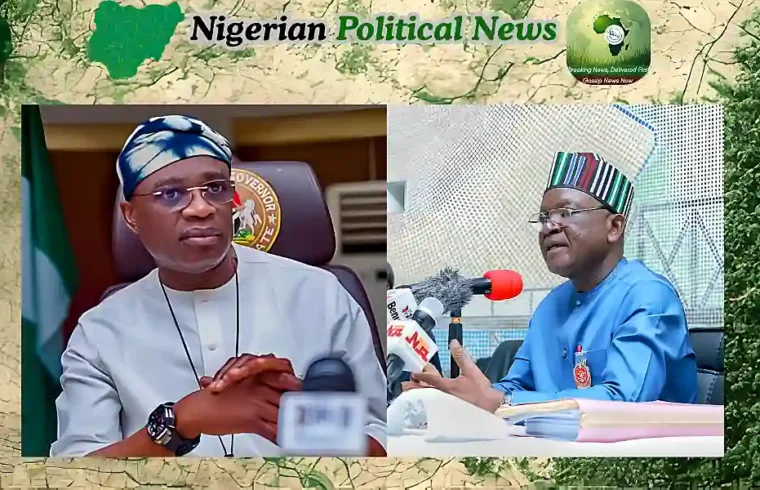
Governor Hyacinth Alia and allies of former Benue State Governor Samuel Ortom have presented sharply different assessments of the current administration’s record, bringing questions about development, accountability and the 2027 governorship election into the political spotlight.
Alia’s camp says the projects, economic reforms and investment initiatives of the administration will form part of his case for re-election, while Ortom’s camp is demanding an explanation of how increased Federation Account allocations to the state and its 23 local government areas have been used.
Why It Matters
The disagreement goes beyond competing claims about government performance.
As Benue approaches the 2027 election cycle, the administration’s development record and its handling of public resources are likely to remain central to the political debate. Alia is pointing to projects and economic initiatives as evidence of progress, while his critics are questioning the government’s accountability over its financial inflows.
Both positions remain political claims made by the respective camps.
What Happened?
Alia, through his Chief Press Secretary, Kula Tersoo, said his administration’s work across Benue would speak for itself when voters assess his performance in 2027.
The governor also dismissed attacks from opposition groups as political distractions, urging them to allow his administration to concentrate on governance and development.
One of the initiatives highlighted by Alia’s camp is the recent signing of a Memorandum of Understanding with Hudson Global Ltd, which the state government says is expected to attract a $5 billion investment into Benue.
The administration also pointed to road construction in rural and urban areas, payment of salaries and gratuities, improved welfare for workers, care for senior citizens and the establishment of the Food Basket Bakery.
Alia’s camp further said the government had strengthened accountability and transparency in the management of state resources. The administration also claimed that reforms had helped restore Benue to creditworthy status and improve the state’s investment environment.
The Two Sides Of The Political Argument
The dispute became sharper after former governor Samuel Ortom raised questions about the amount of money received by Benue through the Federation Account Allocation Committee (FAAC) since the removal of the fuel subsidy.
Ortom’s media consultant and former adviser on media and publicity, Terver Akase, presented the former governor’s concerns during a news conference in Makurdi.
According to Akase, the state government and the 23 local government areas had received about ₦1.2 trillion from FAAC from 2023 to date, and Benue residents deserved an explanation of how the funds had been utilised.
The criticism focused particularly on projects carried out with the increased revenue and what Ortom’s camp described as a lack of visible government presence across some local government areas.
Alia’s administration, on the other hand, has maintained that its record provides grounds for its performance claims and has pointed to infrastructure, investment and economic reforms as evidence of its activities in office.
Key Players
Hyacinth Alia: The Benue governor whose administration’s performance has become central to the dispute and whose camp is presenting its projects and reforms as part of the case for another term.
Samuel Ortom: The former governor who has raised questions about the use of the state’s increased FAAC revenues under the Alia administration.
Kula Tersoo: Alia’s Chief Press Secretary, who issued statements defending the governor’s record and responding to criticism from the former administration.
Terver Akase: Ortom’s media consultant and former adviser on media and publicity, who presented the former governor’s concerns about revenue and accountability.
What They Said
Alia’s administration described the state’s economic prospects as the result of measures taken since it assumed office.
On the Hudson Global agreement, the governor’s statement said:
“Just a few days ago, the state government signed a Memorandum of Understanding (MoU) with Hudson Global Ltd to attract a $5bn investment aimed at transforming Benue’s economic landscape.”
The statement also cited road construction, salary and gratuity payments and the Food Basket Bakery as developments the administration said were visible to residents.
Ortom’s camp took a different position, with Akase questioning how the reported ₦1.2 trillion in FAAC allocations had been spent.
“What projects have been executed with those resources?”
Akase also questioned why, in his view, some local government areas remained without visible government presence despite the revenue inflows.
The competing statements place development performance and financial accountability at the centre of the political disagreement.
Background To The Dispute
The latest exchange follows continuing political disagreements between the Alia administration and figures associated with the previous government led by Ortom.
Alia’s camp has defended its record by highlighting infrastructure projects, economic initiatives and changes in the management of state resources.
Ortom’s camp has instead focused on accountability, particularly the increase in federal allocations following the removal of the fuel subsidy.
The ₦1.2 trillion figure cited by Ortom’s camp refers, according to Akase, to allocations received by the state government and the 23 local government areas from FAAC between 2023 and the time of his statement.
The supplied material does not provide an independent breakdown verifying that figure or detailing how the funds were spent. The figure and the accompanying questions should therefore remain attributed to Ortom’s camp.
What This Means Politically
The dispute gives the 2027 political contest in Benue two competing narratives.
For Alia’s administration, the emphasis is on visible projects, economic reforms, investment prospects and improved financial management. The governor’s camp is effectively presenting these areas as measures by which his performance should be judged.
For the opposition and critics of the administration, accountability over public revenue provides a different basis for assessing the government’s record.
That difference could shape political messaging as the next governorship election approaches. The debate is therefore not only about individual projects but also about what evidence voters will consider most important when assessing the administration’s performance.
The claims from both sides, however, remain positions advanced by their respective political camps rather than independently established findings in the material provided.
Political Significance
The disagreement between Alia’s administration and Ortom’s camp places governance performance and accountability at the heart of Benue’s emerging 2027 political conversation.
Alia is relying on his administration’s development projects and economic initiatives to defend its record, while Ortom’s camp is demanding greater clarity over the use of public funds.
How those competing narratives develop could become an important part of the political debate ahead of the 2027 governorship election. For now, the central contest is over which account of the administration’s record—development achievements or questions about financial accountability—will carry greater weight in Benue’s political discourse.