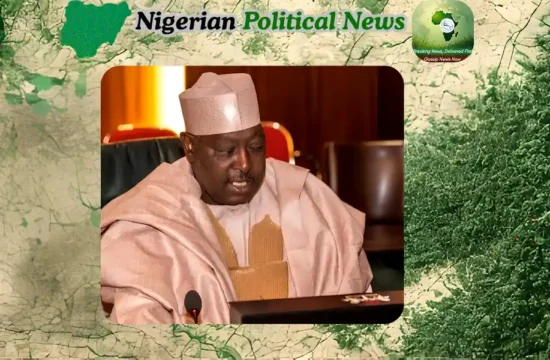
Former Secretary to the Government of the Federation, Babachir Lawal, has accused Aisha Binani, the Nigeria Democratic Congress (NDC) governorship candidate in Adamawa State, of backing African Democratic Congress (ADC) presidential candidate Atiku Abubakar amid a dispute over Lawal’s position within the NDC.
Lawal made the allegation in a statement published on his official Facebook page on Monday.
At a Glance
- Babachir Lawal accused Aisha Binani of being behind opposition to his appointment as the NDC’s leader in the North-East.
- Lawal alleged that Binani was supporting Atiku Abubakar rather than the NDC presidential ticket of Peter Obi and Rabiu Kwankwaso.
- Six NDC governorship candidates in the North-East reportedly rejected Lawal’s appointment and said they did not recognise him in the position.
- Lawal described the protest as a “charade” and said the matter should be handled by the party’s national leadership.
- He said he neither requested nor received a formal offer for the leadership position before it was announced.
What Happened?
The dispute followed reports that six NDC governorship candidates in the North-East had rejected Lawal’s appointment as the party’s leader in the region.
The candidates were reported to have said they did not recognise Lawal in the position, describing their decision as collective, firm and final.
Lawal responded to the development in a post on his official Facebook page.
In the statement, he alleged that the protest was being organised by a female candidate whom he identified as a contender for the Adamawa governorship position.
Lawal also alleged that Binani was behind the opposition and accused her of supporting Atiku rather than the NDC presidential ticket involving Obi and Kwankwaso.
He further said governorship candidates in Gombe and Taraba states had contacted him to distance themselves from the statement rejecting his appointment.
The Positions In The Dispute
The six NDC governorship candidates are reported to have rejected Lawal’s appointment and said they did not recognise him as the party’s leader in the North-East.
Lawal, however, dismissed the protest as a “charade” and said he was not concerned about the opposition to his appointment.
He maintained that the issue should be handled by the national leadership of the party, which he said was responsible for bringing him into the NDC.
The supplied report does not contain a direct response from Binani to Lawal’s allegation that she organised the protest or supported Atiku.
It also does not contain a direct response from Atiku or the NDC national leadership to those claims.
Key Players
Babachir Lawal is the former Secretary to the Government of the Federation who recently joined the NDC and is at the centre of the dispute over the regional leadership position.
Aisha Binani is identified in the report as the NDC governorship candidate in Adamawa State and is the person Lawal accused of backing Atiku and being behind the protest.
Atiku Abubakar is the ADC presidential candidate whom Lawal alleged Binani was supporting.
Peter Obi and Rabiu Kwankwaso are referenced by Lawal in connection with the NDC presidential ticket and his explanation of why he accepted the leadership appointment.
What Lawal Said About His Appointment
Lawal said he neither requested the regional leadership position nor received a formal offer for it before the announcement was made.
He said he accepted the appointment in good faith because of his respect for Senator Dickson, Peter Obi and Kwankwaso.
“No formal offer was made to me, nor did I request to be so appointed before the announcement was made.”
Lawal said he regarded the appointment as a mark of respect to the political figures he mentioned and said he could not turn it down.
He also maintained that the national leadership that recruited him into the party should deal with the dispute over the appointment.
What Is Confirmed And What Remains An Allegation?
The report establishes that there was a dispute over Lawal’s appointment and that six NDC governorship candidates in the North-East were reported to have rejected his position.
However, the claims that Binani organised the protest and that she was backing Atiku instead of the NDC presidential ticket are allegations made by Lawal.
Those claims should therefore remain attributed to him.
Similarly, Lawal’s statement that candidates in Gombe and Taraba contacted him to distance themselves from the protest is presented in the supplied material as his account and is not independently confirmed within the article.
Political Implications
The dispute highlights disagreement within the NDC over Lawal’s role in the party’s North-East structure and the political alignments being attributed to some of its members.
Lawal’s accusation also brings the party’s internal disagreement into the wider contest involving the NDC and the political figures associated with its presidential ticket.
However, the material available does not establish Binani’s position independently of Lawal’s allegation, nor does it provide responses from the other political actors named in the dispute.
The immediate issue therefore remains a disagreement over Lawal’s appointment alongside competing claims about the political positions of those involved.
Verify Before Sharing
The claims surrounding Lawal’s appointment and the alleged political loyalties of individual NDC figures should be distinguished from positions that have been directly confirmed by the people or organisations concerned.
In particular, Lawal’s allegations about Binani’s role in the protest and her alleged support for Atiku remain attributed claims in the material available for this report.
Final Editorial Wrap-Up
The dispute over Babachir Lawal’s role in the NDC’s North-East structure has produced competing positions from party figures, with Lawal accusing Aisha Binani of backing Atiku Abubakar and being behind opposition to his appointment.
Lawal has rejected the significance of the protest and said the party’s national leadership should handle the matter, while also explaining that he accepted the leadership position despite not having formally sought it.
For now, the allegations concerning Binani’s role and political alignment remain claims attributed to Lawal, with no direct response from Binani included in the supplied material.