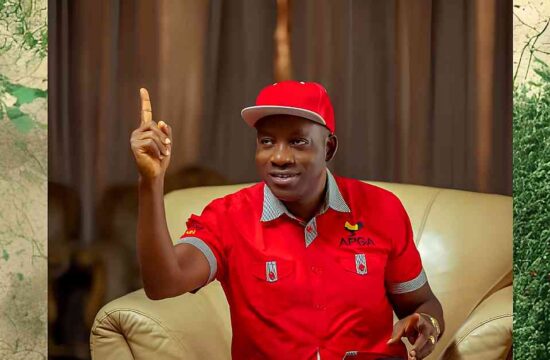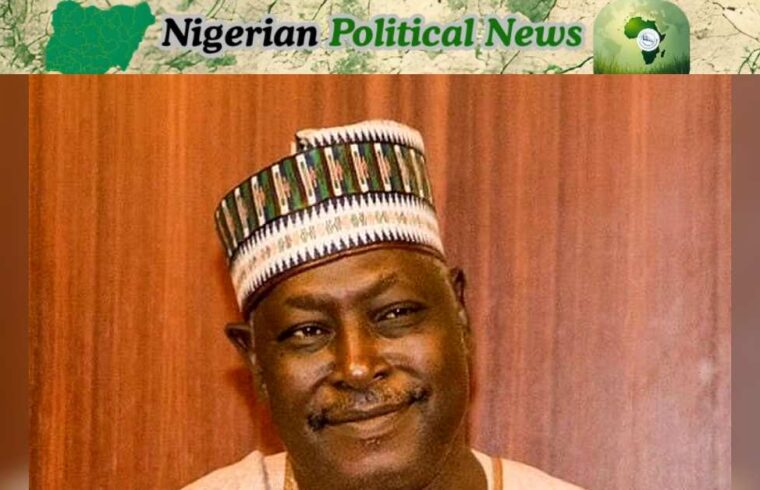
Former Secretary to the Government of the Federation, Babachir Lawal, has predicted that Peter Obi will win Nigeria’s 2027 presidential election, expressing confidence that the political circumstances that shaped the 2023 contest will not be repeated.
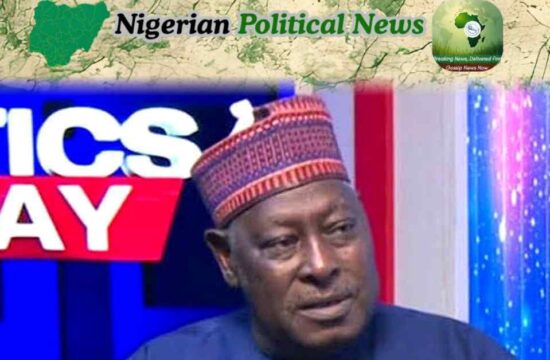
Lawal made the prediction during an interview on Channels Television’s Politics Today on Friday. He argued that Obi would secure the geographical spread he believes was missing from the former Anambra State governor’s performance in the last presidential election.
The former SGF also predicted that Obi would win Kogi, Benue and Plateau states, while claiming that former Vice President Atiku Abubakar would finish third in his home state of Adamawa.
In Brief
- Babachir Lawal believes Peter Obi will win the 2027 presidential election.
- He argues that the 2023 election should have proceeded to a runoff.
- He expects Obi to secure broader geographical support in 2027.
- He predicts that Obi will win Kogi, Benue and Plateau states.
- He also forecasts a poor performance for Atiku Abubakar in Adamawa.
- Lawal praised Obi’s character and leadership qualities and discussed his own possible role in an Obi-led government.
Lawal’s Argument About the 2023 Election
Explaining why he believes the next presidential election will produce a different outcome, Lawal revisited the 2023 contest and questioned the way the results were interpreted.
He maintained that Obi received the largest share of votes but did not achieve the required geographical spread, while Bola Tinubu secured the spread despite finishing behind Obi in his interpretation of the results.
Lawal argued that the election should therefore have proceeded to a runoff.
“Peter got the majority of votes; he didn’t get the spread. Bola Tinubu got the spread and came second. There should have been a runoff in that election,”
— Babachir Lawal, former Secretary to the Government of the Federation, speaking on Channels Television’s Politics Today.
What the Official 2023 Election Figures Show
The official presidential election results declared by the Independent National Electoral Commission (INEC) provide an important point of reference for understanding Lawal’s comments.
The declared national vote totals were:
| Presidential candidate | Official votes | Position |
|---|---|---|
| Bola Ahmed Tinubu | 8,794,726 | First |
| Atiku Abubakar | 6,984,520 | Second |
| Peter Obi | 6,101,533 | Third |
The figures show that Tinubu received the highest number of votes, followed by Atiku and then Obi.
Lawal’s argument about the geographical spread requirement is separate from the official ranking of candidates by total votes. His statement that Obi received the majority of votes does not match the declared national totals.
His assertion that the election should have gone to a runoff should also be understood as his interpretation of the 2023 electoral outcome, rather than an official declaration that a runoff was required.
Why Lawal Believes Obi Will Perform Better in 2027
Looking ahead to the next presidential election, Lawal expressed confidence that Obi would overcome the geographical spread challenge he identified in 2023.
He predicted that the former Anambra governor would secure victories in Kogi, Benue and Plateau states. He also suggested that Obi would attract sufficient support across the country to improve his electoral performance.
Lawal put particular emphasis on Adamawa State, where Atiku Abubakar has a strong political connection.
“I give it to you that Peter didn’t have more spread. This time, Peter will get the spread in Nigeria.”
— Babachir Lawal, former Secretary to the Government of the Federation.
He further predicted that Atiku would struggle to retain his political advantage in his home state.
“Atiku will come third in Adamawa State this time around,”
— Babachir Lawal, speaking during the interview on Politics Today.
Lawal also argued that Atiku would not have sufficient ethnic support to secure the presidency. His comments form part of his personal assessment of the political calculations that could influence the 2027 contest.
These state-level expectations remain predictions. The eventual outcome will depend on voters, party organisation, candidates, campaign activities and the electoral process.
Lawal Explains Why He Supports Peter Obi
Beyond his expectations about the election results, Lawal offered an assessment of the qualities he believes make Obi suitable for the presidency.
He described Obi as a person with integrity, a national outlook and an understanding of business and economic issues.
Lawal also praised what he regarded as Obi’s consistency and willingness to stand by his words.
“First of all, he is incorruptible. Second, he is detribalised. Third, he is a businessman that understands market forces. And fourth, he is a man who sticks to his words,”
— Babachir Lawal, explaining why he believes Nigerians would support Peter Obi.
The comments reflect Lawal’s personal assessment of Obi. They represent his reasons for supporting the politician and should not be treated as independently established findings about any candidate.
When asked whether Obi had made any promise to him in exchange for his support, Lawal dismissed the suggestion.
“No, he doesn’t need to.”
— Babachir Lawal, responding to a question about whether Peter Obi had promised him anything.
Lawal Discusses His Possible Role in an Obi Government
Lawal also spoke about what he would do if Obi eventually won the 2027 presidential election.
The former SGF, who said he was 72 years old, explained that he would prefer to return to his agricultural activities rather than pursue another government appointment.
He said he had a 4,000-hectare farm where he grows cash crops and raises livestock, adding that he would be comfortable watching the country’s progress from there.
Asked whether he would accept a position in an Obi administration, Lawal suggested that an opportunity could instead be given to his son.
“I’m 72 years old. I have a 40-year-old son. What is wrong if Peter says, ‘I’m going to make you Minister of Agric,’ and I say Peter, instead, give my son Minister of Agric. Is that wrong? In those days when we were young, that’s how things were done,”
— Babachir Lawal, discussing a possible ministerial appointment in an Obi-led government.
His response suggested that he was more interested in returning to his farm than seeking another political appointment.
Fact Check: What Is Established and What Remains a Prediction?
Lawal’s interview contains a mixture of historical claims, political opinions and forecasts about the next presidential election. These should be considered separately.
Established election information: INEC’s declared 2023 presidential results placed Bola Tinubu first with 8,794,726 votes, Atiku Abubakar second with 6,984,520 and Peter Obi third with 6,101,533.
Lawal’s interpretation: His argument that the 2023 election should have gone to a runoff is his position on the election. It should not be presented as an official electoral determination.
2027 predictions: His expectations that Obi will win Kogi, Benue and Plateau, secure the required geographical spread and win the presidential election are forecasts, not confirmed outcomes.
Atiku’s prospects: The prediction that Atiku will finish third in Adamawa is also Lawal’s assessment, not an established result.
Obi’s personal qualities: Lawal’s descriptions of Obi as incorruptible and detribalised are his opinions and should remain attributed to him.
Editorial Analysis: What Lawal’s Prediction Means for 2027
Lawal’s remarks highlight the importance of geographical spread, political support across different parts of Nigeria and the ability of presidential candidates to build a nationwide electoral coalition.
His assessment suggests that he believes Obi’s prospects in 2027 will depend partly on improving his performance beyond the areas where he secured support in the previous election.
The predictions about Kogi, Benue, Plateau and Adamawa also demonstrate how state-level expectations are becoming part of the political conversation ahead of the next presidential contest.
However, predicting victories in individual states is not the same as demonstrating that a candidate has secured the support needed to win nationally. Party organisation, campaign strategy, voter turnout, alliances and the conduct of the election will all matter.
Lawal’s confidence in Obi therefore represents one political perspective in an election whose eventual outcome remains uncertain. His comments provide an indication of how some political actors are assessing the contest, but they do not establish what voters will decide in 2027.
Frequently Asked Questions
1. What did Babachir Lawal say about Peter Obi and the 2027 election?
Babachir Lawal predicted that Peter Obi would win the 2027 presidential election, arguing that the political circumstances of the 2023 contest would not be repeated.
2. Why does Babachir Lawal believe Peter Obi will win in 2027?
Lawal believes Obi will secure the geographical spread he says was missing in 2023 and gain support across more parts of the country.
3. Which states does Lawal predict Peter Obi will win?
He specifically predicted that Obi would win Kogi, Benue and Plateau states.
4. What did Lawal predict about Atiku Abubakar in Adamawa?
Lawal predicted that Atiku would finish third in Adamawa State during the 2027 presidential election.
5. What were the official results of the 2023 Nigerian presidential election?
INEC declared Bola Tinubu the winner with 8,794,726 votes. Atiku Abubakar received 6,984,520 votes, while Peter Obi received 6,101,533 votes.
6. Did Babachir Lawal say Peter Obi promised him a political appointment?
No. When asked whether Obi had promised him anything, Lawal said that Obi did not need to make such a promise.
7. Would Babachir Lawal accept a ministerial appointment in an Obi government?
Lawal suggested that he would rather return to his 4,000-hectare farm and allow his son to be considered for a possible Minister of Agriculture position.
Final Editorial Wrap-Up
Babachir Lawal’s prediction adds another perspective to the growing political conversation surrounding Nigeria’s 2027 presidential election. His confidence in Peter Obi is based on his expectation that the former Anambra governor will attract wider geographical support than he did in 2023.
His comments about Kogi, Benue, Plateau and Adamawa also show the importance he attaches to state-level electoral performance. Nevertheless, these remain political forecasts rather than established outcomes.
As political parties and their supporters continue preparing for the next election, the strength of their candidates, campaign strategies and ability to secure votes across the country will be central to the contest. The final decision, however, will rest with Nigerian voters.