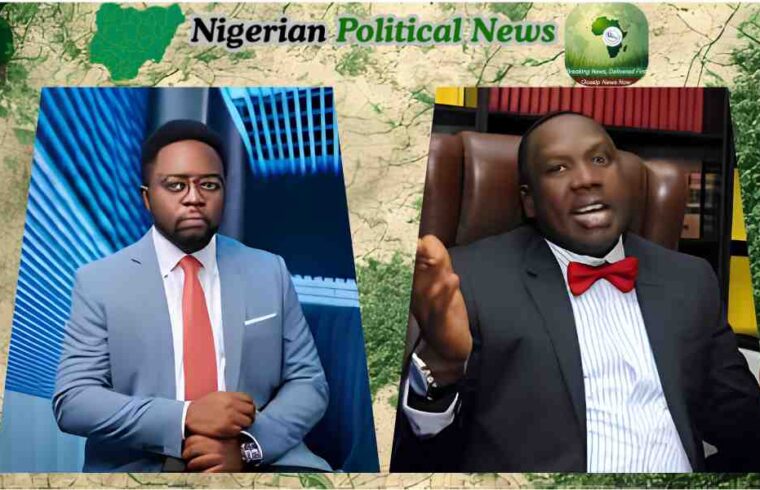
A fresh exchange between the Presidency and the media has emerged after Presidential spokesperson Daniel Bwala accused Channels Television anchor Seun Okinbaloye of applying double standards in political interviews. The criticism came after Okinbaloye’s interview with Peter Obi, with Bwala insisting that national conversations should be centred on governance and the Tinubu administration’s performance rather than opposition politics.
Bwala Criticises Channels TV Presenter Over Peter Obi Interview
Special Adviser on Policy Communication to President Bola Tinubu, Daniel Bwala, has accused Channels Television presenter Seun Okinbaloye of displaying bias in the way he conducts political interviews.
The latest criticism followed Okinbaloye’s interview with Peter Obi, presidential candidate of the Nigerian Democratic Congress (NDC), during which the former Anambra State governor discussed national issues and criticised several policies of the Tinubu administration.
According to Bwala, the interview reflected a different standard from the one applied when government officials appear on the programme.
Presidential Aide Alleges Double Standards
Bwala, who had previously been questioned by Okinbaloye over comments he made about Tinubu before joining the current administration, argued that the broadcaster abandoned his usual probing approach during Obi’s appearance.
Expressing his reaction on his 𝕏 account, the presidential aide accused the television host of failing to challenge the opposition figure with difficult questions.
He wrote:
“Again as predictable, the interviewer with double standards turned up as a massage therapist, no balls, no grit, no creativity, no data, and no click bait, yet the interviewee sounded boring with no substance.
“A thousand media surrogates cannot market him. If e didn’t Dey e didn’t Dey.”
Bwala’s remarks have added another chapter to the ongoing debate over impartiality in political broadcasting and whether interviewers subject public officials and opposition politicians to the same level of scrutiny.
Shifts Attention to Opposition Politics
Beyond his criticism of the television interview, Bwala also used the opportunity to question the priorities of Nigeria’s opposition parties.
Speaking during an appearance on Channels Television’s Politics Today, he described the opposition as “jobless,” arguing that it had become preoccupied with political narratives instead of issues affecting ordinary Nigerians.
According to him, citizens are more interested in the government’s efforts to improve security, strengthen the economy and enhance educational opportunities than in partisan exchanges.
“The opposition is jobless, allow the opposition to keep lazying about. Nigerians want to hear what is happening to their lives,” Bwala said.
He maintained that the Tinubu administration has continued to make measurable progress in critical sectors despite sustained criticism from political opponents.
Bwala Highlights US Recognition of Tinubu
As part of his defence of the administration, Bwala pointed to a recent letter sent by United States President Donald Trump to President Bola Tinubu.
According to the presidential aide, the correspondence demonstrates growing cooperation between Nigeria and the United States under Tinubu’s leadership.
The letter, referenced in a statement issued by the President’s Special Adviser on Information and Strategy, Bayo Onanuga, reportedly praised Tinubu’s efforts in tackling terrorism and insecurity, particularly attacks on Christian communities.
Bwala argued that the diplomatic recognition deserved greater public attention than it had received.
He questioned why discussions surrounding the letter had been overshadowed by political disagreements despite what he described as its significance for Nigeria’s international relations.
Calls for Greater Focus on Governance
The presidential spokesman insisted that Nigerians are more concerned about the practical impact of government policies than ongoing political disputes.
He said citizens want to see continued improvements in economic conditions, education and national security, adding that these are the issues that should dominate public discourse.
According to Bwala, the administration’s growing international partnerships and security collaboration are indicators of progress that deserve wider recognition.
Political Debate Extends Beyond Media Criticism
While Bwala’s criticism began with allegations of bias against a television presenter, his comments evolved into a broader defence of the Tinubu administration and a criticism of the opposition’s approach to national politics.
The exchange reflects continuing tensions between government officials, opposition figures and the media as debates over governance, accountability and public perception continue to shape Nigeria’s political landscape.
Key Takeaways
- Daniel Bwala accused Seun Okinbaloye of applying double standards during political interviews.
- The criticism followed Peter Obi’s interview on Channels Television.
- Bwala claimed the broadcaster failed to subject Obi to the same level of scrutiny applied to government officials.
- The presidential aide described Nigeria’s opposition as “jobless” and urged greater attention to governance issues.
- He also cited a letter from US President Donald Trump praising President Bola Tinubu as evidence of strengthening diplomatic and security cooperation between Nigeria and the United States.
Questions for Readers
- Do you believe political interviewers should apply the same level of scrutiny to both government officials and opposition leaders?
- Should government achievements receive more attention in public discourse than political disagreements?
- How important is media neutrality in strengthening democratic accountability in Nigeria?
What are your thoughts on this development? Share your views in the comments and join the conversation on Gossip News Now.