FIFA is considering another major expansion of the FIFA World Cup, with plans that could increase the number of participating nations from 48 to 64 for the tournament scheduled in 2030.
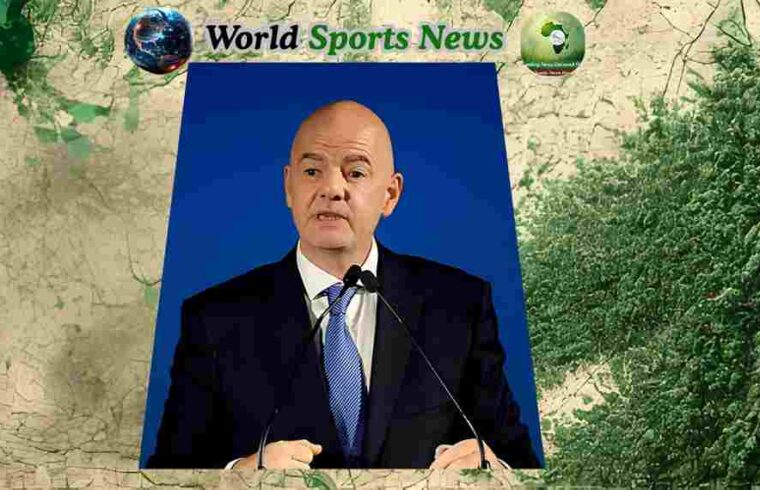
The proposal was disclosed by FIFA President Gianni Infantino, who explained that football’s governing body intends to review the idea after the conclusion of the current World Cup as part of its long-term strategy to broaden global participation in the sport.
Fresh Expansion Proposal Emerges
The proposed increase follows FIFA’s earlier decision to expand the competition from 32 teams to 48 teams beginning with the 2026 World Cup, making it the largest edition ever organized.
According to Gossip News Now, the expanded 2026 tournament features significantly more participating countries and a larger fixture schedule, increasing the total number of matches from 64 to 104.
Infantino believes the success of the new format has strengthened arguments for giving even more nations the opportunity to compete on football’s biggest stage.
Infantino Explains Why More Teams Should Participate
The FIFA president argued that the World Cup should continue evolving beyond its traditional dominance by football powerhouses from Europe and South America.
He maintained that expanding qualification opportunities would inspire developing football nations to invest more heavily in youth development, domestic leagues and national team programmes.
In a reworded statement, Infantino suggested that countries with realistic chances of qualifying are more likely to improve their football structures than nations that repeatedly miss out on the tournament.
Growth Could Benefit Emerging Football Nations
Supporters of the proposal believe a larger World Cup would encourage stronger investment in football across every continent.
Potential benefits highlighted include:
- Greater opportunities for emerging football nations to qualify.
- Increased investment in grassroots football and youth academies.
- More international exposure for developing football countries.
- Additional qualification places across FIFA’s continental confederations.
- Improved global competitiveness through broader participation.
Infantino also pointed to performances under the expanded format, noting that teams from different regions have become increasingly competitive by winning matches, scoring goals and earning valuable points against established football nations.
World Cup Has Continued to Evolve
The structure of football’s biggest tournament has changed considerably over the years.
From 1998 until the 2022 World Cup in Qatar, the competition featured 32 national teams. FIFA later approved the expansion to 48 participants for the 2026 edition, introducing a substantially larger tournament.
Should the proposed 64-team model receive approval, the 2030 FIFA World Cup would become the largest tournament in the competition’s history, surpassing every previous edition in both participating nations and overall match schedule.
Six Nations to Stage 2030 Tournament
The centenary edition of the FIFA World Cup will be unique not only because of its possible expansion but also because of its unprecedented hosting arrangement.
To celebrate 100 years since the inaugural tournament, matches will be shared across six countries spanning three continents.
The host nations include:
- Uruguay
- Argentina
- Paraguay
- Morocco
- Portugal
- Spain
As part of the anniversary celebrations, Uruguay, Argentina, and Paraguay are each expected to stage an opening match, recognizing South America’s historic role in launching the competition in 1930, when Uruguay hosted and won the first-ever World Cup.
The remaining fixtures are scheduled to take place across Morocco, Portugal, and Spain, creating the first World Cup to be organized across Africa, Europe, and South America simultaneously.
Approval Process Still Ahead
Despite growing discussion around the proposal, FIFA has not yet reached a final decision.
The governing body is expected to carefully examine the sporting, financial and logistical consequences of expanding the tournament before presenting the proposal to its decision-making bodies for consideration.
Only after those evaluations and approvals would the 64-team format become official for the 2030 FIFA World Cup.
Analysis: Expansion Could Reshape International Football
The proposed expansion, if it takes place, would be one of the largest changes to the World Cup in history. Additional countries joining the tournament would provide new possibilities to the other emerging football nations and extend the commercialisation and global appeal of the competition.
But the plan also is likely to spark questions about the tournament format, safety of players and travel arrangements. With the push to include more, FIFA will still have to preserve the prestige and competitiveness that has defined the World Cup for decades.
© 2025 Gossip News Now, a division of CHIEJOS HARBIAN DIGITAL MEDIA LTD. Contact us via admin@gossipnewsnow.online.