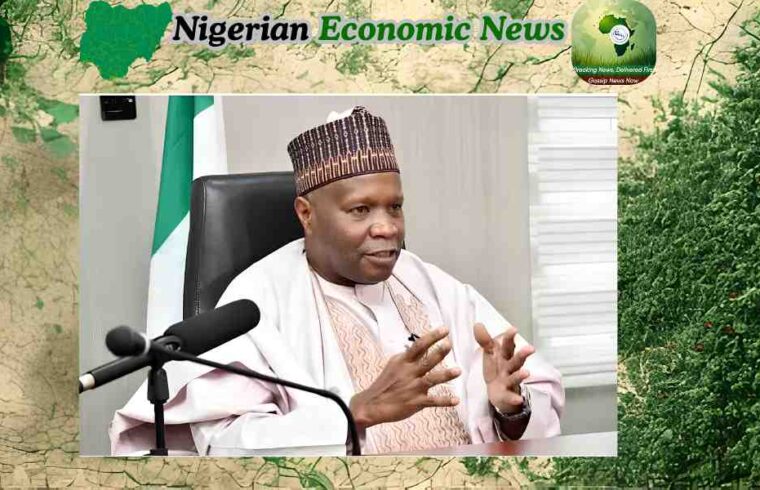
The North-East has recorded progress in infrastructure, energy and regional development, but security concerns continue to limit the pace of recovery, according to Gombe State Governor Inuwa Yahaya.
Yahaya, who chairs the North-East Governors’ Forum, said Boko Haram had been weakened but remained capable of threatening communities across the region.
He made the remarks on Saturday during the 13th meeting of the North-East Governors’ Forum in Maiduguri, Borno State, where governors reviewed the region’s progress and unresolved challenges.
Key Takeaways
- Inuwa Yahaya said Boko Haram has been weakened but not defeated.
- He said insecurity, banditry and communal conflicts remain major challenges for the North-East.
- Many people displaced by insurgency have yet to return to their communities, according to the governor.
- Yahaya highlighted infrastructure, energy, transport, broadband and natural-resource development as major regional priorities.
- He called for stronger implementation and accountability to ensure government decisions produce tangible improvements.
- The governor said poverty, unemployment, illiteracy, drug abuse and illegal mining also require sustained attention.
The Security Challenge Remains Central
Yahaya’s assessment was that the security situation has improved in some respects but remains unresolved.
“Boko Haram has been weakened but not defeated, and we still see attacks on our communities. Banditry and communal clashes are emerging as new threats,” he said.
The governor also expressed concern about people who remain displaced because security conditions have not yet given them enough confidence to return home.
That issue adds a human dimension to the region’s development challenge, as communities cannot fully benefit from infrastructure, education, healthcare and economic opportunities when insecurity continues to affect where people can live and work.
Why Development and Security Are Closely Connected
Yahaya’s remarks placed security alongside a wider list of development challenges confronting the six North-East states.
He said the region had made progress in areas including infrastructure, energy, economic development, education, healthcare and security. At the same time, he argued that several longstanding problems remained unresolved.
Among the priorities he identified were the Mambilla hydropower project, railway connectivity to the North-East and the expansion of broadband infrastructure.
The governor also called for the Kolmani oil exploration project to move beyond its potential stage into actual production, employment and revenue generation.
His position was that the region’s natural resources should contribute to development rather than become sources of funding for criminal activity.
“Our solid minerals must be mined legally and for the benefit of our people, not to fund criminality,” Yahaya said.
Infrastructure Gaps Remain a Major Regional Priority
Several of the issues raised at the meeting concerned the infrastructure needed to connect the North-East more effectively and support economic activity.
Yahaya cited the proposed Port Harcourt-Jos-Bauchi-Maiduguri railway corridor, strategic road projects and broadband expansion among the initiatives requiring continued attention.
He also highlighted the rehabilitation of the Dikwa-Gamboru Ngala and Bama-Banki roads, as well as the adoption of the Akwanga-Jos-Bauchi-Gombe-Biu-Maiduguri highway as a legacy road project.
Taken together, the projects reflect the governors’ broader emphasis on connectivity.
Better road, rail and digital infrastructure can improve access between communities and markets, while energy development can support wider economic activity. In this case, however, Yahaya’s comments also show that infrastructure development is being pursued alongside the unresolved security situation.
Energy, Oil and Other Economic Opportunities
Energy featured prominently in Yahaya’s review of the region.
He said the Dadinkowa Hydropower Plant was supplying electricity to the national grid and noted that the new electricity framework had created opportunities for states to pursue renewable-energy projects.
The governor also returned to the potential of the Kolmani oil exploration project and the exploration opportunities around the Lake Chad Basin.
His argument was that these resources should eventually translate into tangible outcomes for residents, including production, jobs and government revenue.
The emphasis is therefore not simply on discovering or possessing natural resources, but on converting them into productive economic activity.
Regional Cooperation Has Become a Key Strategy
Yahaya also reflected on why the six North-East states established their governors’ forum in the first place.
He said the governors initially came together because the challenges facing the region extended beyond the capacity of individual states.
“When we first met in Gombe, we did so out of necessity. The challenges confronting our region were greater than any one state could solve alone,” he said.
According to Yahaya, insurgency, banditry, cross-border crime, infrastructure deficits, energy shortages and the humanitarian crisis do not stop at state boundaries.
That, he argued, makes regional cooperation necessary.
The forum has subsequently developed structures including a permanent secretariat, technical committees and sectoral groups intended to improve coordination among the six states.
Projects the Governors Say Have Moved Forward
Yahaya pointed to several initiatives that he said demonstrate the forum’s efforts to coordinate development across the region.
These include joint presentations of strategic road projects to the Federal Government, alongside proposals involving rail transportation and natural-resource exploration.
He also cited the rehabilitation of key roads and progress in the energy sector.
The governors have further revived the North-East Trade Fair and developed plans for a regional airline through a N30bn financing arrangement involving the six states, according to Yahaya.
These initiatives indicate the forum’s attempt to approach regional development collectively rather than through isolated state-level projects.
The Human Cost of Unresolved Challenges
Despite the progress highlighted by the governor, Yahaya acknowledged that significant problems remain.
He pointed specifically to children who are still out of school and health indicators that he described as among the weakest in the country.
“We must be honest with ourselves and with our people. The challenges we set out to confront in 2020 have not gone away,” he stated.
His comments suggest that measuring progress cannot be limited to the number of projects announced or completed.
The more immediate test is whether residents experience improvements in security, education, healthcare, employment, infrastructure and living conditions.
Poverty, Unemployment and Illegal Mining Remain Concerns
Yahaya also identified several social and economic problems that he said could contribute to insecurity.
These include:
- poverty;
- unemployment;
- illiteracy;
- drug abuse; and
- illegal mining.
He called for stronger efforts to address these issues while encouraging governors to examine community-based security initiatives that have been implemented in some states.
The governor’s argument links the region’s security concerns with broader development challenges, although the supplied statement does not provide specific figures measuring the contribution of each factor to insecurity.
What the Governors Need to Deliver Next
The next stage, according to Yahaya, should focus on implementation and accountability.
He urged the governors to strengthen mechanisms that ensure decisions taken by the forum translate into tangible improvements for residents.
That means the region’s priorities will increasingly be judged not only by announcements but by whether projects advance and whether their intended benefits reach communities.
Security will also remain an important part of that equation.
For displaced residents to return, businesses to operate and development projects to deliver their full potential, the security concerns identified by Yahaya will need continued attention.
Future Watch: Security, Infrastructure and Implementation
The North-East Governors’ Forum now faces the challenge of sustaining cooperation while turning its stated priorities into measurable results.
Key areas to watch include the region’s security situation, the return of displaced residents, progress on major transport and energy projects, development of the Kolmani oil opportunity, broadband expansion and efforts to combat illegal mining.
Yahaya also called for the forum’s achievements to be protected from changes in government by ensuring that future administrations continue the regional cooperation already established.
The coming period will therefore test whether the forum can convert its collective plans into lasting improvements across the six states.
Frequently Asked Questions
Is Boko Haram defeated in the North-East?
According to Governor Inuwa Yahaya, Boko Haram has been weakened but has not been defeated. He said attacks on communities still occur and that other security threats have also emerged.
What other security threats did Yahaya identify?
He mentioned banditry and communal clashes as additional threats facing communities in the North-East.
Why are some displaced residents yet to return?
Yahaya attributed the continued displacement to lingering security concerns that have prevented many people from returning to their communities.
Which major infrastructure projects did Yahaya highlight?
He mentioned the Mambilla hydropower project, railway connectivity to the North-East, broadband expansion and several strategic road projects.
What did Yahaya say about the Kolmani oil project?
He called for the project to move from potential to actual production, employment and revenue generation.
Why was the North-East Governors’ Forum established?
Yahaya said the six states came together because many of the region’s challenges crossed state boundaries and could not be effectively addressed by individual states acting alone.
What does Yahaya want the governors to do next?
He called for stronger implementation and accountability mechanisms so that decisions made by the forum result in tangible improvements for residents.
Conclusion
Governor Inuwa Yahaya’s assessment presents the North-East as a region where progress and unresolved challenges exist at the same time.
Boko Haram may have been weakened, according to the governor, but the continuing threat, alongside banditry and communal conflict, remains a barrier to full recovery.
At the same time, the region has a broad development agenda covering transport, energy, digital connectivity, natural resources, trade, education and healthcare.
The central challenge now is implementation. For the North-East Governors’ Forum, the effectiveness of its regional strategy will ultimately be measured by whether its plans translate into greater security, stronger infrastructure and tangible improvements in the lives of residents.
What do you think should be the North-East’s biggest priority right now — security, infrastructure, jobs or social development? Share your thoughts in the comments.
© 2025 Gossip News Now, a division of CHIEJOS HARBIAN DIGITAL MEDIA LTD. Contact us via admin@gossipnewsnow.online.