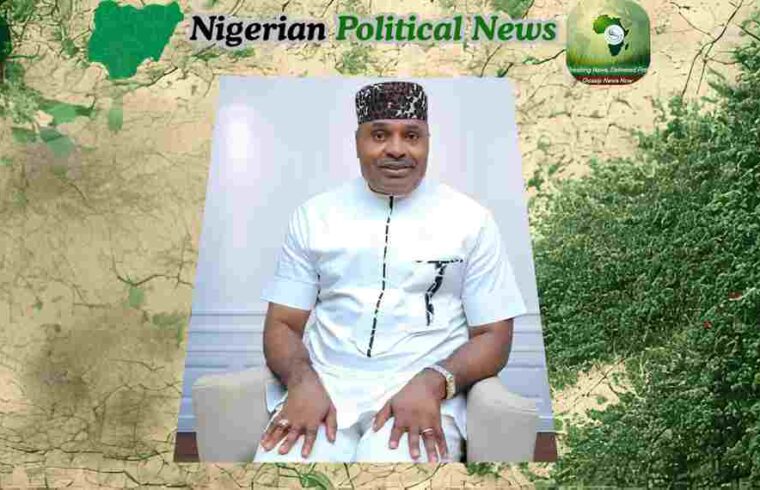
ADC Chieftain Defends Selection of Rotimi Amaechi as Vice Presidential Candidate
A prominent member of the African Democratic Congress (ADC), Kenneth Okonkwo, has explained why the party did not choose a vice presidential candidate from Nigeria’s South-East to run alongside Atiku Abubakar in the build-up to the 2027 presidential election.
Political developments news today reveal that , speaking during an interview on Channels Television, Okonkwo said that although he personally favoured the South-East producing the party’s running mate, legal and political realities made such an outcome impossible.
Electoral Law Limited South-East Options
According to Kenneth Okonkwo, the provisions of the Electoral Act 2026 played a major role in determining who was eligible for consideration.
He explained that anyone seeking to contest under the platform of the ADC was required to have been a registered member of the party at least 21 days before its primary election. Based on that requirement, many of the South-East politicians he would have preferred were not qualified for consideration.
The ADC chieftain stressed that his earlier comments supporting a South-East vice presidential candidate reflected a geopolitical position rather than support for any particular individual.
Peter Obi’s Departure Changed the Political Equation
Kenneth Okonkwo further argued that the exit of former Anambra State governor Peter Obi from the ADC significantly altered the political landscape within the party.
He noted that Peter Obi’s departure left the South-East without a clear rallying point, creating uncertainty at a crucial stage of the party’s preparations for the 2027 election.
As a result, the leadership had to consider other political factors while finalising its ticket.
Why Rotimi Amaechi Emerged
Responding to suggestions that he opposed the emergence of former Minister of Transportation, Rotimi Amaechi, Okonkwo dismissed the claim.
He maintained that Amaechi became the party’s legitimate choice after receiving substantial support during the presidential primary, making it politically difficult to overlook his supporters.
According to Gossip News Now, Okonkwo argued that sidelining a candidate who attracted hundreds of votes during the primary could have weakened party unity ahead of the general election.
Call for Better Engagement With South-East Leaders
Although he accepted the reasons behind the final decision, Kenneth Okonkwo said the party could have handled the situation differently.
He suggested that the ADC leadership should have held direct discussions with stakeholders from the South-East before announcing the vice presidential candidate.
In his view, such consultations would have allowed party leaders in the region to properly explain the circumstances to their supporters and minimise misunderstandings.
Okonkwo Praises Atiku Abubakar’s Response
The former spokesperson also disclosed that Atiku Abubakar was outside Nigeria when the initial announcement regarding the party’s ticket was made.
He explained that upon returning to the country, the former Vice President immediately initiated consultations and encouraged dialogue among party stakeholders before allowing the process to move forward.
Okonkwo described the decision as an example of Atiku Abubakar’s commitment to democratic consultation and consensus-building within the party.
Analysis: ADC Faces Delicate Balancing Act Ahead of 2027
The explanation offered by Kenneth Okonkwo highlights the difficult balancing act confronting the ADC as it prepares for the 2027 presidential election. While legal requirements under the Electoral Act 2026 may have narrowed the party’s options, regional expectations remain a sensitive issue capable of influencing political support.
Going forward, the party’s ability to maintain unity across Nigeria’s geopolitical zones may depend not only on candidate selection but also on effective communication with stakeholders. How the ADC manages those relationships could play a significant role in strengthening its chances ahead of the next general election.