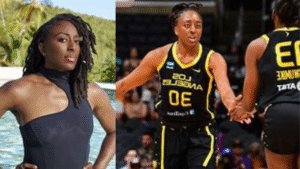
The possibility of Nneka Ogwumike representing Nigeria in international basketball has officially come to an end after the latest ruling from FIBA closed the door on her years-long eligibility battle.
For several years, the veteran Seattle Storm star had pursued an opportunity to suit up for Nigeria’s women’s national basketball team, D’Tigress, hoping to honor her family roots on one of the sport’s biggest stages. However, after multiple attempts and appeals, the outcome remained unchanged.
FIBA sports updates gathered by GNN news Nigeria disclose that the experienced forward, now 35, confirmed she has accepted the final verdict and is moving forward despite the disappointment. Her efforts to switch national team allegiance stretched back to the period following the Tokyo Olympics, but every application ultimately failed to gain approval.
Why FIBA Rejected the Request
According to regulations governing international basketball eligibility, athletes who have previously represented one nation in major competitions face significant restrictions when attempting to compete for another country.
In the case of Nneka Ogwumike, her previous appearances for Team USA in international tournaments became a major obstacle. Basketball authorities maintained that existing rules prevented her nationality switch under the circumstances presented.
Timing issues reportedly added further complications. Some of the applications submitted during the process did not align with required eligibility windows, creating additional hurdles despite support from American basketball officials regarding her desire to explore the change.
A Personal Mission Beyond Basketball
For Nneka Ogwumike, the quest was about more than sporting opportunities. The WNBA veteran repeatedly expressed a strong connection to her Nigerian heritage and a desire to represent the country of her family’s origin.
Reflecting on the latest decision, she indicated that earlier disappointments had already prepared her mentally for the possibility of another rejection. While she remained hopeful until the final review, she acknowledged that the outcome was ultimately beyond her control.
Her comments also suggested frustration with a system she believes can make it difficult for athletes with multicultural backgrounds to reconnect with their heritage through international competition.
Different Outcomes for Other Players
The eligibility debate extended beyond Nneka Ogwumike alone.
Another player, Elizabeth Williams, also failed in her effort to gain approval. Meanwhile, Chiney Ogwumike, Nneka’s sister, received a different outcome because of variations in her international basketball history.
The contrasting decisions highlighted how complex and highly technical FIBA’s eligibility regulations can become, especially when players have represented different national programs during various stages of their careers.
Earlier Choices That Shaped the Journey
One of the more revealing aspects of the story involved decisions made years before the current appeals process.
Nneka Ogwumike explained that she once considered obtaining a Nigerian passport earlier in life. However, concerns about how such a move might affect her future with Team USA reportedly influenced her decision at the time.
Looking back, that choice became one of several factors that eventually shaped her complicated path toward international eligibility.
Nigeria’s Growing Basketball Reputation
The rise of D’Tigress on the global stage has brought increased attention to Nigeria’s women’s basketball program.
Following impressive performances in major international competitions and a historic Olympic campaign, the team has earned growing respect worldwide. As Nigeria’s reputation continues to expand, some observers have questioned whether the nation’s increasing competitiveness has intensified scrutiny surrounding eligibility applications.
While no evidence has been presented to suggest this influenced the ruling, the discussion has remained part of the broader conversation surrounding the case.
Analysis: What the Decision Means for International Sports
The situation involving Nneka Ogwumike has reignited debate about nationality rules across international sports.
Supporters of the current system argue that strict regulations are necessary to preserve competitive balance and prevent frequent nationality changes. Others believe modern sports governance should evolve to reflect the realities of athletes who possess strong ties to multiple countries.
Gossip News Now recalls that similar debates have surfaced across different sports as more athletes seek opportunities to represent nations connected to their family history, cultural identity, or birthplace.
The case of Nneka Ogwumike illustrates the ongoing tension between regulatory frameworks and personal identity. While governing bodies prioritize consistency and fairness, athletes often view national representation as an expression of heritage rather than simply a competitive decision.
Looking Ahead
Although her dream of competing for Nigeria has ended, Nneka Ogwumike hopes her experience will encourage further discussion about how eligibility policies are applied.
Her journey may not have produced the outcome she wanted, but it has generated important conversations about identity, representation, and the future of international basketball regulations. As those discussions continue, her story is likely to remain a notable example in the wider debate over athlete nationality rules around the world.
© 2025 Gossip News Now, a division of CHIEJOS HARBIAN DIGITAL MEDIA LTD. Contact us via admin@gossipnewsnow.online