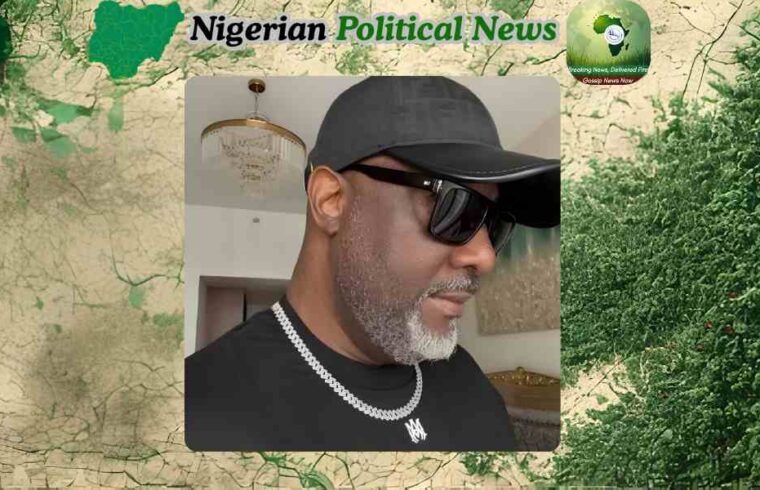
African Democratic Congress (ADC) chieftain Dino Melaye has claimed that many voters collected money allegedly spent by the All Progressives Congress (APC) during the just-concluded Osun State governorship election but still voted according to their conscience.
Melaye made the claim in a post on his Facebook page on Monday while reflecting on the outcome of the election and its possible lessons ahead of the 2027 general elections.
Melaye’s Main Claim
According to Melaye, the APC allegedly spent ₦70 billion in an effort to secure 444,816 votes during the Osun election, which he also claimed involved rigging.
He argued that the spending did not necessarily determine how voters cast their ballots.
“The implication is that more people collected APC money and voted for their conscience,” Melaye said.
He used the claim to argue that voters should not necessarily allow financial inducements to determine their choice at the ballot box.
His 2027 Message
Melaye said Nigerians should learn from what he described as the lesson of the Osun election and apply it during the 2027 elections.
“2027, collect APC money and vote your conscience. APC till we meet again,” he said.
His statement therefore moves beyond his assessment of the Osun election and presents a message about how he believes voters should approach future elections.
What The Claim Means
Melaye’s argument is that campaign spending or alleged financial inducements do not automatically guarantee that voters will support the party providing them.
However, his claims about the amount allegedly spent by the APC, the number of votes obtained and alleged rigging are Melaye’s assertions. The material provided does not independently establish those claims.
The same applies to his interpretation of how voters who allegedly received money ultimately voted.
Electoral Concerns
The remarks also touch on wider concerns surrounding the influence of money in Nigerian elections.
If campaign spending or financial inducements are used to influence voters, questions can arise about electoral integrity and whether voters are able to make their choices freely.
At the same time, claims about vote-buying, spending and rigging require evidence and verification rather than being treated as established facts solely on the basis of a political statement.
Why It Matters For 2027
Melaye’s comments are significant because he is presenting the Osun election as a lesson that voters could apply during the 2027 general elections.
His message suggests that accepting an inducement, where it occurs, does not necessarily mean surrendering one’s choice at the ballot box.
Whether that interpretation accurately reflects broader voter behaviour, however, cannot be established from Melaye’s statement alone.
A Question For Voters
Melaye’s comments raise a broader question about elections and voter independence:
Can voters accept campaign inducements and still vote according to their preferred candidate, or does such spending influence electoral choices?
That question is likely to remain part of wider discussions about money, voter behaviour and electoral integrity ahead of 2027.
Key Takeaways
- Dino Melaye claimed the APC spent ₦70 billion during the Osun governorship election.
- He alleged that the spending was aimed at securing 444,816 votes and also referred to rigging.
- Melaye claimed many people collected APC money but voted according to their conscience.
- He urged Nigerians to apply what he described as the lesson of Osun during the 2027 elections.
- His claims about the spending, vote procurement and rigging remain allegations from Melaye and are not independently established by the material provided.
Note: I excluded the paragraph about Melaye’s separate allegations against former PDP officials, as recommended, because it concerns a different interview, different individuals and a different political story. Including it would break the single-story architecture required by the editorial guides.