Key Takeaways
- Sam Amadi wants the Federal Government to tackle corruption and inefficiency before deciding whether fuel subsidies are necessary.
- The government announced a 30-day petrol discount on fuel dispensed by NNPCL.
- Amadi expressed support for Peter Obi’s approach to addressing corruption and improving efficiency before reassessing subsidies.
- Amadi argued that stronger fiscal capacity has not necessarily improved conditions for ordinary Nigerians.
- The economic effects of the petrol discount and the eventual direction of subsidy policy remain unresolved in the supplied report.
Sam Amadi Says Corruption Must Be Addressed Before Subsidy Decisions
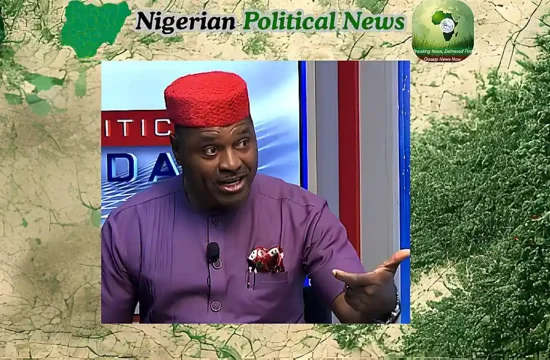
The Federal Government should tackle corruption and improve efficiency before deciding whether fuel subsidies are necessary, according to Sam Amadi, Director of the Abuja School of Social and Political Thought.
Amadi made the argument while discussing Nigeria’s fuel subsidy debate and the government’s recently announced petrol discount proposal, which has attracted reactions from different quarters.
His position centres on the need to address corruption and inefficiency before determining whether subsidies should form part of the country’s fuel pricing policy.
NNPCL Petrol Discount Triggers Fresh Debate
The debate followed an announcement by Taiwo Oyedele, Minister of Finance and Coordinating Minister of the Economy, that the Federal Government was offering a discount on petrol dispensed by the Nigerian National Petroleum Company Limited (NNPCL) for 30 days.
The proposal generated reactions across the country, including accusations from some critics that the initiative was intended to serve as a campaign strategy ahead of the 2027 general elections.
Those allegations form part of the wider political debate surrounding the government’s approach to fuel pricing.
Why Amadi Supports Peter Obi’s Approach
Speaking during an interview on Arise Television on Sunday, Amadi expressed support for the Nigeria Democratic Congress (NDC) presidential candidate, Peter Obi, whose proposal prioritises tackling corruption and inefficiency before reassessing the need for fuel subsidies.
Amadi argued that increased fiscal capacity had not necessarily translated into improved living conditions for Nigerians.
“Tackle corruption first before talking about subsidies. Fiscal buoyancy has not translated into ease for the people,” he said.
He also contrasted the positions taken by President Bola Tinubu and former Vice President Atiku Abubakar on fuel subsidy policy.
“President Bola Tinubu removed the subsidy, saying it was bad, while Atiku says he will bring it back. The previous subsidy was corrupt,” Amadi stated.
His comments underline his view that the subsidy question should not be considered separately from concerns about corruption and the efficiency of public institutions.
Efficient Pricing Before Deciding on Subsidies
Amadi explained that Obi’s approach involves addressing corruption and inefficiency before assessing whether subsidies are needed.
“Peter Obi’s approach is to first address corruption and inefficiency, then see how that translates and assess the need for subsidies,” he said.
He added that he agreed with Obi’s emphasis on improving the performance of economic sectors and ensuring that prices are determined efficiently.
“I agree with Obi’s approach of making the sectors work better and ensuring efficient pricing first.”
The position places the effectiveness of economic management at the centre of the subsidy debate. Rather than treating the restoration or removal of subsidies as the only consideration, Amadi argues that the government should first address the governance and efficiency issues he identified.
What the Debate Leaves Unresolved
The discussion raises a broader policy question about how Nigeria should approach fuel pricing while addressing corruption, inefficiency and the financial implications of subsidy decisions.
The proposed 30-day petrol discount and Amadi’s comments represent different elements of the current debate. However, the supplied report does not establish what economic effects the discount will produce or whether the approach advocated by Amadi will lead to better outcomes.
The central issue in his argument remains whether improvements in governance and sector efficiency should come before any decision on the future role of fuel subsidies.
Frequently Asked Questions
What did Sam Amadi say about fuel subsidies?
Amadi argued that the Federal Government should address corruption and inefficiency before deciding whether fuel subsidies are necessary.
Why did Sam Amadi support Peter Obi’s proposal?
He supported Obi’s approach because it prioritises tackling corruption and inefficiency before assessing the need for subsidies.
What was the Federal Government’s petrol discount proposal?
According to the report, the government announced a discount on petrol dispensed by NNPCL for a period of 30 days.
What did Amadi say about Nigeria’s previous fuel subsidy?
Amadi described the previous subsidy as corrupt and argued that improving efficiency should be a priority.
Has the new petrol discount resolved the subsidy debate?
The supplied report does not establish that the discount has resolved the debate or demonstrate its economic impact. The questions of fuel pricing, efficiency and the role of subsidies remain under discussion.
Conclusion
Sam Amadi’s position is that Nigeria’s fuel subsidy debate should begin with tackling corruption and improving efficiency. His support for Peter Obi’s proposal places those issues ahead of a decision on whether subsidies should be introduced or restored. The wider policy debate now centres on how the government approaches fuel pricing while addressing the concerns raised about economic management.
What is your view? Should the Federal Government prioritise tackling corruption and inefficiency before considering fuel subsidies? Share your thoughts in the comments.
© 2025 Gossip News Now, a division of CHIEJOS HARBIAN DIGITAL MEDIA LTD. Contact us via admin@gossipnewsnow.online.