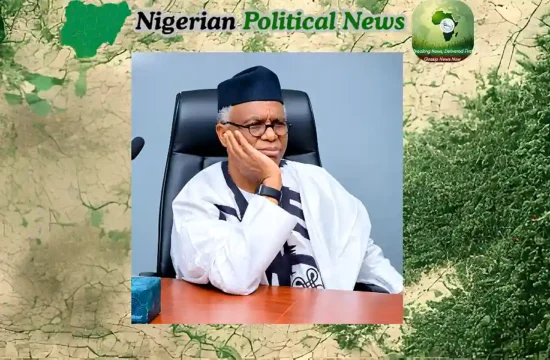
A fresh political dispute has emerged over Atiku Abubakar’s proposal to review the Nigerian Education Loan Fund (NELFUND), with President Bola Tinubu’s Special Assistant on Social Media, Dada Olusegun, accusing the African Democratic Congress (ADC) presidential candidate of making the promise for electoral gain.
Key Facts
Atiku has promised to review the NELFUND policy if elected president in 2027, saying his administration would seek to reduce the cost of education and provide forgiveness for qualifying student debts.
Atiku also argued that a student loan should be viewed as a liability rather than a scholarship, saying the effectiveness of an education policy should be measured by whether ordinary families can educate their children without being pushed into debt.
Olusegun, however, rejected Atiku’s position and accused him of making the promise in an attempt to attract votes ahead of the 2027 presidential election.
What Happened?
Atiku’s position on NELFUND became the subject of a political response from Olusegun, who criticised the former vice president over the proposed changes to the student-loan policy.
According to Atiku’s position as reported in the source material, the NELFUND policy should be reviewed to make education more affordable for Nigerians.
He argued that families should not have to take on significant debt simply to keep their children in school and said qualifying student debts should be considered for forgiveness.
Olusegun responded on Wednesday through his X account, accusing the ADC candidate of making promises designed to improve his electoral prospects.
The presidential aide also questioned Atiku’s position by pointing to the fees allegedly charged by a university associated with him.
The Two Positions
Atiku’s argument centres on the affordability of education and the financial burden placed on families and students.
He said a student loan is a liability rather than a scholarship and argued that education policy should be judged by whether ordinary families can afford to educate their children without being pushed into debt.
Olusegun took a different position, alleging that Atiku’s NELFUND proposal was politically motivated.
The presidential aide also challenged Atiku to make his university free if he was genuinely committed to reviewing or cancelling student-loan obligations.
Key Quotes
Reacting to Atiku’s position, Olusegun wrote:
“Atiku’s university takes between N3m-N4.2m per year from each student. This man is a pathetic liar and will say anything to get elected. Believe Kachalla at your own risk.”
He further challenged Atiku over the fees allegedly charged by his university.
“If he is serious about cancelling NELFUND. He should begin by making his University free for all.”
Olusegun also accused Atiku and his political allies of focusing on government spending rather than generating resources.
“All of Atiku’s plans involve spending money, not earning it. He and his fellow travellers have their eyes on the excess crude oil account. It is that simple.”
The presidential aide went further, saying Atiku had not done enough for ordinary Nigerians as a private citizen to convince him that he would prioritise them as president.
Fact Check: What Is Established?
The central facts established by the supplied material are that Atiku has proposed reviewing the NELFUND policy if elected president and that Olusegun subsequently criticised the proposal.
However, several of Olusegun’s statements are political allegations or opinions, rather than independently established facts in the material provided.
The claim that Atiku’s university charges between ₦3 million and ₦4.2 million annually is presented in the source as an allegation made by Olusegun. The material supplied does not independently establish those figures.
Similarly, the claim that Atiku’s NELFUND proposal is intended to secure votes is Olusegun’s political interpretation and should not be presented as an established motive.
His prediction that Atiku will lose the 2027 election is likewise a political prediction, not an established outcome.
Political Implications
The exchange highlights how education policy could become part of the wider political contest ahead of the 2027 presidential election.
Atiku’s NELFUND proposal provides the ADC candidate with an opportunity to frame education around affordability, student debt and the financial pressure faced by families.
For Tinubu’s camp, however, the proposal provides an opportunity to question Atiku’s record, credibility and consistency on education-related issues.
The dispute also illustrates how policy proposals can quickly become personalised political confrontations as potential presidential candidates position themselves ahead of the next election.
The competing arguments are therefore not only about NELFUND. They also form part of a broader contest over which political camp can present itself as more credible on issues affecting ordinary Nigerians.
Strategic Assessment
For Atiku, making education affordability part of his political message could allow the ADC to appeal to students, families and voters concerned about the cost of education.
But such proposals also expose him to scrutiny over how the policies would be funded and whether his own record is consistent with the principles he is advocating.
Olusegun’s response reflects the counter-strategy available to the Tinubu camp: rather than debating only the proposed NELFUND changes, it can challenge the credibility and personal record of the candidate making the proposal.
How effectively either side makes that argument could depend on whether the 2027 campaign becomes primarily focused on policy choices, the records of the candidates or attacks over their credibility.
The 2027 Political Battle
Olusegun did not stop at criticising Atiku’s NELFUND proposal. He also predicted that the ADC candidate would suffer a major defeat in the 2027 presidential election.
He said:
“By God, we will make Atiku’s last presidential run since 1992 a very, very memorable loss for him. He will never forget it.”
The statement represents Olusegun’s political prediction about the outcome of the 2027 election and not a confirmed electoral result.
The next presidential election remains ahead, leaving voters to ultimately determine how the competing candidates and their policies perform at the ballot box.
Key Questions for Readers
- Should student-loan policies be judged primarily by their affordability and repayment burden?
- Should presidential candidates be expected to demonstrate their education policies through institutions they personally operate or control?
- How significant could education costs become in the 2027 presidential campaign?
- Will policy proposals such as NELFUND reform influence voters more than attacks over candidates’ personal records?
- What evidence should voters demand when presidential candidates make promises about reducing education costs or cancelling student debt?
Editorial Wrap-Up
The dispute over NELFUND has added another policy issue to the emerging political contest ahead of the 2027 presidential election.
Atiku has presented a proposal focused on reducing the financial burden of education, while Tinubu’s aide has responded by questioning the proposal and attacking the ADC candidate’s credibility.
For now, the accusations and electoral predictions made by Olusegun remain political positions. The claims surrounding university fees and Atiku’s alleged motives for proposing NELFUND changes would require independent verification before being treated as established facts.
As the 2027 contest develops, the debate is likely to extend beyond personal attacks to questions about how each political camp intends to address education costs, student debt and the wider economic pressures facing Nigerian families.