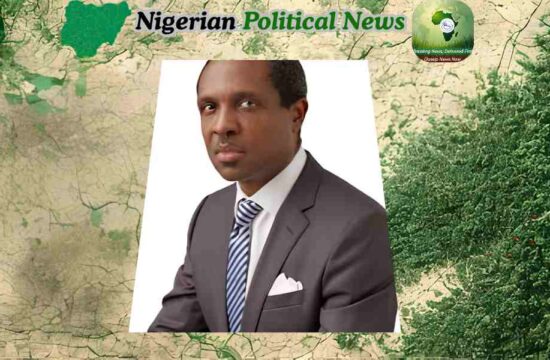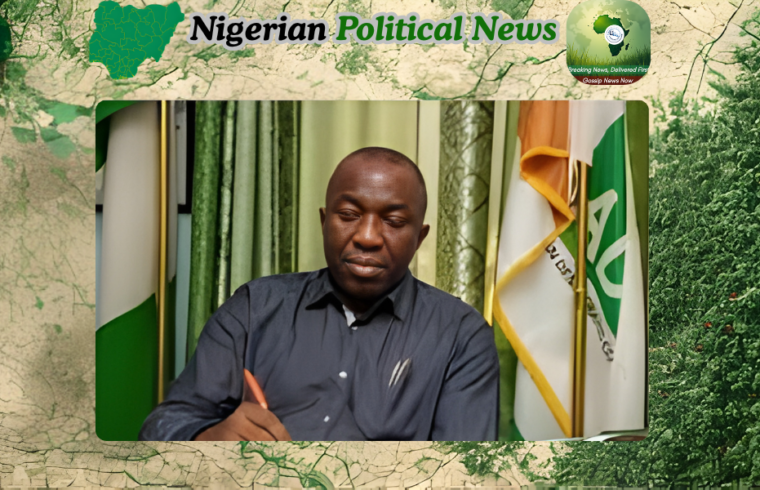
The internal tensions rocking the African Democratic Congress (ADC) have taken a new turn, as its founding national chairman, Ralph Nwosu, firmly rejected claims that a prominent member, Bala Nafiu, was sidelined from party affairs. Speaking amid growing controversy, Nwosu maintained that available records clearly contradict such allegations.
According to him, there is verifiable proof that Bala remained actively engaged in all critical party meetings, with documentation backing this position. He stressed that attendance logs and official filings reflect consistent participation.
In explaining further, Nwosu pointed to evidence presented during legal proceedings, noting that even the Independent National Electoral Commission (INEC) had previously confirmed Bala’s involvement. He suggested that the electoral body’s earlier stance aligned with the party’s records before what he described as a recent shift in position.
Gossip News Now reports that Nwosu raised concerns about this perceived reversal, hinting at inconsistencies that have added fuel to the already tense situation within the party.
Claims of External Interference
Beyond the issue of attendance, the ADC founder alleged that the ongoing discord is not entirely organic. He suggested that certain individuals may have been influenced to create an impression of instability within the party.
Nwosu questioned how a handful of actors could project the image of division in a political structure he described as having millions of registered members. To him, the scale of the party makes such claims of fragmentation appear exaggerated.
Spotlight on Internal Figures
Attention also turned to Dumebi Kachikwu, whom Nwosu accused of attempting to assert disproportionate influence within ADC. He argued that some actions by party figures are strategically designed to portray authority and control, even when such claims may not reflect reality.
Nwosu further implied that financial backing from powerful interests could be enabling these moves, suggesting that political funding is being deployed in ways that undermine opposition cohesion.
Minority vs Majority Narrative
Despite the ongoing disputes, Nwosu emphasized that those driving the conflict represent only a very small segment of the party’s base. He contrasted their actions with what he described as a vast and committed membership population that continues to support the ADC’s structure and objectives.
He made it clear that isolated dissent should not be mistaken for a full-blown crisis, insisting that the party remains largely intact despite the noise surrounding it.
Analysis: What This Means for ADC
The unfolding situation highlights deeper challenges within opposition parties in Nigeria—particularly around internal cohesion, leadership disputes, and external political pressure. While Nwosu’s defense seeks to reinforce institutional credibility, the conflicting narratives involving INEC and party stakeholders suggest that the crisis may not be resolved quickly.
If the party fails to manage perceptions and internal disagreements effectively, even a small faction could influence public confidence. On the other hand, strong documentation and unified messaging could help stabilize its position moving forward.
© 2025 Gossip News Now, a division of CHIEJOS HARBIAN DIGITAL MEDIA LTD. Contact us via admin@gossipnewsnow.online