Why It Matters
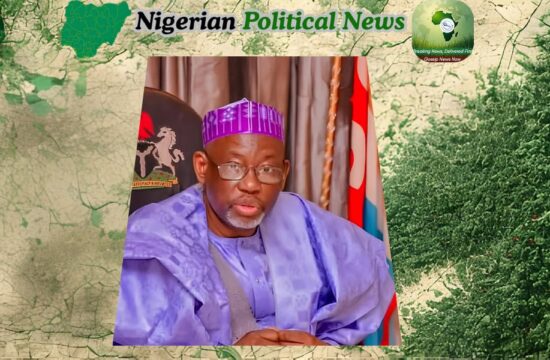
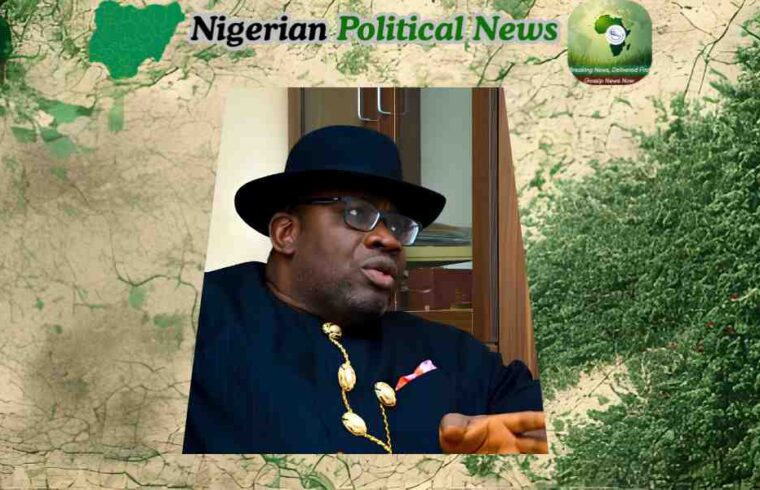
Nigeria’s democratic institutions took centre stage after former Bayelsa State Governor and National Leader of the Nigeria Democratic Congress (NDC), Seriake Dickson, warned that the country’s democratic progress could be undermined if constitutional safeguards are weakened. Speaking at a public lecture, Dickson argued that respect for the Constitution, an independent judiciary, a free press and a credible electoral system remain essential to preserving democratic governance.
What Happened?
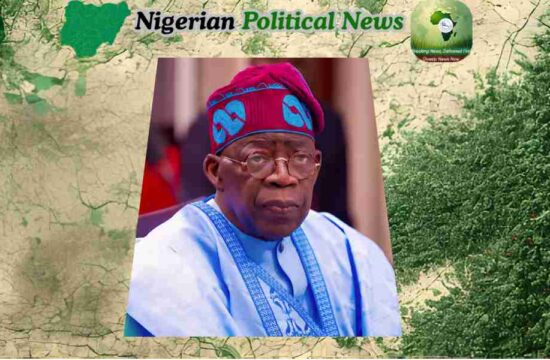
Former Bayelsa State Governor Seriake Dickson has cautioned President Bola Tinubu and the ruling All Progressives Congress (APC) against actions he believes could reduce Nigeria’s democratic space.
Addressing participants during the Diplomatic Digest 6th Anniversary Lecture, the NDC leader said Nigeria’s democratic achievements should not be taken for granted, stressing that elected leaders must continue to strengthen—not weaken—the institutions that protect constitutional governance.
According to Dickson, democratic governance depends on adherence to the rule of law, an independent judiciary, a free and responsible media, and an electoral commission that enjoys public confidence.
He maintained that any attempt to erode these institutions could blur the distinction between democratic rule and authoritarian leadership.
Background
Nigeria returned to democratic rule in 1999 after years of military government, with successive administrations pledging to consolidate democratic governance and strengthen public institutions.
Dickson argued that while the country has made significant progress since the end of military rule, elected governments must avoid actions capable of weakening constitutional institutions under the guise of democratic governance.
His remarks come amid ongoing debates over institutional independence, governance standards and democratic accountability across Nigeria and the wider West African region.
Key Remarks from Dickson
During his address, Dickson described democracy as a continuous process that requires constant protection rather than a destination that can be permanently secured.
He said democratic governance can only thrive where constitutional principles are respected and institutions are allowed to function independently.
“Democracy is not a sprint; it is a marathon. There are twists and turns, as well as ups and downs. What is important is a commitment to democratic governance, observance of the rule of law, democratic principles, a free and independent media, an impartial judiciary, and an electoral body that is truly independent and enjoys the confidence and trust of the people.”
He further warned that weakening these institutions creates little practical difference between civilian and military authoritarianism.
“Without these essential elements, there is little difference between a civilian dictator and a military dictator.”
His Criticism of APC and ECOWAS Leadership
Dickson also criticised what he described as the APC government’s foreign policy approach, arguing that Nigeria’s influence within the Economic Community of West African States (ECOWAS) has declined.
According to him, the emergence of the Alliance of Sahel States, formed by Mali, Burkina Faso and Niger after tensions with ECOWAS, reflects broader challenges facing regional cooperation.
He said the development raises questions about Nigeria’s traditional leadership role within West Africa.
“It is unfortunate that, under the APC government and its dysfunctional foreign policy, ECOWAS has weakened before our very eyes. The emergence of breakaway blocs, such as the Alliance of Sahel States, does not speak well of Nigerian leadership.”
Different Political Perspectives
Dickson urged President Tinubu to ensure that public institutions remain impartial and are not deployed for partisan political purposes.
He argued that governments perceived as operating above the Constitution or weakening state institutions risk losing public trust over time.
According to him, democratic legitimacy depends on the ability of political leaders to respect constitutional limits and preserve the independence of institutions created to serve the public.
He added:
“When a government is perceived as oppressive, dictatorial, and above the Constitution and the institutions of the state, it inevitably loses the confidence and support of its citizens.”
He further warned that any political party that considers itself greater than the nation’s Constitution or democratic institutions ultimately weakens public confidence in democratic governance.
Political Implications
Dickson’s remarks add to continuing national discussions about the resilience of Nigeria’s democratic institutions, judicial independence, electoral credibility and constitutional governance.
While his comments reflect the position of an opposition political leader, they also highlight broader conversations taking place across Nigeria and parts of West Africa regarding the strength of democratic institutions and regional cooperation.
As political activities continue ahead of future electoral contests, debates over institutional independence, the rule of law and democratic accountability are expected to remain central issues in Nigeria’s political landscape.