Football’s Biggest Talking Point
Long after Spain lifted the 2026 FIFA World Cup trophy, another battle has taken centre stage—this time over football’s most prestigious individual honour.
FIFA’s decision to crown Rodri as the tournament’s Golden Ball winner ahead of Lionel Messi has triggered passionate reactions across the football world, with many supporters, analysts and journalists questioning whether the award reflected the competition’s standout performer.
Among the loudest critics is Argentine journalist Antonio Serpa, who insists the decision failed to recognise Messi’s extraordinary influence throughout the tournament.
Three Things to Know
- Rodri won the 2026 FIFA World Cup Golden Ball after helping Spain lift the trophy.
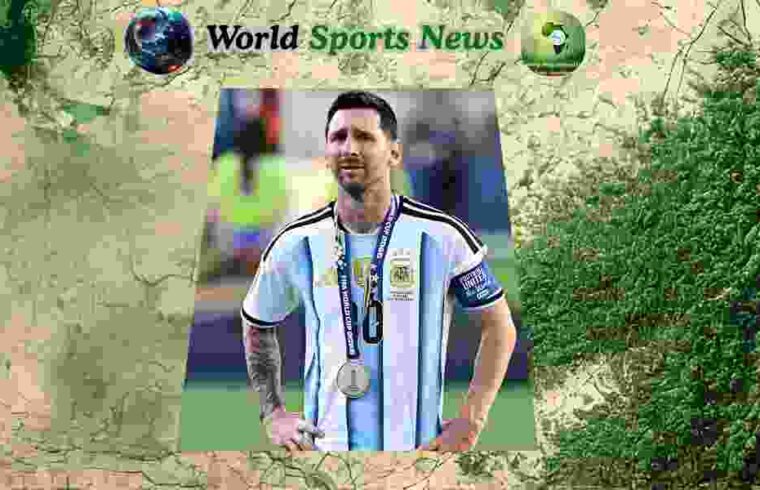
- Lionel Messi finished second despite producing eight goals and four assists.
- Argentine journalist Antonio Serpa described FIFA’s decision as a “disservice.”
- The controversy has reignited debate over how football’s biggest individual awards should be decided.
Why the Award Has Sparked Debate
The announcement immediately divided opinion within the global football community.
While few questioned Rodri’s importance to Spain’s success, many believed Messi’s overall impact made him the strongest candidate for the tournament’s highest individual recognition.
The Argentine captain combined goals, creativity, leadership and decisive performances to guide his country back to another World Cup final, leading many observers to argue that his influence extended beyond conventional statistics.
For supporters of the Spanish midfielder, however, Rodri’s consistency, tactical intelligence and control of matches represented the qualities FIFA sought to reward.
The Final That Changed Everything
The controversy unfolded after Spain defeated Argentina 1-0 in the World Cup final.
Argentina struggled to break through Spain’s disciplined defensive structure and failed to register a shot on target during normal time.
Their hopes suffered another setback when Enzo Fernández was sent off late in the contest, leaving the South Americans with ten men.
The decisive moment eventually arrived in extra time when Ferran Torres scored the goal that delivered Spain’s second FIFA World Cup title.
The Numbers Behind the Debate
Although Rodri collected the Golden Ball, Messi’s attacking output has become the centrepiece of the discussion.
Performance Comparison
| Player | Tournament Contribution |
|---|---|
| Lionel Messi | 8 goals, 4 assists, World Cup finalist |
| Rodri | Golden Ball winner, World Cup champion |
The contrasting profiles have fuelled disagreement over whether football’s biggest individual prize should reward attacking brilliance or complete tactical influence.
Voices from Argentina
Antonio Serpa believes the debate extends beyond statistics.
According to the veteran journalist, the issue is not whether Rodri deserved recognition but whether any player influenced the tournament more than Lionel Messi.
Serpa argued that millions of supporters travelled to witness Messi’s performances, leadership and ability to shape matches, insisting that those qualities represented the true spirit of the World Cup.
His comments have resonated with many Argentine supporters who view the Golden Ball result as one of the tournament’s most controversial decisions.
Inside FIFA’s Selection Philosophy
The disagreement has also drawn attention to the criteria used in selecting the Golden Ball winner.
Supporters of Rodri argue that midfield control, tactical discipline, defensive intelligence and consistency deserve equal recognition alongside goals and assists.
Others believe decisive attacking contributions should remain the primary measure of football’s best individual performer.
The contrasting viewpoints demonstrate that evaluating greatness often depends on which aspects of the game are valued most.
Football Commentary
The Golden Ball debate illustrates why individual awards remain among football’s most subjective honours.
Unlike trophies decided by goals and victories, awards recognising the “best player” depend on interpretation.
Some analysts favour statistical output.
Others prioritise leadership.
Many emphasise tactical influence.
In tournaments where several elite players deliver exceptional performances, reaching unanimous agreement is almost impossible.
Beyond the Trophy
Whether supporters agree with FIFA’s decision or not, the discussion has highlighted the remarkable standards set by both finalists.
Rodri’s composure and control were central to Spain’s championship-winning campaign, while Messi once again demonstrated why he continues to be regarded as one of football’s defining figures.
Rather than diminishing either player, the controversy reflects the extraordinary level both reached during the tournament.
Supporters’ View
Football fans remain sharply divided.
- Should Lionel Messi have received the 2026 FIFA World Cup Golden Ball?
- Did Rodri’s influence deserve greater recognition than Messi’s attacking contributions?
- What qualities should matter most when FIFA chooses its best player?
Cast your verdict in the comments and let us know which side of the debate you support.
Editorial Conclusion
Years from now, many supporters may remember the 2026 FIFA World Cup Golden Ball almost as much for the debate it created as for the player who ultimately received it.
Whether history favours Rodri’s tactical brilliance or Messi’s inspirational tournament remains a matter of perspective. What is certain is that the controversy has reopened one of football’s oldest arguments: Should the game’s greatest individual honour reward the player who controlled the tournament—or the one who inspired it?
© 2025 Gossip News Now, a division of CHIEJOS HARBIAN DIGITAL MEDIA LTD. Contact us via admin@gossipnewsnow.online.