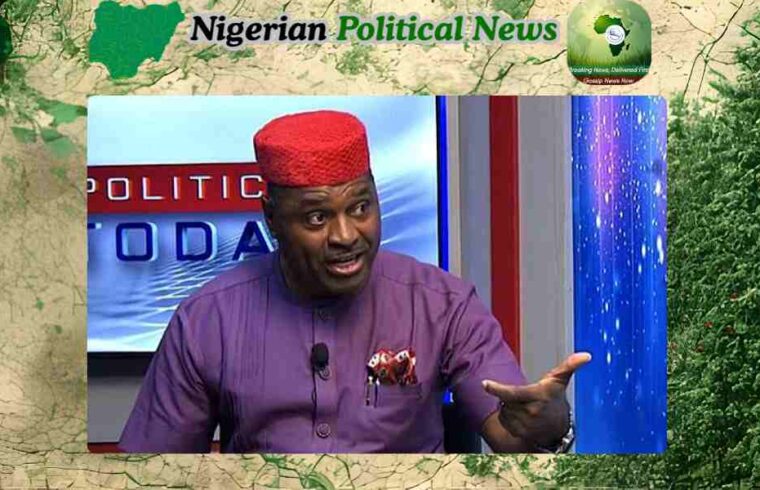
Can Peter Obi defeat President Bola Tinubu in the 2027 presidential election without a broader opposition coalition? For Kenneth Okonkwo, the answer is no.
The spokesperson for the Atiku Abubakar presidential campaign has argued that Obi would struggle to defeat Tinubu on his own, even if former Kano State governor Rabiu Kwankwaso joins his ticket as running mate.
Okonkwo’s position comes as opposition figures continue efforts to build a coalition ahead of the 2027 elections.
Why The Coalition Question Matters
The argument over a possible opposition coalition goes beyond the choice of presidential candidates. It also raises questions about how opposition figures can combine their political support and regional strength to mount a stronger challenge against the incumbent.
For Okonkwo, a broader coalition is essential if Obi is to have a realistic chance against Tinubu.
“Coalition is the only way out,” he said during an interview with Ibeju Upgrade Media.
What Happened?
Okonkwo argued that Obi would face significant difficulties if he chose to contest against Tinubu without the backing of a wider opposition alliance.
He also questioned whether a ticket involving Obi and Kwankwaso, without a broader coalition, would be enough to overcome the political advantage of the incumbent president.
According to him, Obi would particularly struggle to secure sufficient support in northern Nigeria if he contests without the coalition.
“So, if Peter Obi goes against Tinubu alone, Tinubu will eat him like biscuits. Will Kano people accept Peter Obi? In 2023, when we had the opportunity, they did not accept him. In 2027, they will not accept him,” Okonkwo said.
He further dismissed the suggestion that Kwankwaso would significantly strengthen such a ticket.
“Kwankwaso has nothing to contribute to the ticket. Even in Kano, Kwankwaso has lost,” he said.
The Coalition Debate Behind The Argument
The comments place the question of opposition cooperation at the centre of the 2027 political contest.
Okonkwo’s argument is that individual opposition figures may not have enough electoral strength on their own to defeat Tinubu and that a broader alliance is therefore necessary.
His comments also reflect the importance he places on northern support, particularly when considering Obi’s prospects against an incumbent president.
However, the claims about how voters in Kano or other parts of northern Nigeria would vote in 2027 are Okonkwo’s political assessment. The source material does not establish those future voting patterns as facts.
What Okonkwo Says About Obi And Kwankwaso
Okonkwo’s criticism is not limited to Obi’s chances without a coalition. He also argues that Kwankwaso would not add enough electoral value to an Obi ticket.
His assessment is based partly on his view of Kwankwaso’s standing in Kano and partly on his broader argument that the opposition needs something larger than a two-person presidential ticket to challenge Tinubu.
He also referenced President Bola Tinubu’s own political approach, saying:
“Coalition is the only way out. So you don’t come down with a man who has told you from the beginning that power is not taken à la carte; you fight for it, you grab it, you snatch it, you run away with it.”
The statement was made in the context of Okonkwo’s argument about the need for opposition forces to combine rather than approach the 2027 contest separately.
What The Argument Means For 2027
The significance of Okonkwo’s comments lies in the strategic question they raise: Can opposition candidates challenge Tinubu individually, or will they need to consolidate their support through a wider coalition?
Okonkwo clearly favours the latter approach.
His assessment also separates the value of a broader opposition coalition from the individual contribution of Kwankwaso. In his view, simply placing Kwankwaso on Obi’s ticket would not resolve the wider electoral challenge facing the opposition.
Whether that assessment proves correct will ultimately depend on the alliances formed, the candidates that emerge and the voting patterns in 2027.
Strategic Assessment
The coalition debate suggests that opposition strategy could become one of the defining issues ahead of the 2027 presidential election.
For Obi, the challenge presented by Okonkwo’s argument is whether his political base can be expanded sufficiently across different regions without a wider alliance. For Kwankwaso, the issue is whether his political influence, particularly in Kano and the North, can translate into meaningful electoral value within an opposition arrangement.
For the wider opposition, the question is whether competing interests can be brought together under an arrangement capable of presenting a unified challenge to the incumbent.
Okonkwo’s comments therefore represent one political assessment of the opposition’s prospects, rather than a prediction of the eventual election outcome.
Key Takeaways
- Kenneth Okonkwo says Peter Obi cannot defeat Bola Tinubu alone in the 2027 presidential election.
- He argues that a broader opposition coalition is necessary.
- Okonkwo also says Rabiu Kwankwaso would have little to contribute to an Obi ticket.
- He questioned Obi’s ability to secure sufficient support in northern Nigeria without a coalition.
- His comments come amid renewed efforts by opposition figures to build a coalition ahead of 2027.
- Okonkwo’s claims about future voter behaviour and Kwankwaso’s electoral strength are political assessments, not established election results.
Frequently Asked Questions
Can Peter Obi defeat Tinubu without a coalition?
Kenneth Okonkwo argues that Obi would struggle to defeat Tinubu without a broader opposition coalition. However, this remains a political assessment and not an established prediction of the 2027 election.
What did Okonkwo say about Kwankwaso?
Okonkwo said Kwankwaso “has nothing to contribute to the ticket” and claimed that he has lost political ground even in Kano.
Why does Okonkwo believe Obi needs a coalition?
His argument is that Obi would struggle to build sufficient support across northern Nigeria and other parts of the country if he contests Tinubu without broader opposition backing.
Are Obi and Kwankwaso definitely running together in 2027?
The supplied article does not establish a confirmed Obi-Kwankwaso presidential ticket. Okonkwo’s comments address the possibility of such an arrangement within the wider coalition debate.
What is the bigger issue ahead of 2027?
The broader issue is whether opposition figures will contest separately or combine their political strength through a coalition capable of mounting a stronger challenge to Tinubu.