The Institution Under Scrutiny
Fresh political attention has shifted to the Independent National Electoral Commission (INEC) after the National Democratic Coalition (NDC) questioned the commission’s decision to accept President Bola Tinubu’s nomination documents despite blank entries in sections relating to his primary and secondary school education.
Rather than focusing solely on the President’s submitted credentials, the opposition coalition argued that the more pressing issue is whether the electoral commission fulfilled its constitutional responsibility when processing the nomination documents.
According to the NDC, public confidence in the electoral process depends not only on what candidates submit but also on how the commission applies its own nomination procedures.
What Triggered The Questions?
The latest controversy followed INEC’s publication of the personal particulars and supporting documents submitted by presidential and vice-presidential candidates ahead of the 2027 presidential election.
A review of President Tinubu’s Form EC9 shows that he listed a Bachelor of Science degree in Business Administration from Chicago State University under educational qualifications and attached copies of his university degree certificate together with his National Youth Service Corps (NYSC) certificate.
However, the sections designated for primary and secondary school qualifications contain no entries.
It is this aspect of the published form—not merely the qualifications themselves—that has prompted the latest political reaction.
NDC Says INEC Must Explain Its Decision
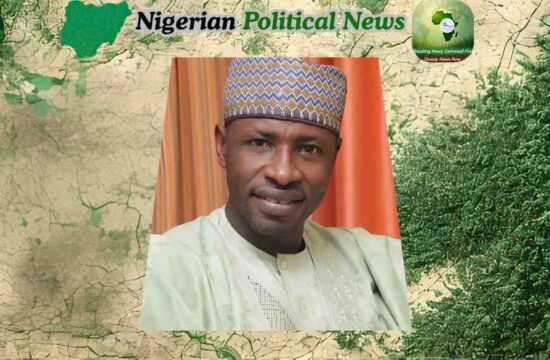
Reacting to the published documents, National Publicity Secretary of the National Democratic Coalition, Osa Director, said questions arising from the nomination form should no longer be directed only at President Tinubu.
Instead, he argued that INEC should explain the basis upon which the commission accepted documentation containing what critics describe as incomplete educational information.
Speaking during an interview with Punch, Director maintained that while the Presidency should clarify why those educational records were not listed, the electoral commission equally owes Nigerians an explanation regarding its own administrative process.
According to him:
“It is so disappointing that this is what we are talking about… This question should be directed to the appropriate quarters, that is, to the President and his aides, not to us in the opposition.”
The Procedural Issue Raised By The Opposition
Director argued that the concern extends beyond politics and enters the realm of electoral procedure.
He questioned whether information relating to primary and secondary education forms part of the mandatory requirements contained in INEC’s nomination process.
Drawing a comparison with modern electronic application systems, he said incomplete forms are ordinarily rejected until every required field has been completed.
For that reason, he said the commission should explain whether the educational sections were optional or whether another administrative basis justified acceptance of the nomination papers.
“Because when you fill out forms online and try to submit, it will reject your submission… I am surprised that this form went through INEC, knowing it was not filled.”
Presidency Also Asked To Clarify Educational Records
Although much of the criticism was directed at the electoral commission, the NDC spokesman also maintained that the Presidency should explain why details relating to the President’s primary and secondary education were absent from the published form.
He argued that Nigerians are entitled to seek clarification regarding information contained in documents submitted for elective office.
According to Director, university education ordinarily follows earlier stages of formal education, making the omission a legitimate subject of public inquiry.
He stressed, however, that only the President and his official representatives could provide that explanation.
Publication Praised Despite The Criticism
Despite questioning the commission’s handling of the nomination documents, Director acknowledged INEC’s decision to publish the forms for public inspection.
He said making the documents available allows Nigerians to independently examine the information submitted by candidates and reach their own conclusions.
In his words:
“INEC also has a question to answer by accepting that form when the information was incomplete, though we also have to commend them for having the guts to publish it for all Nigerians to see the gaps.”
Why The Issue Extends Beyond One Candidate
The latest reaction broadens the conversation from an individual candidate’s credentials to the responsibilities of institutions responsible for administering elections.
Rather than debating only what appears on a nomination form, the NDC’s position places attention on the procedures governing document verification, public transparency and compliance with electoral requirements.
That shift introduces a wider institutional dimension to a debate that has previously centred almost exclusively on the President’s educational history.
Background
Questions surrounding President Tinubu’s educational qualifications have remained part of Nigeria’s political discourse since the 2023 presidential election.
The publication of the latest nomination documents has revived those discussions, with different political actors offering contrasting interpretations of the information contained in the forms.
While some maintain that previous court proceedings settled earlier disputes surrounding the President’s credentials, the NDC’s latest intervention introduces a separate issue by asking whether INEC properly discharged its administrative responsibilities during the nomination process.
What Happens Next?
Attention now shifts to whether further clarification will come from INEC, the Presidency, or through any formal legal challenge concerning the nomination documents.
For the moment, the published Form EC9 remains part of the public record, while the questions raised by the National Democratic Coalition continue to focus on the electoral commission’s acceptance process as much as on the information contained in the form itself.