The proposed opposition alliance ahead of the 2027 general election took another step in Abuja on Monday, although some of the political figures expected to play prominent roles in the initiative were absent from the meeting.
Former Vice President Atiku Abubakar, former Anambra State Governor Peter Obi and Oyo State Governor Seyi Makinde were among the notable absentees at the summit held at the Shehu Musa Yar’Adua Centre.
The meeting nevertheless brought together presidential and vice-presidential contenders, as opposition parties continued discussions around a possible joint political framework for the 2027 election.
Parties Gather Around Coalition Proposal
The summit brought together representatives of six political parties involved in the initiative: the African Democratic Congress (ADC), Allied Peoples Movement (APM), Nigeria Democratic Congress (NDC), Peoples Democratic Party (PDP), Peoples Redemption Party (PRP) and Social Democratic Party (SDP).
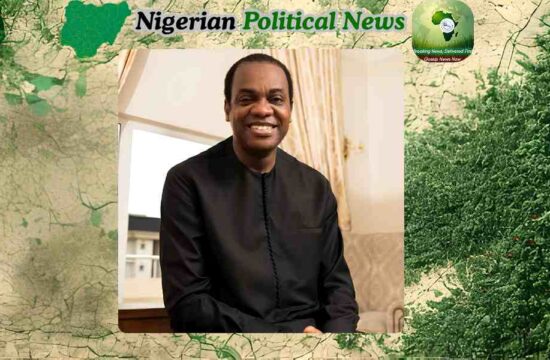
Among those present were SDP presidential candidate Adewole Adebayo and PRP presidential candidate Donald Duke.
The APM vice-presidential candidate, Lawal Musa Daura, also attended, alongside members of the National Working Committees and some members of the Boards of Trustees of the participating parties.
The gathering therefore proceeded despite the absence of several prominent politicians associated with the opposition movement.
A Government Of National Competence Proposed
A major development at the meeting was the presentation of a proposed political framework by Salihu Lukman on behalf of the G100.
Lukman said the proposal would culminate in the establishment of what he described as a “Government of National Competence.”
According to him, the proposed arrangement would be built around four key principles: competence, integrity, national inclusion and fair representation for every party participating in the coalition process.
He said the proposal was intended to go beyond simply bringing together politicians with shared electoral ambitions.
“The Framework before you proposes something more demanding than a merger of ambitions: a Government of National Competence, built on competence, integrity, national inclusion, and fair representation of every party that contributes to the effort.”
Lukman also proposed that the arrangement should operate for a single four-year transition period.
Why The Proposed Charter Matters
A central part of the proposal is the creation of an enforceable agreement that would formally commit participants to the proposed four-year arrangement.
Lukman said the commitment should be captured in what he called an “enforceable Transition Charter.”
He argued that relying on verbal assurances would not be sufficient, pointing to previous political agreements that, according to him, had failed because there were no effective mechanisms to compel parties and politicians to honour their commitments.
“What it has suffered from is promises that nobody could enforce when the person who made them changed his/her mind.”
For Lukman, the proposed coalition must therefore establish obligations that remain binding on participants even when political circumstances change.
He insisted that any agreement reached through the negotiations should be formally documented, witnessed and backed by consequences for breaches.
“It must be written, it must be witnessed, and it must have consequences.”
The Political Question Around The Alliance
The proposed framework gives the opposition initiative a more defined political structure, with discussions extending beyond cooperation between parties to the form of government the participants envisage.
The emphasis on competence, integrity, inclusion and equitable representation also places the distribution of political participation at the centre of the proposed arrangement.
However, the absence of Atiku Abubakar, Peter Obi, Seyi Makinde and other notable figures remains part of the political picture surrounding the summit.
Their absence, on its own, does not establish opposition to the initiative or indicate that the proposed alliance is divided.
What the meeting does establish is that representatives of the participating parties are continuing discussions around a common political framework ahead of the 2027 general election.
What The Initiative Currently Represents
The Abuja gathering represents an ongoing attempt by the participating opposition parties to develop a structured political arrangement ahead of 2027.
The proposed Government of National Competence and Transition Charter indicate an effort to establish clear principles and commitments for parties taking part in the process.
At the same time, the proposal remains a framework presented during the coalition discussions. The information available does not establish that the participating parties have already reached a final agreement on the proposed arrangement.
The significance of the initiative will therefore depend on how the participating parties handle the negotiations, formalise their commitments and determine the structure of any eventual political agreement.
For now, the Abuja summit has placed the proposed coalition framework firmly at the centre of opposition discussions ahead of the 2027 election, even as the absence of several prominent political figures leaves an important part of the alliance’s broader participation still to be clarified.