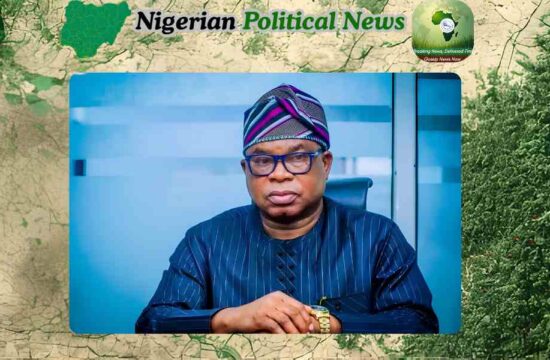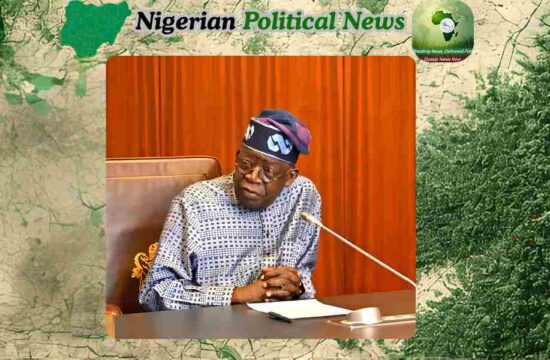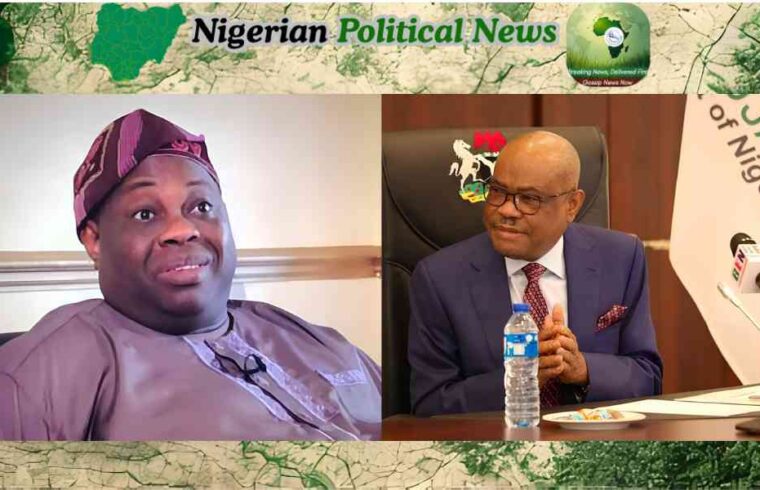
A fresh political exchange has emerged over the outcome of the Osun State governorship election, with chieftain of the African Democratic Congress (ADC), Dele Momodu, challenging a claim made by the Minister of the Federal Capital Territory (FCT), Nyesom Wike, about the role federal political influence could have played in the poll.
Momodu described Wike’s submission as an “empty boast,” arguing that the FCT Minister did not possess the level of political influence suggested by his comments.
What Happened
Naija News reports that Wike had said Governor Ademola Adeleke could have lost the Osun governorship election if the federal government had deployed its full political influence to support the All Progressives Congress (APC).
Wike reportedly stated that he would have travelled to Osun State to help secure an APC victory if President Bola Tinubu had wanted the party to win the election.
The comment subsequently drew a response from Momodu, who questioned whether Wike could have achieved the outcome he suggested.
What They Said
Speaking during an interview on News Central Television on Wednesday, Momodu said Wike’s claim was unusual and unfortunate coming from a minister of the Federal Republic of Nigeria.
He argued that Wike’s political influence could not be greater than that of Senate President Godswill Akpabio and several state governors who had also gone to Osun to support efforts to secure victory for the APC.
Momodu said:
“When I listened to him, I had to respond instantly because I knew that was an empty boast.”
He added that Wike would not have achieved anything different had he personally been present in Osun during the election.
The Competing Positions
Wike’s argument, as presented in the report, was based on a hypothetical scenario: that Adeleke would have been defeated if federal political machinery had been deployed against him.
Momodu rejected that assessment.
His counterargument was that the presence and involvement of senior political figures and governors had already demonstrated the limits of political influence in an electoral contest.
He specifically pointed to the involvement of the Senate President and governors who, according to him, had attempted to deliver Osun to the APC but were unable to change the outcome.
Momodu also argued that the episode should serve as a reminder that elected political officials do not possess unlimited influence over voters or electoral outcomes.
Background To The Argument
The exchange comes against the backdrop of the recently concluded Osun State governorship election and the political contest surrounding the result.
Momodu further connected his argument to the experience of the former G-5 governors, who abandoned the Peoples Democratic Party (PDP) during the last general election.
According to him, three members of the group who were governors of Abia, Enugu and Benue states subsequently attempted to secure senatorial victories in their respective states but failed.
He cited those outcomes as evidence that holding political office does not automatically translate into the ability to determine electoral results.
Separating The Claims
The central disagreement between the two politicians concerns a hypothetical question rather than a separate election result.
Wike’s position, as reported, was that the APC could have defeated Adeleke if federal political power had been fully deployed.
Momodu’s response challenges that assumption, arguing that the political figures who were already involved in the Osun contest were themselves unable to produce the outcome Wike suggested he could have delivered.
The available account therefore presents two competing political interpretations of the same election: Wike’s assessment of what greater federal involvement could have achieved and Momodu’s argument that political influence has clear limits.
Where The Matter Stands
Momodu has now publicly rejected Wike’s assessment and used the Osun election, as well as the experience of the G-5 governors, to support his argument.
He also warned that the implications of such political calculations could become more significant as Nigeria approaches the 2027 general election.
According to Momodu, the APC would need to repeat the type of political approach he believes was attempted in Osun if it hopes to secure victories in the next presidential and governorship elections.
What The Exchange Means
The disagreement highlights a broader argument about the relationship between political power and electoral outcomes.
While Wike’s statement suggests that stronger federal political involvement could have altered the Osun result, Momodu’s response questions whether individual politicians or groups of political leaders can exercise the degree of electoral influence sometimes attributed to them.
Momodu’s reference to Akpabio and the governors is central to that argument. His position is that if prominent political actors could not secure the outcome they wanted in Osun, it would be difficult for one individual to claim that his presence alone could have produced a different result.
His argument also relies on the G-5 experience to illustrate that political office and influence do not necessarily guarantee electoral victory.
Why The Dispute Matters
The exchange is significant because it moves beyond the immediate Osun election and touches on competing views about political influence ahead of the 2027 elections.
Momodu’s comments suggest that electoral outcomes cannot simply be reduced to the strength or influence of individual political figures.
Wike’s earlier claim, meanwhile, reflects a different interpretation of what federal political influence could have achieved under different circumstances.
The disagreement therefore places the question of political influence at the centre of the post-election conversation.
Final Editorial Wrap-Up
The dispute between Momodu and Wike has added another political dimension to discussions surrounding the Osun governorship election.
Wike’s comments focused on what he believed could have happened if greater federal political influence had been deployed, while Momodu rejected that assessment and argued that even more senior political figures had been unable to produce the outcome they wanted in Osun.
Momodu also drew on the experience of the G-5 governors to reinforce his position that political office does not automatically confer control over electoral outcomes.
As political actors begin to position themselves ahead of 2027, the disagreement offers two contrasting interpretations of the power that individual politicians and government figures can exercise during elections.