Political Divisions Test Coalition Unity Ahead Of Election Campaigns
Internal disagreements have become one of the biggest challenges confronting political coalitions as preparations gradually gather momentum for Nigeria’s 2027 general election. While alliances often emerge to strengthen electoral competitiveness, maintaining unity after their formation can prove equally demanding.
That challenge has now come into focus within the Nigeria Democratic Congress (NDC) following concerns over divisions inside the OK Movement, the coalition that brings together the Kwankwassiyya Movement and the Obidient Movement.
Against that backdrop, leading figures within the party have begun fresh consultations aimed at reassuring members that the coalition remains focused on its political objectives despite the disagreements that have surfaced in recent weeks.
Story In Context
The latest meeting comes at a sensitive moment for the NDC as the party attempts to maintain cohesion before nationwide campaigns for the 2027 general election begin.
The OK Movement was established as a political coalition combining supporters of Peter Obi and Rabiu Kwankwaso, bringing together two influential political movements under a single electoral platform.
However, the coalition has recently experienced internal leadership disagreements that have produced rival factions and raised concerns among party supporters about whether the movement can sustain its unity throughout the election cycle.
Although party officials have not publicly disclosed the specific issues behind the dispute, the continuing uncertainty has generated widespread discussion within the coalition and increased pressure on its leadership to demonstrate stability.
Party Leaders Hold Strategic Meeting In Abuja
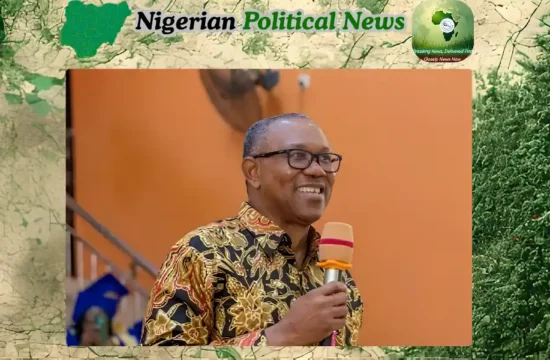
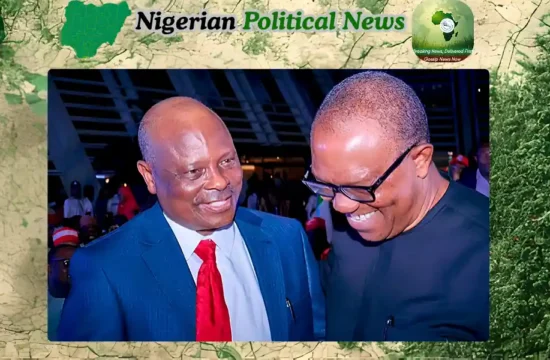
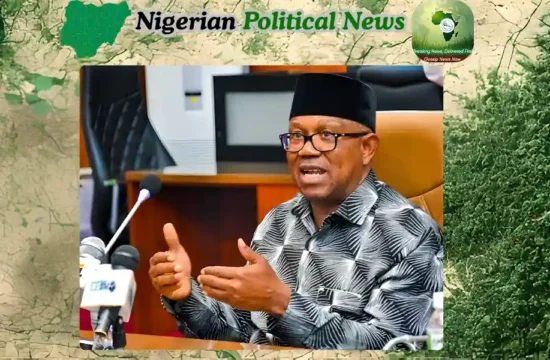
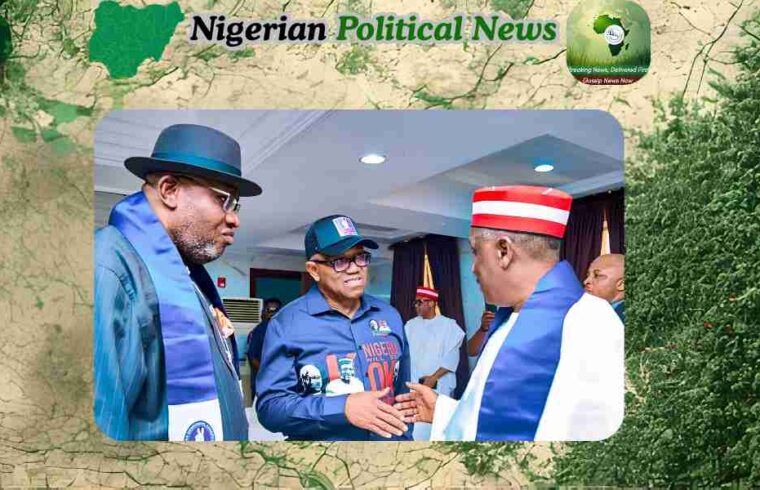
In what appears to be an effort to reinforce confidence within the party, the presidential and vice-presidential candidates of the Nigeria Democratic Congress (NDC), Peter Obi and Rabiu Kwankwaso, met with the party’s National Leader, Senator Seriake Dickson, in Abuja.
The consultation comes as members continue to monitor developments surrounding the leadership dispute within the OK Movement, with many supporters closely watching how party leaders intend to manage the situation before campaign activities officially commence.
While no indication was given that the meeting was convened solely because of the internal disagreements, its timing has inevitably drawn attention because of the political uncertainty currently affecting the coalition.
Leadership Seeks To Reassure Members
Confirming the meeting publicly, Senator Dickson disclosed through his official Facebook page that he hosted both Obi and Kwankwaso at his residence in Abuja.
According to the former Bayelsa State governor, discussions focused on the current state of the party and preparations for the next stage of its political activities.
Rather than highlighting internal disagreements, Dickson presented the meeting as part of the party’s continuing organisational efforts ahead of the forthcoming campaign season.
He described the discussions as centred on strengthening the party’s readiness for political activities expected to begin later in the month.
“The meeting focused on the positive state of affairs of our party and to prepare for the forthcoming campaigns, which are expected to commence later this month,” Dickson stated.
Why The Meeting Has Attracted Attention
Ordinarily, consultations among senior party leaders would represent a routine aspect of political organisation.
However, the latest engagement carries additional significance because it follows growing reports of disagreements within the coalition’s leadership structure.
The emergence of rival factions has fuelled uncertainty among sections of the party’s support base, particularly those who view continued unity between the Kwankwassiyya and Obidient movements as essential to the coalition’s electoral prospects.
Although the precise source of the disagreement has not been officially explained, the prolonged silence surrounding the issue has contributed to speculation among supporters about the coalition’s internal stability.
Dickson Appeals For Unity
As discussions about the internal crisis continue, Dickson used the opportunity to encourage members of the party to remain committed to the coalition.
He appealed to party supporters, officials and stakeholders not to allow internal disagreements weaken the movement’s broader political objective.
According to him, unity and collective commitment remain fundamental if the NDC intends to present a strong challenge during the 2027 general election.
“I call on all members, supporters and stakeholders of our great party to unite, remain steadfast and work together for victory for all candidates of our party,” the former governor said.
His appeal reflects the leadership’s effort to redirect attention from internal disagreements towards the party’s electoral preparations.
Campaign Preparations Continue Despite Internal Challenges
Despite concerns surrounding the coalition, the party leadership indicated that preparations for campaign activities remain on schedule.
Dickson suggested that organisational planning is continuing alongside efforts to strengthen cooperation within the movement.
The emphasis on campaign readiness indicates that party leaders are attempting to prevent the leadership dispute from disrupting broader electoral preparations as political activities intensify ahead of the 2027 polls.
Internal Crisis Extends Beyond Leadership Meeting
While party leaders projected confidence during the Abuja meeting, the leadership dispute within the OK Movement remains one of the most closely watched developments inside the coalition.
The movement, formed through the alliance between the Kwankwassiyya Movement and the Obidient Movement, has recently witnessed the emergence of rival factions, creating uncertainty about its internal leadership structure.
Although officials have not publicly disclosed the specific issues behind the disagreement, the absence of detailed explanations has continued to fuel discussions among members and supporters regarding the coalition’s long-term cohesion.
For many observers, the central challenge now extends beyond resolving individual disagreements to preserving confidence in the coalition’s ability to remain united throughout the election cycle.
A Coalition Under Pressure
Political coalitions are often built around shared electoral objectives, but maintaining unity after their formation can prove considerably more difficult.
The situation confronting the NDC reflects that reality.
As preparations for the 2027 general election gradually intensify, every internal disagreement carries greater political significance because opponents, supporters and undecided voters frequently interpret such developments as indicators of a party’s organisational strength.
It is against this background that the meeting involving Peter Obi, Rabiu Kwankwaso and Senator Seriake Dickson has attracted attention beyond the immediate discussions that took place behind closed doors.
The gathering represents not only an organisational consultation but also an attempt to reassure party members that the coalition remains focused despite recent tensions.
Separate INEC Development Adds Fresh Controversy
Even as party leaders work to calm concerns surrounding the coalition, another issue has emerged involving the Independent National Electoral Commission (INEC) and the party’s candidate records.
According to information available, confusion arose after the INEC nomination portal displayed the photograph of Sunny Aguebor alongside the name of Epelle-Asemota Bridgitte Osayuki as the candidate for the Edo South Senatorial District in the 2027 general election.
The apparent mismatch between the candidate’s photograph and the accompanying name generated fresh concern among party stakeholders, raising questions about the accuracy of information appearing on the commission’s portal.
Although the development is separate from the leadership issues affecting the OK Movement, it has nevertheless created another challenge requiring clarification from those involved.
Owie Questions Candidate Information
Reacting to the development, former Senate Chief Whip Rowland Owie expressed dissatisfaction with the information appearing on the electoral commission’s portal.
Speaking during an interview with Punch, Owie maintained that Sunny Aguebor emerged as the party’s candidate during a primary election monitored by INEC.
He further alleged that a national officer of the NDC could have played a role in the change reflected on the nomination portal.
According to Owie, the situation amounts to a serious irregularity that should not be allowed to stand if the integrity of the party’s nomination process is to be preserved.
He insisted that Aguebor remains the authentic candidate for the Edo South Senatorial District.
What The Two Developments Mean For The Party
Although the leadership meeting and the Edo South nomination controversy involve different issues, together they illustrate the organisational responsibilities currently confronting the NDC ahead of the next general election.
On one hand, senior party leaders are attempting to reinforce unity within the coalition and reassure supporters that preparations for the campaign remain on course.
On the other hand, questions surrounding candidate documentation highlight the importance of ensuring administrative processes remain transparent and free from avoidable disputes.
Managing both political cohesion and organisational credibility is likely to remain an important priority as campaign activities approach.
The Road To The 2027 Campaign
With campaign activities expected to begin later this month, attention is now shifting from internal consultations to how effectively the party can convert its preparations into coordinated political mobilisation.
The coming weeks are expected to test both the leadership’s ability to maintain unity within the coalition and its capacity to respond promptly to issues capable of distracting from its electoral message.
For supporters of the Obi-Kwankwaso ticket, the expectation will be that ongoing consultations among party leaders produce greater internal stability before nationwide campaigns gather momentum.
Whether those efforts succeed may influence not only confidence within the coalition but also public perception of its readiness for the 2027 general election.
© 2025 Gossip News Now, a division of CHIEJOS HARBIAN DIGITAL MEDIA LTD.
Contact us via admin@gossipnewsnow.online.