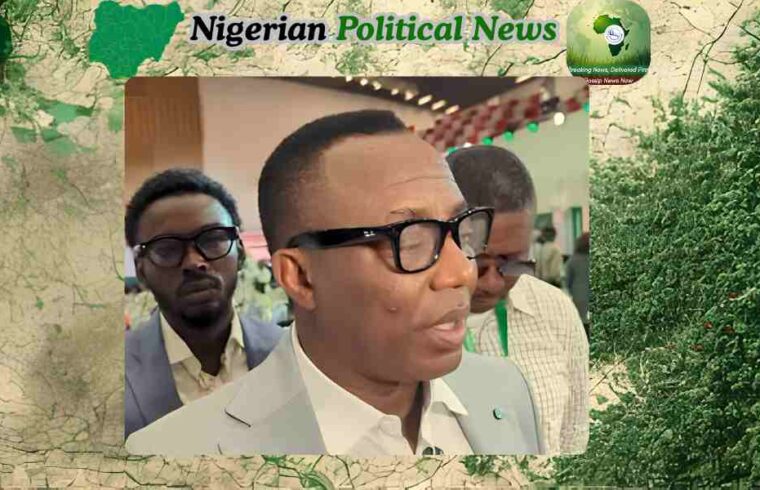
A disagreement over how former military ruler Ibrahim Babangida should be remembered has escalated after activist Omoyele Sowore rejected Yusuf Datti Baba-Ahmed’s description of Babangida as a revered former Nigerian leader.
Sowore argued that Babangida’s age should not prevent Nigerians from examining decisions taken during his years in power and their consequences for the country.
What Happened
Sowore responded to Baba-Ahmed in a statement titled “My Response To Mallam Yusuf Datti Baba-Ahmed Over My Comments On Ex-Nigerian Military Dictator Ibrahim Badamosi Babangida At 85: Compassion Does Not Require Historical Amnesia.”
In the statement, Sowore rejected the suggestion that his criticism of Babangida was motivated by the former military ruler’s age.
Instead, he said Nigerians have the right to interrogate Babangida’s record and examine decisions taken during his years in power.
The activist also rejected Baba-Ahmed’s suggestion that people like him seeking to lead Nigeria represent “the real danger.”
Key Players
Omoyele Sowore is the Nigerian activist who issued the response. His argument centres on historical accountability and the right of Nigerians to continue scrutinising former leaders.
Yusuf Datti Baba-Ahmed, the former Labour Party vice presidential candidate, is the political figure whose description of Babangida prompted Sowore’s response.
Ibrahim Babangida, the former military ruler, is at the centre of the disagreement over how his political record should be remembered and assessed.
MKO Abiola is also relevant to the dispute because Sowore cited the annulment of the June 12, 1993 presidential election and Babangida’s acknowledgement that Abiola won the poll.
Background
Babangida ruled Nigeria as a military leader during a period that remains politically significant in the country’s history.
One of the most controversial episodes associated with his administration was the annulment of the June 12, 1993 presidential election.
Sowore cited the episode as an example of why Nigerians should continue to examine Babangida’s record.
According to Sowore, Babangida’s acknowledgement that MKO Abiola won the election does not remove the need to examine the decision to annul the result and its consequences for Nigeria’s democratic development.
For Sowore, that historical episode forms part of a broader argument that the passage of time should not prevent Nigerians from questioning decisions made by former leaders.
What Sowore Said
Sowore said he wished no illness upon Babangida but would not participate in what he described as rewriting the former military ruler’s record simply because he had grown old.
He argued that compassion towards an elderly former ruler should not require Nigerians to forget the consequences of decisions taken during his time in power.
Sowore also said:
“Growing old is a privilege. It is not immunity from history.”
He maintained that his criticism was not based on personal hatred but on questions of accountability, institutions and the consequences of political decisions.
Stakeholder Positions
Baba-Ahmed’s position, as presented in the article, was that Babangida should be regarded as a revered former Nigerian leader.
Sowore rejected that characterisation and argued that Nigerians should retain the right to scrutinise Babangida’s record regardless of his age.
The disagreement therefore goes beyond the personal assessment of Babangida.
At its centre is a broader dispute over whether respect for a former leader should influence how Nigerians discuss decisions made while that person was in power.
Sowore also challenged Baba-Ahmed’s suggestion that people seeking to lead Nigeria, including figures such as himself, are “the real danger.”
He instead argued that the greater danger lies in a political culture that, in his words, “rehabilitates failure, protects privilege, and demands silence from anyone who refuses to participate.”
Editorial Analysis
The disagreement raises a broader question about the relationship between compassion, historical memory and political accountability.
Sowore’s argument is that growing old should not place a former political leader beyond historical scrutiny. His reference to June 12 is intended to demonstrate why, in his view, past decisions remain relevant even decades later.
The June 12 election is particularly important to his argument because he presents the annulment as an example of a decision taken during Babangida’s rule whose consequences remain part of Nigeria’s political history.
At the same time, the supplied article primarily presents Sowore’s response and does not provide a detailed account of Baba-Ahmed’s original remarks beyond the characterisation attributed to him.
It also does not independently assess the full historical record of Babangida’s administration.
For that reason, the broader historical judgments contained in Sowore’s response should remain understood as his political position, rather than as independent findings of the report.
The central issue raised by the exchange is therefore whether respect for a former leader’s age and status should coexist with continued scrutiny of decisions made while that leader exercised political power.
Questions For Readers
The disagreement raises several questions that go beyond the personalities involved:
- Should a former leader’s age change how Nigerians evaluate his political record?
- Can compassion for an elderly former ruler coexist with continued historical scrutiny?
- Should former leaders be judged by their intentions, their decisions, or the consequences of those decisions?
- How should Nigeria balance respect for former leaders with accountability for their time in office?
- Should controversial decisions from Nigeria’s political past remain open to public examination decades later?
These questions shift the discussion from the personalities involved to the broader issue of how a democratic society remembers, evaluates and learns from its political history.
Reader Perspective
The disagreement between Sowore and Baba-Ahmed ultimately reflects a larger debate about how Nigeria should remember its former leaders.
For Sowore, compassion for an elderly former ruler should not require what he describes as historical amnesia. His position is that citizens must remain free to examine the decisions of former leaders and discuss their consequences.
The opposing consideration is whether historical criticism can be pursued while still recognising the dignity and age of individuals who once occupied positions of power.
What remains clear from the exchange is that Babangida’s legacy continues to generate disagreement, particularly around questions of democracy, political accountability and the events surrounding June 12.
The debate therefore extends beyond whether one person should be described as revered or condemned. It raises a more enduring question: how should Nigerians remember their political history while maintaining both compassion for individuals and accountability for the decisions made in public office?