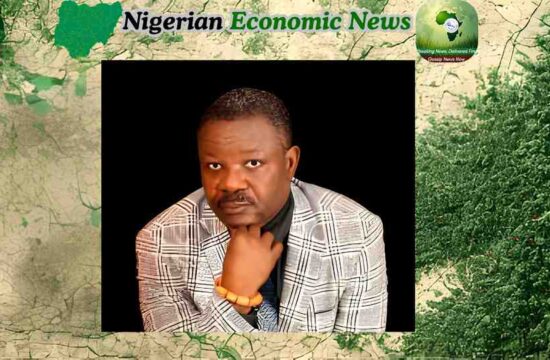
Gbenga Olawepo-Hashim, the Accord Party’s factional 2027 presidential candidate, says Nigerians would pay no more than ₦610 per litre for petrol under his proposed administration, with the price potentially falling to between ₦200 and ₦300 if certain economic targets are achieved.
His proposed starting sustainable price is ₦605 per litre. He said the lower projection would depend on bringing production costs under control and achieving a targeted exchange rate.
The ₦605–₦610 Petrol Proposal
Olawepo-Hashim said his proposed pricing framework would be based on the actual cost of producing, refining, transporting, insuring and distributing petrol in Nigeria.
He argued that domestic fuel prices should not automatically be benchmarked against international market prices when determining whether Nigerians are receiving an effective subsidy.
According to him, the difference between a domestic price and an international benchmark should not automatically be regarded as a subsidy loss.
The presidential candidate described the previous justification for subsidy removal as “accounting magic.”
“N605 per litre is our starting sustainable price. Nobody will buy petrol above N610 under our government. It could be as low as N200.”
He added that the price could fall to ₦200 or ₦300 if production costs were brought down and his exchange-rate target was achieved.
How He Says The Price Can Be Achieved
Olawepo-Hashim’s argument centres on reducing the costs embedded in the petroleum value chain rather than simply lowering the pump price through an unspecified government intervention.
He said the cost of crude production, refining, transportation and other stages of the supply chain should first be established.
His position is that Nigerians should not bear the cost of inefficiencies and then be told that higher petrol prices are unavoidable because of subsidy removal.
He argued that where costs are inflated by inefficiency, corruption or contracting practices, those problems should be addressed instead of transferring them to consumers.
A Forensic Audit Of The Petroleum Sector
To establish what petrol actually costs to deliver, Olawepo-Hashim called for an independent forensic audit of Nigeria’s petroleum value chain.
He said the exercise should cover crude oil production, contracting, procurement, refining, transportation, storage, insurance, pipeline operations and distribution.
He also called for the publication of the costs and margins associated with the different stages.
“Show Nigerians the books. Publish the production cost. Publish the refinery cost. Publish transportation. Publish insurance. Publish every margin. Let the data speak.”
The proposal would make transparency a central part of his approach to petrol pricing, with the stated objective of determining whether the costs being passed to consumers are justified.
The Exchange-Rate Argument
The proposed petrol-price framework is also tied to Olawepo-Hashim’s exchange-rate target.
He said a government under his leadership would target between ₦525 and ₦700 to the dollar, arguing that an appropriate exchange rate would reduce the naira cost of petroleum-sector inputs and ease pressure across other areas of the economy.
He maintained that achieving the proposed petrol price would depend on getting both production costs and the exchange rate right.
This means the projected ₦200–₦300 price is not presented as an immediate guaranteed pump price, but as a possible outcome if the conditions he identified are achieved.
Cheaper Petrol Without Lower Government Revenue?
Olawepo-Hashim also rejected the argument that making petrol more affordable must necessarily reduce government revenue.
He said his proposal would not be implemented at the expense of government revenue or current FAAC allocations.
“We are not going to make petrol cheaper by making the government poorer.”
He said his broader objective was to create a productive economy where affordable energy, stronger production and stronger government revenue reinforce one another.
The candidate also argued that government intervention in petrol pricing should not automatically be considered illegitimate if it is transparent, targeted and connected to measurable economic objectives.
The Questions Behind The Proposal
The central challenge for the proposal is whether its economic assumptions can be achieved in practice.
The source does not provide detailed calculations showing how a ₦605 starting price would be financed, how the ₦525–₦700 exchange-rate target would be reached, or what specific measures would reduce production costs enough to bring petrol down to ₦200–₦300.
Those details would be important in assessing the proposal beyond the campaign claim.
The proposed forensic audit could also become significant if it produces independently verifiable information about the actual costs and margins across the petroleum value chain.
What Comes Next?
As the 2027 political contest develops, the focus will likely shift from the headline figures to the details behind them.
Will Olawepo-Hashim publish the calculations supporting the ₦605–₦610 target? Can the proposed exchange-rate and production-cost assumptions produce the projected ₦200–₦300 price?
And perhaps most importantly, can Nigeria achieve more affordable petrol without sacrificing the government revenue that Olawepo-Hashim says his framework is designed to protect?