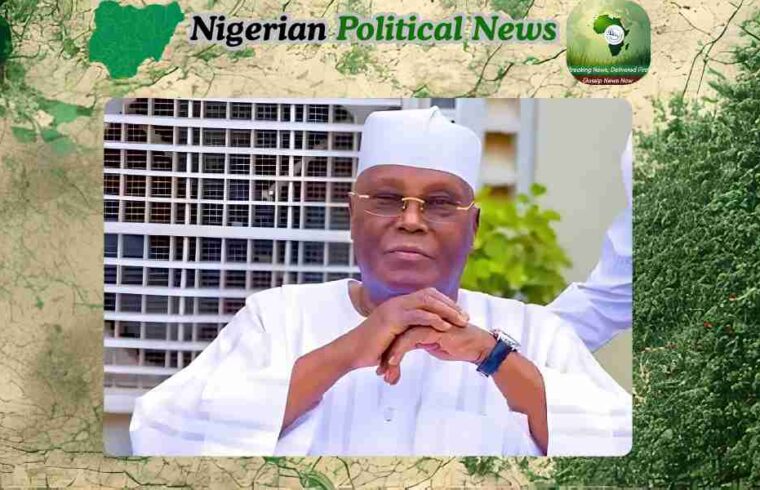
The debate over fuel subsidy has taken a fresh political turn after a spokesperson for former Vice President Atiku Abubakar sought to distinguish his principal’s proposal from the subsidy regime that previously attracted criticism over alleged waste and corruption.
Phrank Shaibu, Senior Special Assistant on Public Communication to Atiku, said the proposal being discussed is not a return to the former import-subsidy arrangement but a targeted system intended to support domestic production.
Key Facts
Atiku, the 2027 presidential candidate of the African Democratic Congress (ADC), had said during a Facebook Live session that he would restore fuel subsidy if elected president.
The position drew criticism from the Presidency, which argued that Atiku’s comments reflected an outdated approach to economic management.
The Presidency also questioned the change in Atiku’s position, noting that he had previously supported the removal of fuel subsidy.
In the ensuing debate, Shaibu moved to clarify what Atiku meant by restoring subsidy, arguing that the proposal should be understood in terms of who receives the support, how it is administered and what economic activity it is intended to encourage.
Stakeholder Positions
The disagreement centres largely on what should qualify as a fuel subsidy and whether Atiku’s proposal represents a return to the previous system.
The Presidency’s position, as presented in the original report, is that the former subsidy regime had become wasteful and vulnerable to abuse. Bayo Onanuga described the old system as much-abused, wasteful, pillaged and corruption-ridden.
The criticism also focused on Atiku’s previous position on subsidy removal. The Presidency argued that his latest proposal appeared inconsistent with his earlier support for ending the regime.
Shaibu, however, rejected the suggestion that Atiku was simply proposing a restoration of the old arrangement.
He argued that the central issue was not merely whether subsidy should exist, but the form it should take, who should benefit and how the programme should be administered.
According to Shaibu, Atiku’s proposal would involve a targeted, capped and auditable subsidy directed at domestic production, particularly Nigerian refining, rather than subsidies for imported fuel and intermediaries.
Background
The latest disagreement follows Atiku’s comments during a Facebook Live session in which he promised to restore fuel subsidy if elected president in 2027.
The statement reopened an issue that has remained politically sensitive since Nigeria’s fuel subsidy policy became a major subject of economic and political debate.
The Presidency subsequently challenged Atiku’s position, arguing that the subsidy system had been associated with significant waste and corruption.
The criticism also created a political comparison over the positions previously taken by major political figures on subsidy removal.
That comparison was highlighted by Rufai Oseni in a post on his 𝕏 handle, where he questioned the difference between Atiku’s current position and President Bola Tinubu’s earlier opposition to subsidy removal.
Oseni recalled that Tinubu had previously criticised subsidy removal under former President Goodluck Jonathan, describing it as Jonathan’s tax, and questioned why Atiku should now be criticised for advocating subsidies.
What They Said
In responding to the controversy, Shaibu wrote on 𝕏 that the issue was not simply “subsidy or no subsidy.”
He said the more important questions were the type of subsidy, its beneficiaries and the manner in which it would be administered.
Shaibu further explained that Atiku was not proposing a return to what he described as the old import-subsidy racket.
Instead, he said the proposal involved a targeted, capped and auditable subsidy for domestic production, with the objective of supporting Nigerian refining rather than foreign imports and middlemen.
Shaibu ultimately framed the debate as a choice between subsidising imports and consumption or strategically supporting Nigerian production and jobs.
Editorial Analysis
The controversy illustrates how the word “subsidy” can refer to significantly different policy arrangements.
Atiku’s original statement, as presented in the report, referred broadly to restoring fuel subsidy. The subsequent clarification from Shaibu attempted to give that proposal a more specific policy definition by distinguishing domestic-production support from the former import-focused arrangement.
That distinction is central to understanding the disagreement.
The Presidency’s criticism focuses on the problems associated with the previous subsidy regime, while Shaibu’s response seeks to argue that Atiku’s proposal should not automatically be equated with that system.
The two positions therefore address different aspects of the same economic question: whether government support for fuel should continue, and if so, what form that support should take.
The available statements do not independently establish whether the proposed model would be economically effective. They show, however, that the political disagreement has moved beyond the simple question of whether subsidy should exist to a debate over its design, beneficiaries and implementation.
Balanced Assessment
At the centre of the controversy is a distinction between restoring a subsidy regime and creating a different subsidy mechanism for domestic production.
The Presidency’s criticism is rooted in its characterisation of the previous system as wasteful, abused and vulnerable to corruption. Shaibu’s response, by contrast, seeks to separate Atiku’s proposal from that history by describing it as targeted, capped and auditable.
This makes the design and administration of the proposed subsidy an important part of the political argument.
If Atiku’s position is to be assessed on its stated terms, the question would not simply be whether government should subsidise fuel. It would also involve determining what would qualify for support, who would receive it, how much government would spend and what safeguards would be used to prevent the problems associated with previous arrangements.
The disagreement also has a political dimension because the subsidy debate has previously produced sharply contrasting positions among Nigeria’s major political figures.
For now, the competing statements leave the central argument focused on whether government support should primarily cushion consumption and imports or be directed towards domestic production and refining.
Final Editorial Wrap-Up
Atiku’s subsidy proposal has therefore become another point of political disagreement ahead of the 2027 general election.
While the Presidency has questioned the proposal by pointing to the problems associated with the former subsidy regime, Phrank Shaibu has sought to clarify that Atiku’s position is not intended to revive that system in its previous form.
Instead, Shaibu says the proposal would involve a targeted, capped and auditable mechanism aimed at supporting domestic production and Nigerian refining.
The distinction is significant because the debate is no longer limited to whether fuel subsidy should return. It now also concerns what kind of subsidy government should provide, who should benefit from it and what safeguards would be required.
As the political debate continues, the substance of any eventual proposal, including its financing, implementation and accountability mechanisms, will remain important to how the policy position is understood by voters and other stakeholders.