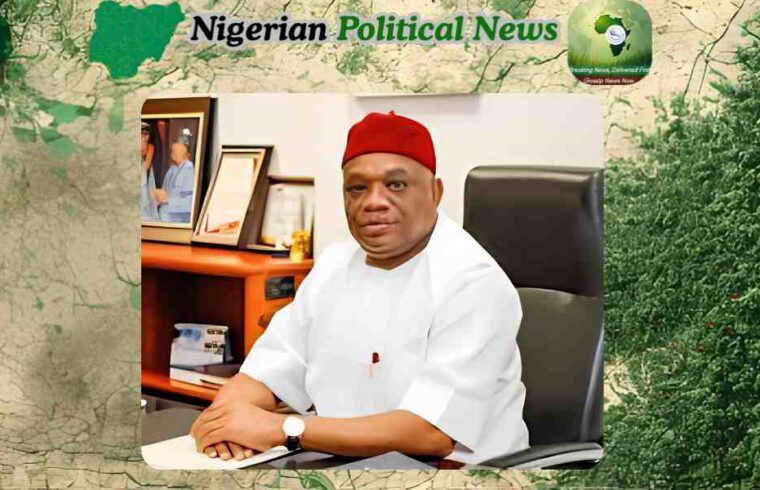
Senator Orji Uzor Kalu has said the All Progressives Congress (APC) can recover from its defeat in the recently concluded Osun State governorship election, insisting that the outcome should not be interpreted as a setback for President Bola Ahmed Tinubu ahead of the 2027 general elections.
Kalu, who represents Abia North Senatorial District, made the remarks while congratulating Governor Ademola Adeleke on his re-election and sympathising with the APC candidate, Bola Oyebamiji, and other members of the party over the election result.
The former Abia State governor said the outcome of the election demonstrated the democratic choice of the people and should provide an opportunity for the APC to reassess and return stronger.
What Happened In Osun
The Osun governorship election ended with Accord Party candidate and incumbent Governor Ademola Adeleke emerging victorious after a keenly contested poll.
Adeleke subsequently received congratulatory messages from members of his party, family members, well-wishers and political opponents.
President Bola Tinubu was also among those who congratulated the governor on his re-election.
Kalu joined the growing list of political figures who acknowledged Adeleke’s victory in a congratulatory message issued by his media office on Sunday.
Kalu Reacts To APC’s Defeat
While responding to the outcome, Kalu described the election as an expression of democracy and urged members of the APC to see the defeat as an opportunity to regroup.
“What happened in Osun is democracy in play. Elections are about the choice of the people, and as a party, we should be able to come back stronger,” he said.
He also sympathised with Oyebamiji, who finished behind Adeleke, as well as the APC leadership and supporters who participated in the election.
Kalu said the party’s loss in Osun should not overshadow its broader political outlook or prevent its members from preparing for future elections.
What The Result Could Mean Politically
The former Abia governor maintained that the Osun election result should not automatically be viewed as an indication that President Tinubu’s political prospects in the state have weakened ahead of 2027.
According to Kalu, Tinubu’s prospects in Osun remain “very bright”, despite the APC’s performance in the governorship election.
He argued that the President could still enjoy support from political stakeholders across the state, including members of the APC and the Accord Party.
His position shifts the focus from the immediate loss to the wider political calculations that could shape the next general election.
Kalu’s comments also suggest that the APC intends to treat the Osun result as a setback from which the party can recover rather than as a definitive indication of what will happen in the 2027 presidential election.
Kalu’s Strategic Assessment Ahead Of 2027
Kalu’s assessment places particular emphasis on the distinction between a state governorship election and the wider political contest that will emerge ahead of 2027.
While the APC’s candidate lost the Osun governorship election, Kalu maintained that the result should not be interpreted as a rejection of Tinubu at the national level.
He expressed confidence that the President could attract support from political stakeholders beyond the APC as preparations for the 2027 elections continue.
In his congratulatory message to Adeleke, Kalu wrote: “I join President Bola Ahmed Tinubu in congratulating Governor Ademola Adeleke on his re-election as the Governor of Osun State. I also sympathise with the APC leadership, our party’s governorship candidate and all our supporters over the outcome of the election.”
Kalu also commended the Minister of Marine and Blue Economy and former Osun State Governor, Gboyega Oyetola, for what he described as his contributions to the development of the state.
What Happens Next?
The Osun election outcome is now likely to form part of the political calculations of parties and their leaders as preparations for the 2027 general elections gather momentum.
For the APC, Kalu’s call for the party to “come back stronger” places emphasis on recovery following the defeat, while his comments about Tinubu indicate that he does not regard the Osun result as decisive evidence of the President’s prospects in the state.
The broader political contest ahead of 2027 will ultimately determine whether the relationships and support Kalu referred to translate into electoral backing.
Conclusion
Kalu’s reaction combines acceptance of Adeleke’s victory with optimism about the APC’s ability to recover and Tinubu’s prospects ahead of 2027.
For now, his position is that the Osun defeat should be viewed within the context of the immediate governorship election rather than as a final judgment on the President’s political standing ahead of the next general election.