Analytical Lead
The outcome of the Osun governorship election has opened a fresh political debate over what the result could mean for the 2027 presidential election, particularly for the All Progressives Congress (APC).
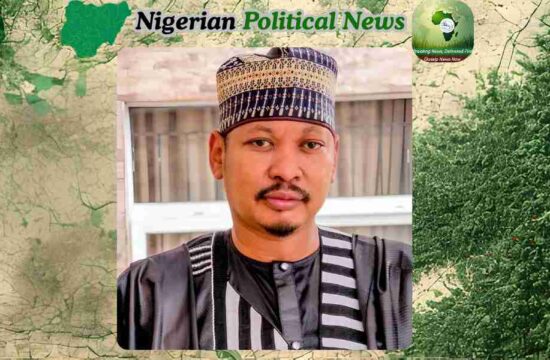
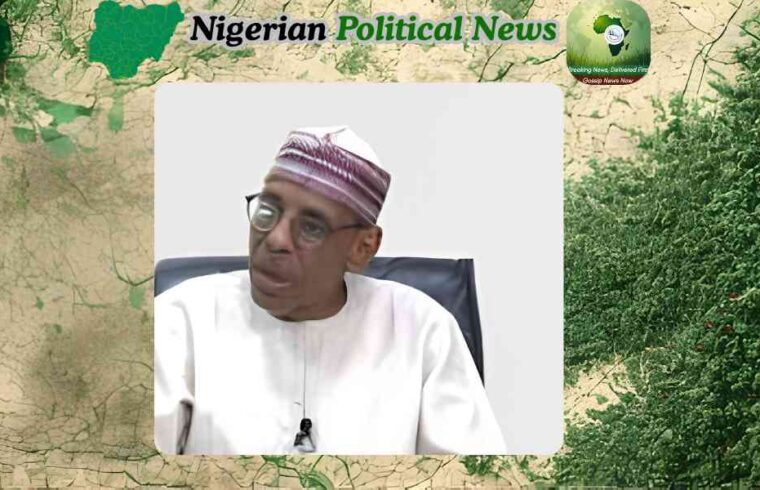
Former political adviser to President Bola Tinubu, Hakeem Baba-Ahmed, has interpreted the APC’s defeat in the state as evidence that the party can be defeated through what he described as fair elections.
Baba-Ahmed also rejected suggestions that the result was connected to Osun Governor Ademola Adeleke’s support for Tinubu ahead of the 2027 presidential election. Instead, he argued that the election result could point to a difficult political contest for the APC in Osun in 2027.
Election Results
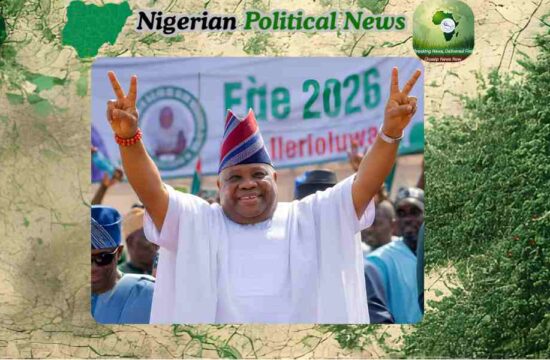
Ademola Adeleke won the Osun governorship election after polling 511,067 votes, defeating the APC candidate, Bola Oyebamiji.
Oyebamiji finished second with 444,815 votes, while Najeem Salaam of the African Democratic Congress (ADC) came a distant third with 17,180 votes.
The result gave Adeleke another electoral victory in the state and provided the basis for renewed political arguments about the strength of the major parties ahead of the 2027 general election.
Baba-Ahmed subsequently reacted to the outcome on 𝕏, using the APC’s performance in the governorship election to make a broader argument about the party’s prospects in the state.
Stakeholder Positions
A major issue surrounding the election result is whether Adeleke’s support for Tinubu’s 2027 presidential bid had any relationship with the APC’s performance in the governorship election.
Before the election, Adeleke and his Accord Party had endorsed Tinubu as their presidential candidate for 2027.
Baba-Ahmed, however, rejected the suggestion that the APC’s defeat represented a political trade-off for Adeleke’s support for Tinubu.
He said he was not among those supporting what he described as a conspiracy theory linking the two developments.
According to Baba-Ahmed, the result should instead be understood as evidence that Accord could win the election fairly and that the APC could also be defeated in a free contest.
His position therefore shifts the focus from the Adeleke-Tinubu relationship to what the election result could indicate about voter choices and party strength in Osun.
Key Quotes
Reacting to the result, Baba-Ahmed said:
“I am not one of those supporting the conspiracy theory that the APC’s defeat in the Osun governorship election is a trade-off for the governor’s support for Tinubu in 2027.”
He added:
“I prefer to believe Accord Party won fairly. I believe the APC can be defeated in fair elections. Osun State will reject it in 2027.”
Baba-Ahmed also criticised the intervention by Tinubu in the controversy involving the Economic and Financial Crimes Commission (EFCC) and frozen Osun State funds.
He argued that the President had no power to stop EFCC operations and claimed that the anti-graft agency had damaged its own reputation over the matter.
Background
The political significance of Baba-Ahmed’s comments is tied to the relationship between Adeleke’s political position in Osun and the wider 2027 presidential contest.
Adeleke and his Accord Party had endorsed Tinubu ahead of the presidential election, creating a political situation in which support for the President at the national level existed alongside competition between Adeleke’s political camp and the APC in the Osun governorship election.
The APC’s defeat therefore created competing interpretations of the result.
While one interpretation could link the outcome to Adeleke’s support for Tinubu, Baba-Ahmed has rejected that explanation.
Instead, he argues that the result demonstrates that the APC can lose an election even in a state where its presidential candidate has received political support from a major local political figure.
Political Implications
The Osun result could become part of the wider political calculations surrounding the 2027 presidential election, particularly as parties assess their strength across the states.
For the APC, the result provides an indication that its performance in Osun cannot simply be taken for granted, while Adeleke’s victory could strengthen his political position within the state.
However, the governorship result alone does not establish what Osun voters will do in a presidential election. Governorship and presidential contests involve different candidates, political alliances and campaign dynamics.
Baba-Ahmed’s prediction that Osun will reject the APC in 2027 should therefore be understood as his political assessment rather than an established electoral outcome.
The significance of the result will ultimately depend on how political alliances develop and how voters respond when the 2027 presidential contest takes shape.
Future Outlook
Attention will now gradually shift from the immediate Osun governorship result to the broader political realignment ahead of 2027.
The APC will have to assess its performance in the state, while other political actors are likely to use Adeleke’s victory to strengthen their arguments about the party’s electoral prospects.
The relationship between Adeleke’s support for Tinubu and the political contest between his camp and the APC could also remain a subject of discussion as preparations for the presidential election intensify.
Whether Baba-Ahmed’s prediction becomes reality will ultimately be determined by the political alliances, candidates and voter decisions that emerge before the 2027 election.
Final Editorial Wrap-Up
The Osun governorship election has provided a new reference point for discussions about the political landscape ahead of 2027.
Adeleke’s victory gave his political camp another significant result in the state, while the APC’s defeat has prompted questions about its ability to retain or expand its support among Osun voters.
For Baba-Ahmed, the result demonstrates that the APC can be defeated in a fair election and points to a possible rejection of the party in the state during the 2027 presidential contest.
That prediction, however, remains a political assessment rather than a settled electoral outcome. The eventual direction of Osun politics will depend on the alliances, campaigns and voter choices that develop as the 2027 election approaches.